Pondicherry University and the Indian Space Research Organisation (ISRO) have signed a memorandum of understanding (MoU) to study the mangrove forests of the Andaman Islands using satellite data and field measurements, according to a release issued by the Press Information Bureau (PIB) in Chennai on 19 November 2026. The agreement is with the Regional Remote Sensing Centre – East (RRSC-East) in Kolkata, which is part of ISRO's National Remote Sensing Centre (NRSC).
The MoU sets up a joint framework for an advanced research and development project worth ₹54.03 lakh titled "Characterization of Mangrove Forests of Andaman Using Multi-Frequency SAR Data, Optical Data, and Ground Measurements", the PIB release said.
What does the ISRO–Pondicherry University agreement cover?
The agreement covers a single, defined research project on the Andaman mangroves, combining multi-frequency SAR data and optical satellite data with measurements taken on the ground. Beyond the project itself, the release describes the MoU as a framework to strengthen research collaboration between the university and the ISRO centre.
Dr Tanumi Kumar, Scientist/Engineer SG and Head (Applications) at RRSC-East, is the project's Principal Investigator. She explained how the MoU came about and set out the project's scope, objectives and the responsibilities of each institution. According to the release, she said the project's deliverables will be particularly useful to the Department of Environment and Forests of the Andaman and Nicobar Administration.
On the university side, Dr T. Ganesh is the MoU coordinator and Co-Principal Investigator. Ms Sharmistha B. Pandey of RRSC-East is also a Co-Principal Investigator.
Who took part in the signing?
The ceremony was held in a hybrid format. R. Gunasekaran, Registrar of Pondicherry University, and Dr T. Ganesh attended in person at RRSC-East in Kolkata, while the university's Vice-Chancellor, Prof. P. Prakash Babu, joined online.
Dr Arindam Guha, Deputy General Manager of RRSC-East, opened the event and stressed the need for a strong partnership between the two institutions. Aparna N., Deputy Director of NRSC, spoke about the core deliverables of the mangrove study, and Dr Prakash Chauhan, Director of NRSC, gave guidance on carrying out the project, urging the teams to make use of the specialised resources and expertise at NRSC in Hyderabad.
Why do the Andaman mangroves matter?
Mangroves in the Andaman and Nicobar Islands play a critical ecological role, Prof. Prakash Babu said at the event, pointing to carbon sequestration, protection of the coast against cyclones and storm surges, and wider ecosystem services. He promised full support from the university's Department of Ocean Studies and Marine Biology at its Andaman campus for field observations and laboratory analysis.
Combining satellite imagery with ground data from the university's island campus means the study will draw on both institutions' strengths: ISRO's remote sensing capability and the university's presence in the islands.
What does it mean for young researchers?
The agreement is expected to open opportunities for young scientists, according to Dr S.K. Srivastav, Associate Director and Chief General Manager at NRSC-ISRO. He said the MoU would allow young researchers and Junior Research Fellows to build expertise in remote sensing and work towards doctoral degrees. He praised both institutions for starting the partnership.
What is not yet known?
The PIB release does not give the exact date on which the MoU was signed, the duration of the project, or a timeline for when results will be shared with the Andaman and Nicobar Administration. It also does not say how the ₹54.03 lakh cost will be shared between the two institutions.
What happens next?
The two teams will now carry out the study under the framework agreed in the MoU, with NRSC's facilities in Hyderabad available to support the work. The release described the agreement as a milestone in cooperation between institutions and said it could lead to longer-term partnerships in environmental research, technology and academic capacity building.
The agreement adds to a run of Indian science announcements this week, including a Birbal Sahni Institute study showing how Himalayan marmot droppings can track alpine climate change and CSIR's transfer of parali-based bio-bitumen and other technologies to industry.
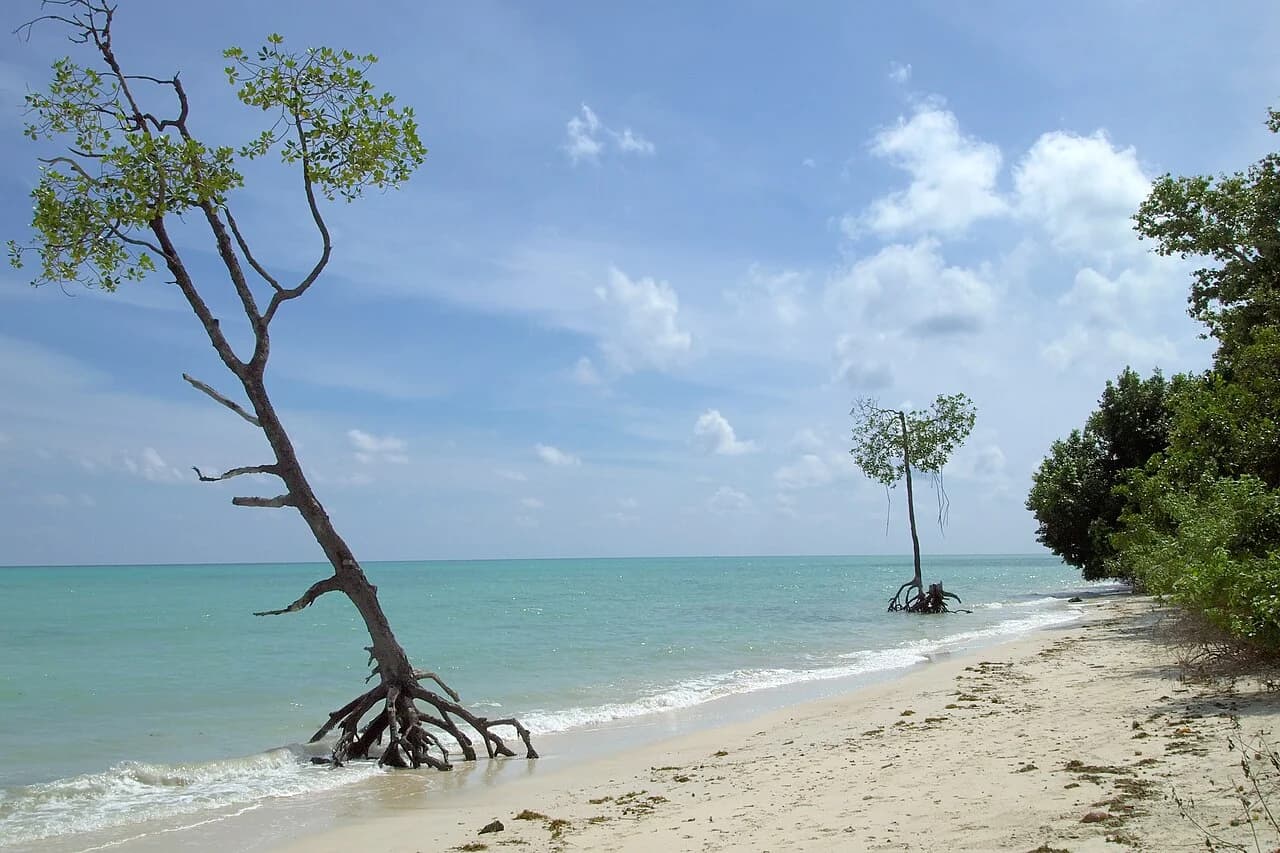
Photo source · Vyacheslav Argenberg, CC BY 4.0