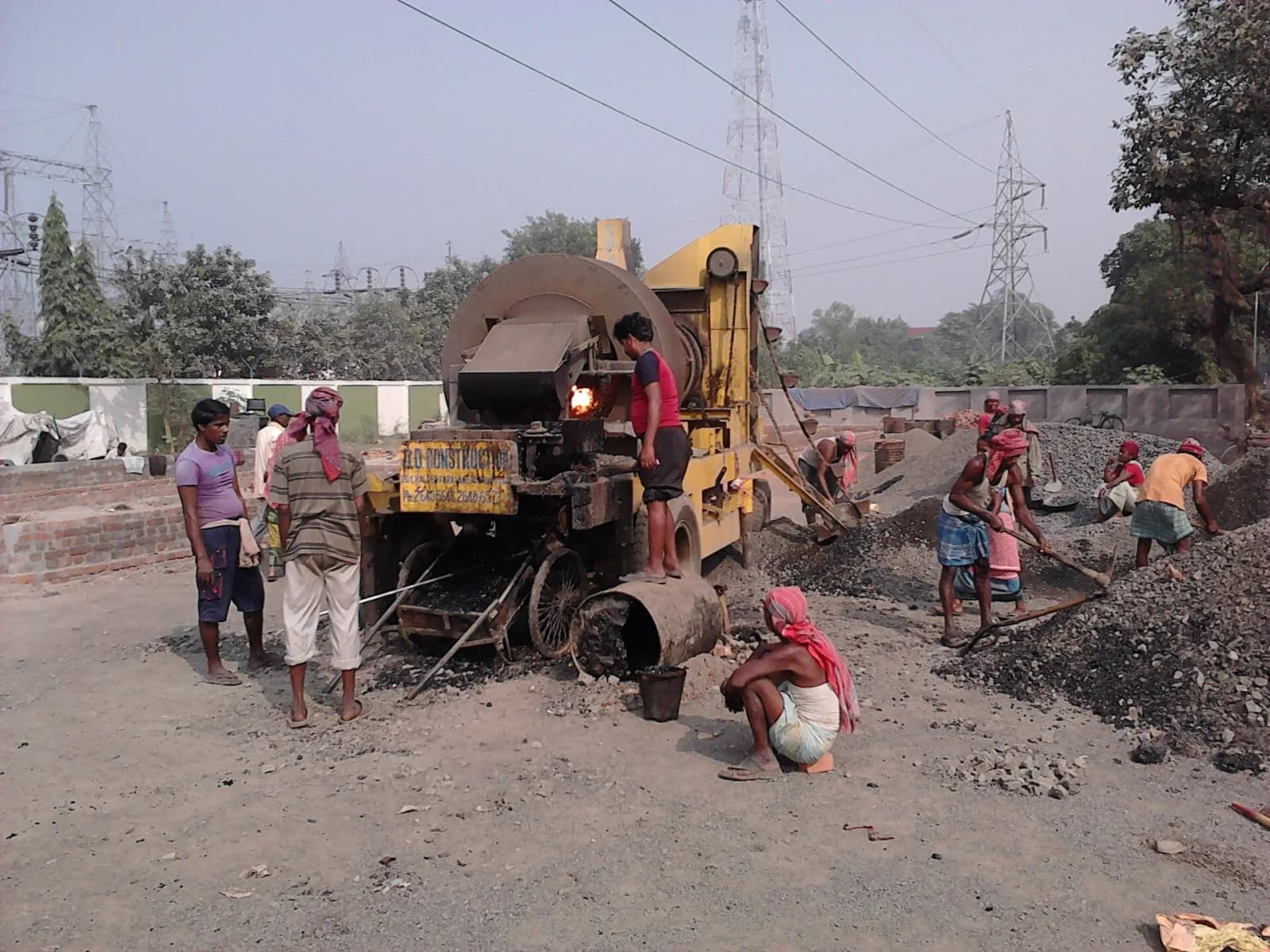
The Council of Scientific and Industrial Research (CSIR) has handed over a technology that turns rice straw, or parali, and other farm residues into a partial substitute for petroleum-based road bitumen to two private companies. The transfer took place at a technology transfer and MoU-signing event at CSIR headquarters in New Delhi, which the Ministry of Science and Technology announced on 19 November 2026. Six technologies from four CSIR laboratories were handed to industry, and two research agreements were signed.
What is bio-bitumen and who will make it?
Bio-bitumen is a biomass-derived material that can partly replace conventional bitumen, the petroleum product used to bind road surfaces. It was developed jointly by the CSIR-Central Road Research Institute (CSIR-CRRI), New Delhi, and the CSIR-Indian Institute of Petroleum (CSIR-IIP), Dehradun. According to the ministry, it uses agricultural residues including rice straw. The technology went to RAACS Solutions Private Limited of Bihar (BioBhoomi) and SAR Parivahan Private Limited of Kolkata. The release did not say how much conventional bitumen it can replace, or when the companies will start production.
What other technologies were transferred?
CSIR-CRRI also transferred MicroReAct-RAP, a cold micro-surfacing method for road maintenance that uses up to 40% reclaimed asphalt pavement, which is material recovered from old roads. It cuts the need for fresh aggregates and bitumen emulsion, the ministry said. Three firms received it: Innovative Roadztech Private Limited of Delhi, AVK BlackGold Infra Private Limited of Surat and Hindustan Colas Private Limited (HINCOL) of Mumbai. CSIR-CRRI developed these road materials with the CSIR-Advanced Materials and Processes Research Institute (CSIR-AMPRI), Bhopal, and CSIR-IIP.
The CSIR-Structural Engineering Research Centre (CSIR-SERC), Chennai, transferred three technologies:
- An Emergency Retrieval System for power lines, a light, modular structure for quickly restoring electricity transmission lines after failures, to IFAB Global.
- Bricks, hollow blocks and paver blocks made entirely from recycled aggregates and industrial waste, to the National Automotive Test Tracks (NATRAX).
- Ultra-High-Performance Concrete pavement technology, meant for strong, durable roads that need less maintenance, also to NATRAX for pilot-scale field use.
Which agreements were signed?
CSIR-CRRI signed a memorandum of understanding with the Global Automotive Research Centre in Tamil Nadu, which works under the National Automotive Board of the Ministry of Heavy Industries, covering joint research, shared testing facilities and academic exchanges. A second agreement, with Pārakhi Skill Systems Private Limited of Patna, covers research on driver risk assessment and cognitive and psychomotor testing.
Why does it matter?
The transfers aim to put waste to use in road building. The recycled-aggregate products are designed to use construction and demolition waste and reduce reliance on natural aggregates, the ministry said, while the bio-bitumen gives crop residue a commercial use. Construction waste and road dust are also on the pollution agenda. On the same day, Union Environment Minister Bhupender Yadav asked Delhi-NCR civic bodies to step up road repairs and dust control and to act against open burning of waste and biomass, as MapMyTimes reported.
Dr N. Kalaiselvi, Director General of CSIR and Secretary of the Department of Scientific and Industrial Research, chaired the event. She said CSIR must transfer more technologies to industry so that laboratory research turns into economic and social benefits. The event is part of CSIR's monthly technology transfer programme.
What happens next?
The next step is industrial adoption. The ministry did not give timelines, licence terms or production targets. The UHPC pavement technology will first be tested in pilot-scale field use at NATRAX.
Photo source · Biswarup Ganguly, CC BY 3.0