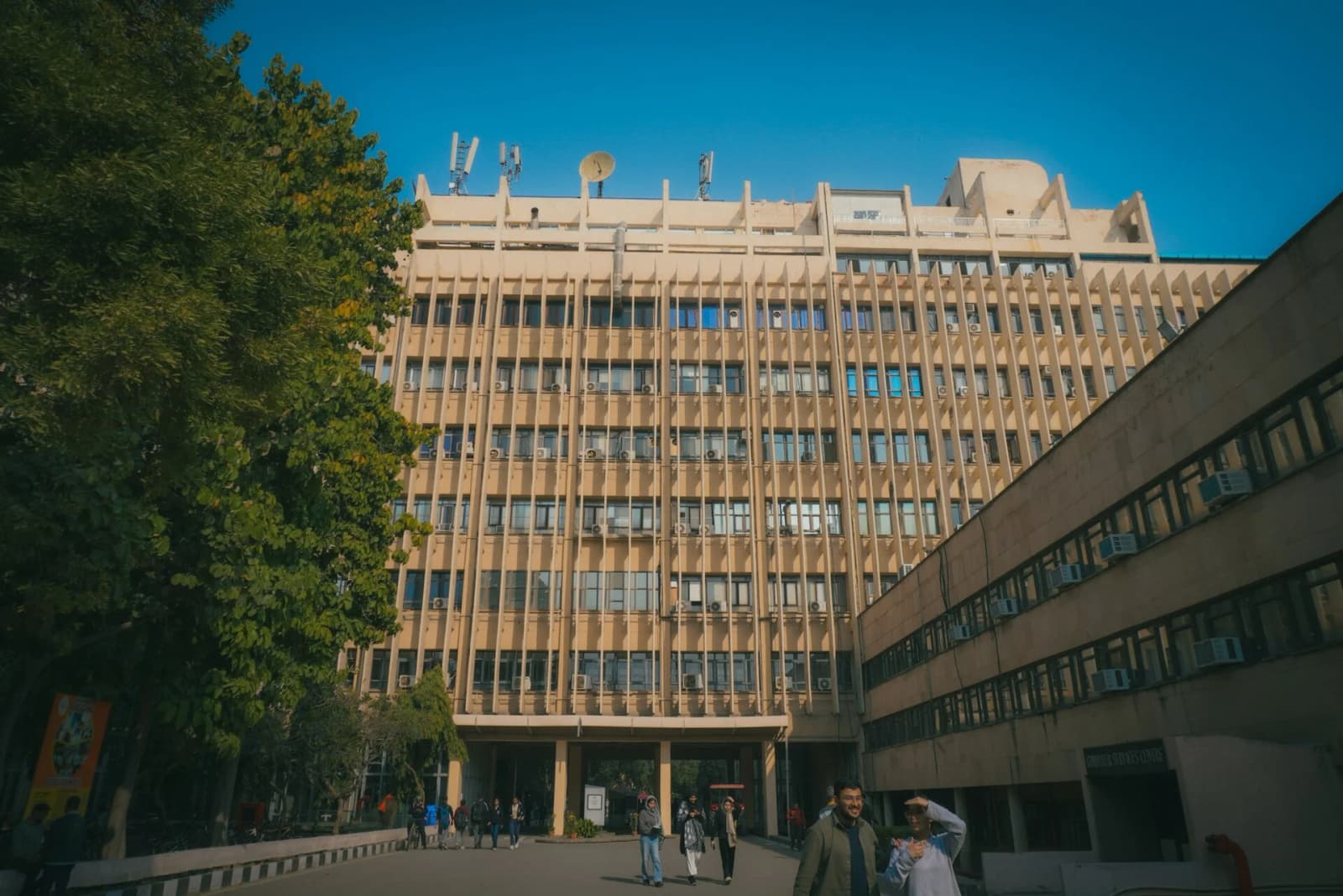
The Abu Dhabi campus of the Indian Institute of Technology Delhi (IIT Delhi) held its first convocation on Thursday, 19 November 2026, awarding degrees to its inaugural batch of 17 students. Union Education Minister Pralhad Joshi presided over the ceremony in Abu Dhabi, United Arab Emirates (UAE), and later held talks in Dubai with the UAE's minister for artificial intelligence on cooperation in AI and education.
All 17 graduates completed a Master of Technology (M.Tech) in Energy Transition and Sustainability, the first programme the campus launched, according to DD News, the public broadcaster's news service.
Who graduated, and what did they study?
The first graduates are 17 M.Tech students whose theses dealt with carbon capture, green hydrogen, renewable energy, energy markets and methane. Adnan Aboud Hajsalem Saleh Nagah received the Gold Medal for academic excellence after finishing with a perfect grade point average of 10.
The ceremony was attended by senior figures from both countries, including:
- Harish Salve, Chairperson of the Board of Governors, IIT Delhi
- Professor Rangan Banerjee, Director, IIT Delhi
- Professor Shantanu Roy, Executive Director, IIT Delhi–Abu Dhabi
- Rima Al Mokarrab, Executive Director of Strategic Affairs at the Executive Affairs Authority of the UAE
- Dr Deepak Mittal, India's Ambassador to the UAE
What did the minister say?
Mr Joshi called the campus a strong example of higher-education cooperation between India and the UAE. He noted that it began modestly in January 2024 and had expanded its programmes and research facilities in under three years. He credited the National Education Policy 2020 with moving Indian education away from rote learning towards critical thinking, research and innovation, and pointed to the growing internationalisation of Indian institutions. He described the graduates as "a generation of bridge-builders" who could draw on their knowledge of both markets as trade between the two countries grows, DD News reported.
How did the campus come about?
The idea dates to February 2022, when Prime Minister Narendra Modi and Sheikh Mohammed bin Zayed Al Nahyan, then Crown Prince of Abu Dhabi, agreed at a virtual summit to set up an IIT in the UAE. A memorandum of understanding between India's Ministry of Education, IIT Delhi and Abu Dhabi's Department of Education and Knowledge followed in July 2023, during Mr Modi's visit to the UAE. Teaching began in January 2024.
The campus now runs six programmes: the M.Tech in Energy Transition and Sustainability, a PhD in Energy and Sustainability, and undergraduate programmes in Chemical Engineering, Computer Science and Engineering, Energy Engineering and Electrical Engineering. Its students and research scholars come from 13 countries, The Indian Awaaz reported.
What came out of the Dubai meeting?
After the convocation, Mr Joshi met Omar Sultan Al Olama, the UAE's Minister of State for Artificial Intelligence, Digital Economy and Remote Work Applications, in Dubai. According to DD News, they discussed AI-enabled learning, digital public infrastructure for education, STEM education, teacher training and the responsible use of new technologies in classrooms.
The two sides also explored using the IIT Delhi–Abu Dhabi campus as a bridge for joint AI research with the Mohamed bin Zayed University of Artificial Intelligence, and research collaboration under India's Scheme for Promotion of Academic and Research Collaboration (SPARC) in AI, climate resilience, renewable energy, advanced manufacturing and space technology. The UAE side shared its National AI Literacy Curriculum Framework for schools and its national AI upskilling programme for teachers, and a structured India–UAE dialogue on AI in education was proposed. No agreement was reported as signed.
Why does it matter?
The convocation marks the first full cycle of an Indian Institute of Technology campus abroad, from admission to degree. It comes in a week of education and technology events at home, including the VMMC-Safdarjung convocation in New Delhi and the close of the Bengaluru Tech Summit. Whether the AI-in-education talks lead to a formal programme remains to be seen.
Photo source · Mahi zahidi, CC BY-SA 4.0