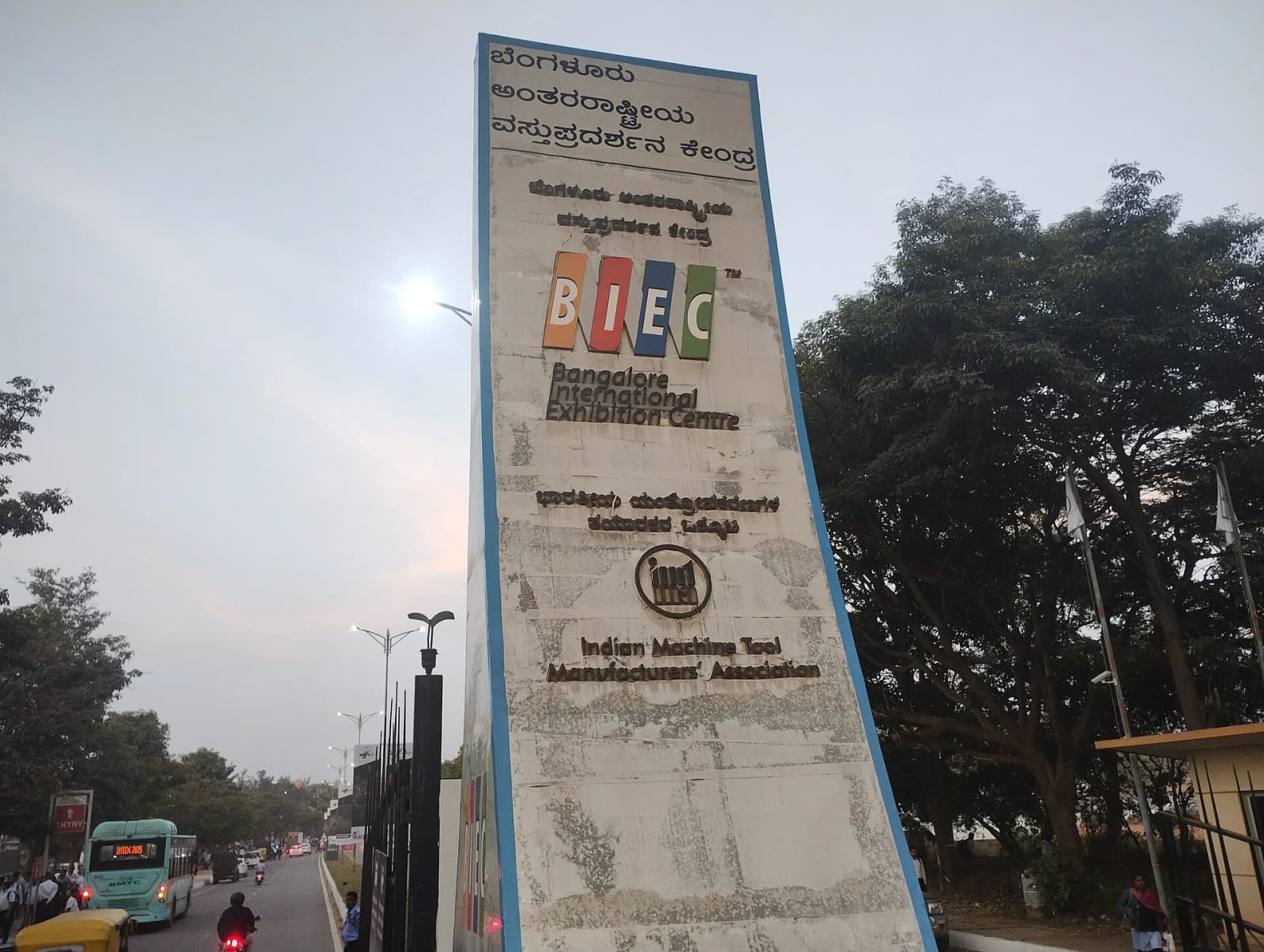
The 29th Bengaluru Tech Summit ended at the Bangalore International Exhibition Centre (BIEC) in Bengaluru, Karnataka, on 19 November 2026 with 24 venture capital firms announcing about ₹1,050 crore of investment for deeptech start-ups, more than double the roughly ₹400 crore announced at the same platform a year earlier. The three-day event, held from 17 November under the theme "AI & Beyond", was organised by the Karnataka government's Department of Electronics, IT and Biotechnology.
The investment pledges were made at the Future Makers Conclave, the summit's start-up flagship, according to a press release from the department reported by Bengaluru Live. The names of the individual funds and the size of each commitment were not disclosed.
What did Karnataka say it wants from the summit?
The state wants to move from being a technology services hub to a place where new technology is built and sold. Priyank Kharge, Karnataka's Minister for IT and Biotechnology, said the state was moving towards becoming a global centre for developing, researching and commercialising new technologies, and described the summit as "no longer just an annual conference" but a platform that turns discussions into partnerships and investment. He listed the focus areas as "AI and deeptech to biotechnology, robotics and semiconductors", The South First reported.
What does the new GCC report show?
A report released at the summit, "Karnataka's Global Capability Centres: Shaping the AI Future of Enterprises", says the state hosts 1,088 global capability centres (GCCs), or 51% of India's 2,117. GCCs are offshore units that multinational companies run for engineering, technology and operations work. According to the report:
- Karnataka's GCCs employ 1.11 lakh AI and machine-learning professionals, 43% of such talent in India's GCCs.
- 66% of the surveyed centres in the state are at an advanced stage of AI use.
- Bengaluru accounts for 44% of senior AI leadership job postings in India's GCCs.
For job seekers, the numbers point to where AI hiring at multinational units is concentrated. The report recommends that the state focus on AI leadership, skilling and the commercial use of research by 2030.
Agreements signed
- A joint declaration of intent with the Regional Chamber of Commerce in Katowice, Poland, and the kato.hub technology hub, and another with Dubai CommerCity on applied AI and helping Karnataka start-ups enter Dubai.
- Agreements with Korean and Taiwanese trade bodies in Bengaluru to attract companies from those countries.
- Through the Bangalore Bioinnovation Centre, an industrial biotechnology research centre with the University of York and a Beckman Coulter Centre of Excellence with Danaher Corporation.
- A pact between the life-sciences platform C-CAMP and France's Genopole, and one between the state's cybersecurity centre CySecK and the DSN Foundation on skills and research.
- A letter of intent with Amagi for what the government called India's first government sports technology centre of excellence in Bengaluru; governance details are still to be worked out.
Other announcements
The state announced an AI skilling initiative aimed at 63,200 students and engineers, and said a drone testing facility is being developed at Jeedarahalli in Chikkaballapur district for uses in agriculture, defence, logistics, marine technology and urban planning. No timeline for the facility was given.
The organisers said the summit drew delegates from 64 countries, 704 speakers and 1,518 exhibitors, including 923 start-ups from 104 cities, with 11,257 conference delegates and 58,872 registered industry visitors.
What happens next
Most of the agreements are declarations of intent or memoranda of understanding, which set out cooperation but do not commit money on their own. The test will be how many of the ₹1,050 crore in VC pledges turn into actual deals with Karnataka start-ups, and when the drone facility and sports technology centre begin work.
Photo source · Gpkp, CC BY-SA 4.0