Scientists from Israel's Weizmann Institute of Science and Germany's Max Planck Institute for Gravitational Physics in Hannover have found a fast-spinning pulsar hidden in NASA data using a search method borrowed from cryptography, in a study published in Physical Review Letters on 19 November 2026. The object, named PSR J1622-7204, spins 261 times a second.
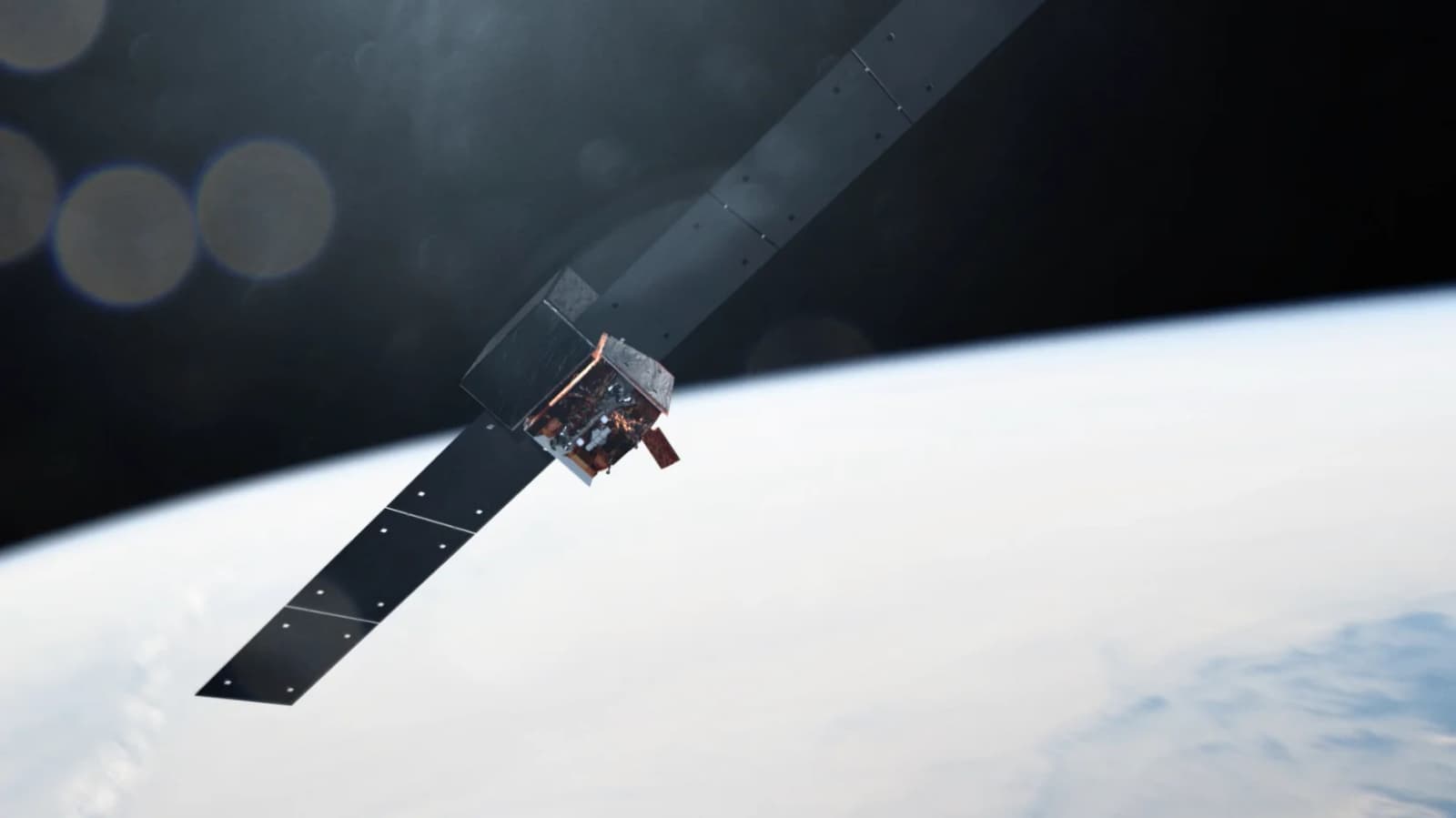
According to NASA, the new technique can find pulsars in publicly available data from its Fermi Gamma-ray Space Telescope about a million times faster than earlier methods. The team needed computing time equivalent to about 10 hours on a standard processor. The previous best method had failed to find the same pulsar after using computing power that would take a single processor around 600 years.
What is a pulsar, and why is it so hard to find one?
A pulsar is a rapidly spinning neutron star, the dense core left behind when a massive star dies, which sweeps beams of radiation across space like a lighthouse. Finding one in gamma-ray data is difficult because Fermi catches very few photons from any single pulsar, and these are mixed with background noise.
Barak Zackay of the Weizmann Institute's Particle Physics and Astrophysics Department said the telescope detects a single photon roughly once every 100 million rotations of a pulsar, while the telescope itself keeps moving as it orbits Earth. To confirm a pulsar, researchers must guess its exact sky position, spin rate and the rate at which that spin is slowing, all at once.
How does the new method work?
According to the Weizmann Institute, each guess about how many times the star rotated between two detected photons is treated as a point on a lattice, a regularly spaced grid of points. The algorithm then looks for the answer that leaves the smallest leftover error, a task mathematicians call the shortest vector problem.
NASA said the approach draws on algorithms that cryptographers developed while trying to break encryption systems designed to resist future quantum computers.
Zackay said the team ran the algorithm 20 times, each time on a slightly different set of 80 photons suspected to come from the same source, and one run gave the right answer. Each run took about five minutes on a single computer core. He added that the team was "somewhat lucky", since theory suggested about 300 runs would be needed for a 95 per cent chance of success.
What did the team learn about the pulsar?
PSR J1622-7204 is an isolated pulsar in the southern sky, found in 15 years of Fermi data. Dotan Gazith of Zackay's lab, who led the study with Daniel Pook-Kolb of the Max Planck Institute, said the team measured its spin rate precisely and calculated how fast it is slowing down: in about 100 million years, it will complete roughly five fewer rotations per second than it does today.
Why does this matter?
Pulsars are used as natural laboratories for testing Einstein's theory of general relativity and studying gravitational waves. The Weizmann Institute noted that a NASA experiment in 2018 showed a spacecraft can work out its position in space to within a few kilometres by timing pulses from different pulsars.
The work also shows the value of open data. Fermi, launched in 2008, scans the whole sky every three hours, and all 18 years of its data are public. "The nice thing about NASA data is it's all open," said co-author Colin Clark of the Max Planck Institute.
Scientists from Chalmers University of Technology in Gothenburg, Sweden, also took part. Read also: our reports on Voyager 1 reaching one light-day from Earth and the planned end of the Terra satellite's science mission.
What happens next?
The team now wants to find pulsars in binary systems, where a companion star's gravity distorts the signal. "We know that there are probably tens or maybe even hundreds of these pulsars in the data set that we just couldn't find," Clark said. The researchers plan to combine the new algorithm with volunteer computing power from the Einstein@Home project. Gazith said the method is already turning up more pulsars, though details of those finds have not yet been published.