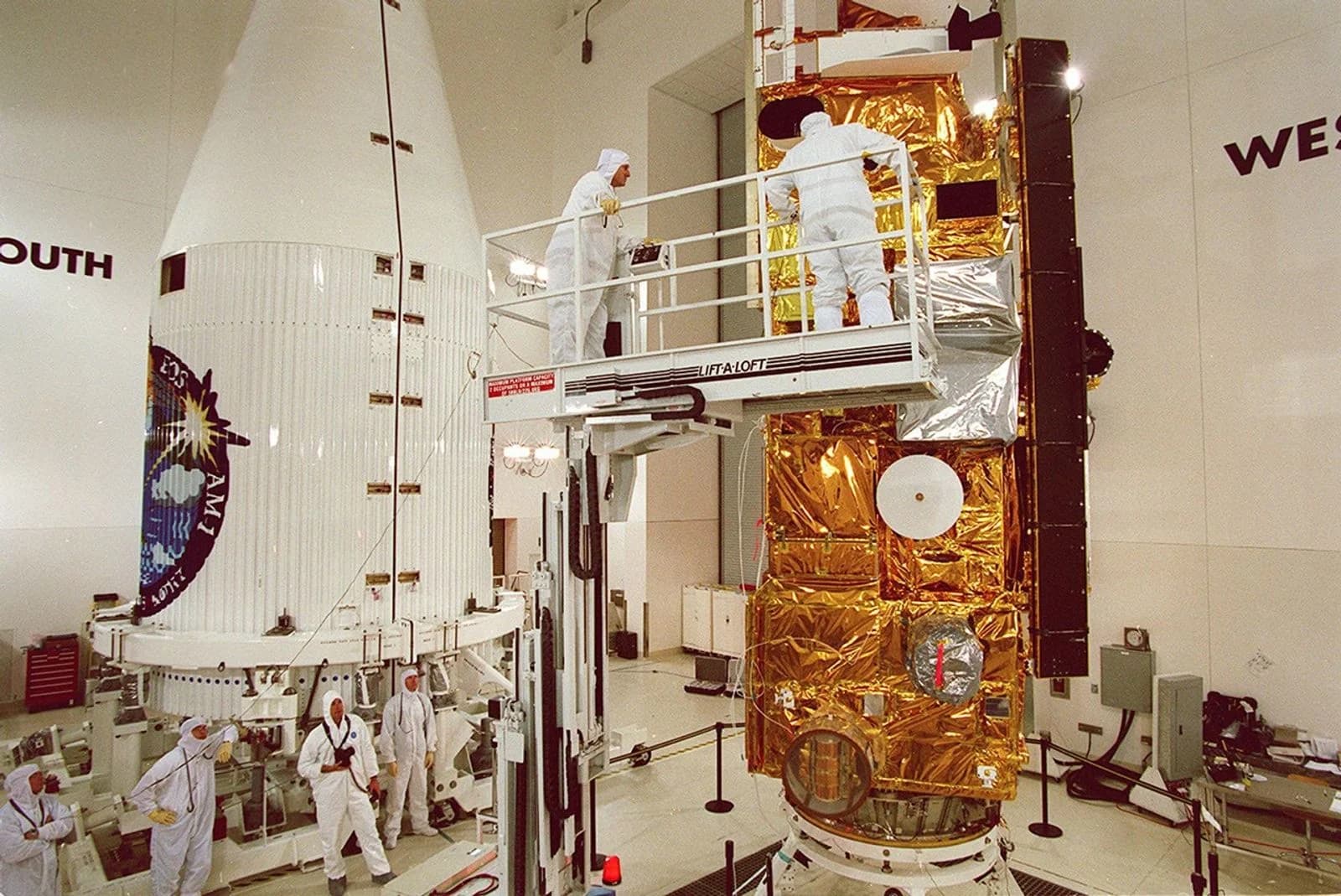
NASA's Terra satellite, one of the longest-serving Earth-observation spacecraft in orbit, will stop collecting science data on 1 December 2026, the US space agency said in a science news brief published on 17 November 2026. The shutdown ends 27 years of observations of Earth's atmosphere, land, oceans and living systems from a satellite that was originally built to last six years.
NASA said the decision was driven by the spacecraft's ageing systems and its drifting orbit. After science operations end, the Terra team will use the remaining fuel to lower the satellite's orbit and then switch off all of its systems in January 2027.
Why is NASA ending the Terra mission now?
Ageing hardware and a drifting orbit have made continued science operations untenable, according to NASA. In a longer mission retrospective, the agency explained that it stopped adjusting Terra's orbit in late 2020 to conserve fuel, so the satellite has gradually been crossing the equator earlier in the day. Battery degradation has also forced cuts in power use.
Those power limits have already silenced parts of the payload. NASA said the Measurements of Pollution in the Troposphere (MOPITT) instrument, along with parts of the Clouds and the Earth's Radiant Energy System (CERES) and the Advanced Spaceborne Thermal Emission and Reflection Radiometer (ASTER), had been switched off earlier to save power. The retrospective records that MOPITT went into safe mode on 1 February 2025 and was turned off on 9 April 2025.
The new 1 December date comes earlier than NASA's own earlier projection. An editor's note on the retrospective page had projected end-of-science activities for Terra in February 2027.
What did Terra do?
Terra launched on 18 December 1999 from what was then Vandenberg Air Force Base in California, aboard an Atlas-Centaur IIAS rocket, as the first flagship of NASA's Earth Observing System. It carries five instruments supplied by the United States, Japan and Canada:
- ASTER, a high-resolution land imager built in partnership with Japan
- CERES, which tracks Earth's radiation budget and cloud properties
- MISR (Multi-angle Imaging SpectroRadiometer), which views aerosols, clouds and surfaces from several angles
- MODIS (Moderate Resolution Imaging Spectroradiometer), which gathers global land, ocean and atmosphere data
- MOPITT, a carbon monoxide sensor built in partnership with Canada
According to NASA, Terra has completed more than 100,000 orbits and its data have been cited in more than 27,000 publications. Over its life it recorded changes in land use, wildfire behaviour, the movement of dust and smoke, atmospheric composition and ice cover. NASA said its data informed decisions on public safety, agriculture and water resources. MOPITT produced the longest space-based record of carbon monoxide, and MISR's aerosol record spans more than two and a half decades.
Michael King, a former Earth Observing System senior project scientist and MODIS team lead, described Terra in the retrospective as "the quintessential and most significant of all of the EOS satellites".
What happens to the data?
NASA said Terra's data records will remain free and publicly available after the spacecraft is switched off. The agency has also funded a product called Terra Fusion, which merges data from all five instruments into a single dataset.
Why it matters
Terra is one of three ageing Earth Observing System flagships, along with Aqua and Aura. NASA's retrospective had projected end-of-science dates of September 2027 for Aqua and August 2028 for Aura. Its shutdown comes in the same week that Europe's newest Copernicus satellite released its first data: MapMyTimes reported on Sentinel-3C's first thermal images, which showed land temperatures in Australia above 40°C.
What is confirmed and what is not
NASA has confirmed the 1 December end of science data collection and the January 2027 power-off. It has not said in the brief whether any instrument will be kept running up to the final day, or where the lowered orbit will leave the spacecraft.
Photo source · NASA