
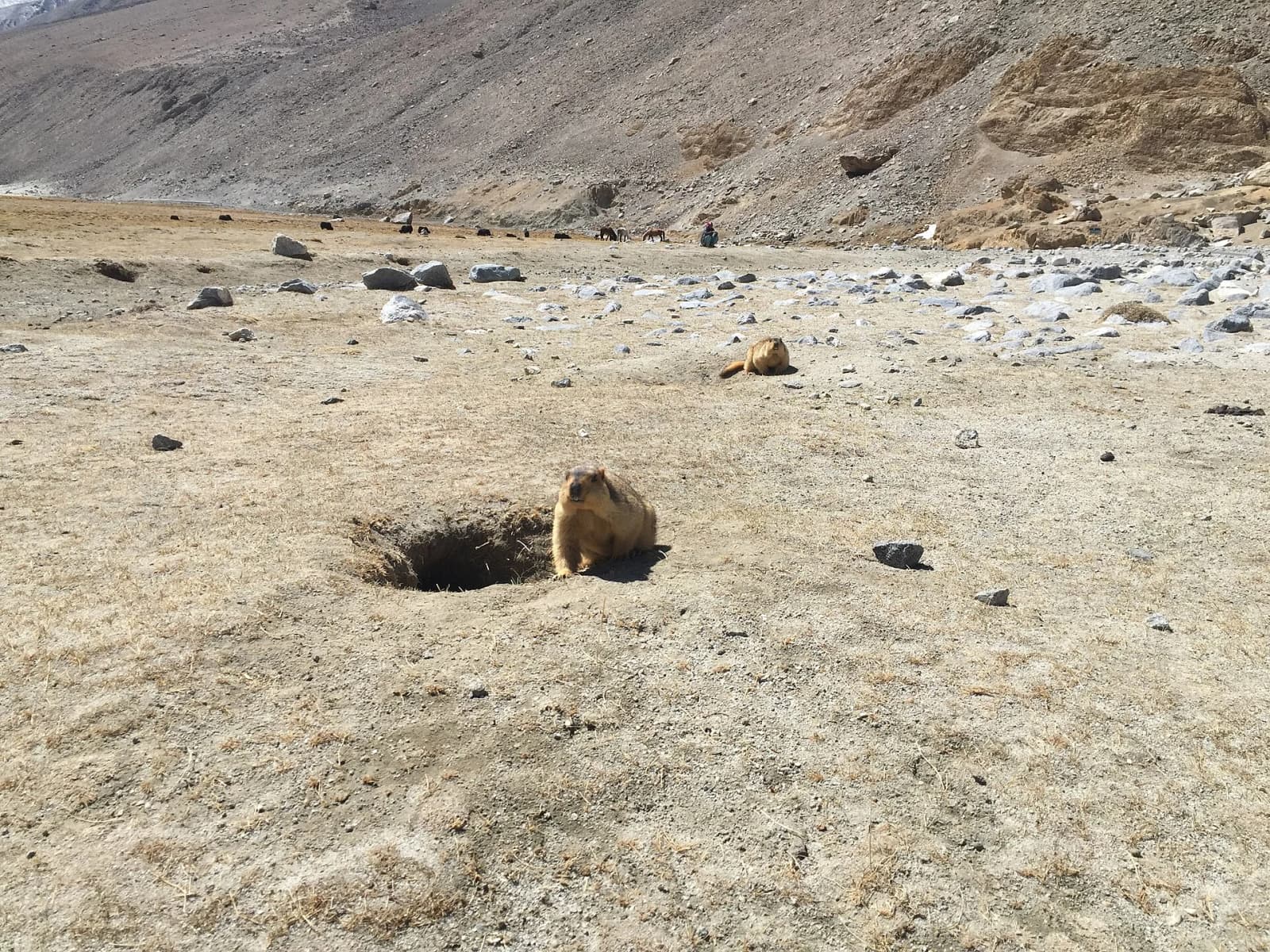
Droppings left by the Himalayan marmot, a plant-eating mammal of the high Himalaya, can act as a natural record of alpine vegetation and climate, according to scientists at the Birbal Sahni Institute of Palaeosciences (BSIP) in Lucknow. The Union Ministry of Science and Technology highlighted the research on 19 November 2026 in a press release issued in New Delhi. The study examined marmot faeces collected at Pensila Pass in Ladakh's Zanskar region and in the Rimkhim area of Uttarakhand's Dhauliganga valley.
What did the scientists find?
The pollen locked inside the droppings closely matched what the animals eat, and that diet mirrors the alpine steppe plants around their colonies. The team found the marmot (Marmota himalayana) is a mixed feeder. Its diet was dominated by Artemisia, plants of the Asteroideae and Caryophyllaceae groups, and the Chenopodiaceae family, with Ephedra also present.
The researchers used ratios between pollen types, such as Artemisia to Chenopodiaceae, Artemisia to Cyperaceae and Artemisia to Ephedra, as markers for the cold, dry steppe vegetation of the higher Himalaya. A statistical comparison showed only a slight difference between the two sites.
The droppings also held spores of dung-loving fungi, chiefly Sporormiella and Saccobolus. Electron-microscope analysis recorded 15 nutritional elements. Carbon, nitrogen, calcium, silicon and phosphorus were present in high concentrations, which the authors link to the plants the animals eat.
Why do marmot droppings matter for climate research?
They offer a new archive in places where the usual ones are scarce. According to the ministry, most studies of past environments rely on lake sediments, peat and soil, which are rare in the remote, arid high mountains. The sampling sites lie between about 3,600 and 4,200 metres above sea level, the paper says.
The authors say the work provides a modern baseline. Scientists can compare it with fossilised dung, known as coprolites, to reconstruct past vegetation and climate. It can also help track how the species responds as warming pushes habitats to higher altitudes. The ministry said shifts in marmot habitat can signal such altitude changes.
Why does it matter for India?
The Himalaya is highly sensitive to changes in temperature, rainfall and snow cover, which affect alpine plants and wildlife habitats, the ministry noted. It said the findings could support conservation planning by improving understanding of what marmots need. That matters for other species too: marmots are important prey for the snow leopard, which shares these landscapes with wild yak, ibex, blue sheep and the Tibetan wolf, according to the paper. The research comes a day after experts at a Dehradun conclave called for climate-sensitive planning in Himalayan cities.
Who carried out the study?
The paper was written by Sadhan K. Basumatary, Hukam Singh, Manish Mehta, Swati Tripathi, Mahesh G. Thakkar, H. Gregory McDonald, Eline N. van Asperen and Vinit Kumar. It was funded by BSIP, an autonomous institute of the Department of Science and Technology, and the Wadia Institute of Himalayan Geology in Dehradun. The open-access paper in PLOS ONE was published on 28 October 2026.
What is still unclear?
The study describes present-day conditions at two sites. It sets a reference point rather than measuring change over time. Its value for tracking climate will depend on future studies that compare these results with older deposits or with repeat sampling.
Photo source · Jasmeet23289, CC BY-SA 4.0