Hill cities in the Himalayas should build carrying-capacity assessments into their statutory master plans and get more predictable funding suited to mountain terrain, a two-day regional conclave on mountain urbanisation recommended as it ended in Dehradun on Wednesday, 18 November, the Housing and Urban Affairs Ministry said.
The Parvat Manthan Conclave 2026, organised by the National Institute of Urban Affairs (NIUA), brought together representatives of 11 Himalayan states along with urban local bodies, technical experts, academics, civil society groups and development partners. It was held on 17 and 18 November.
Water security at the centre
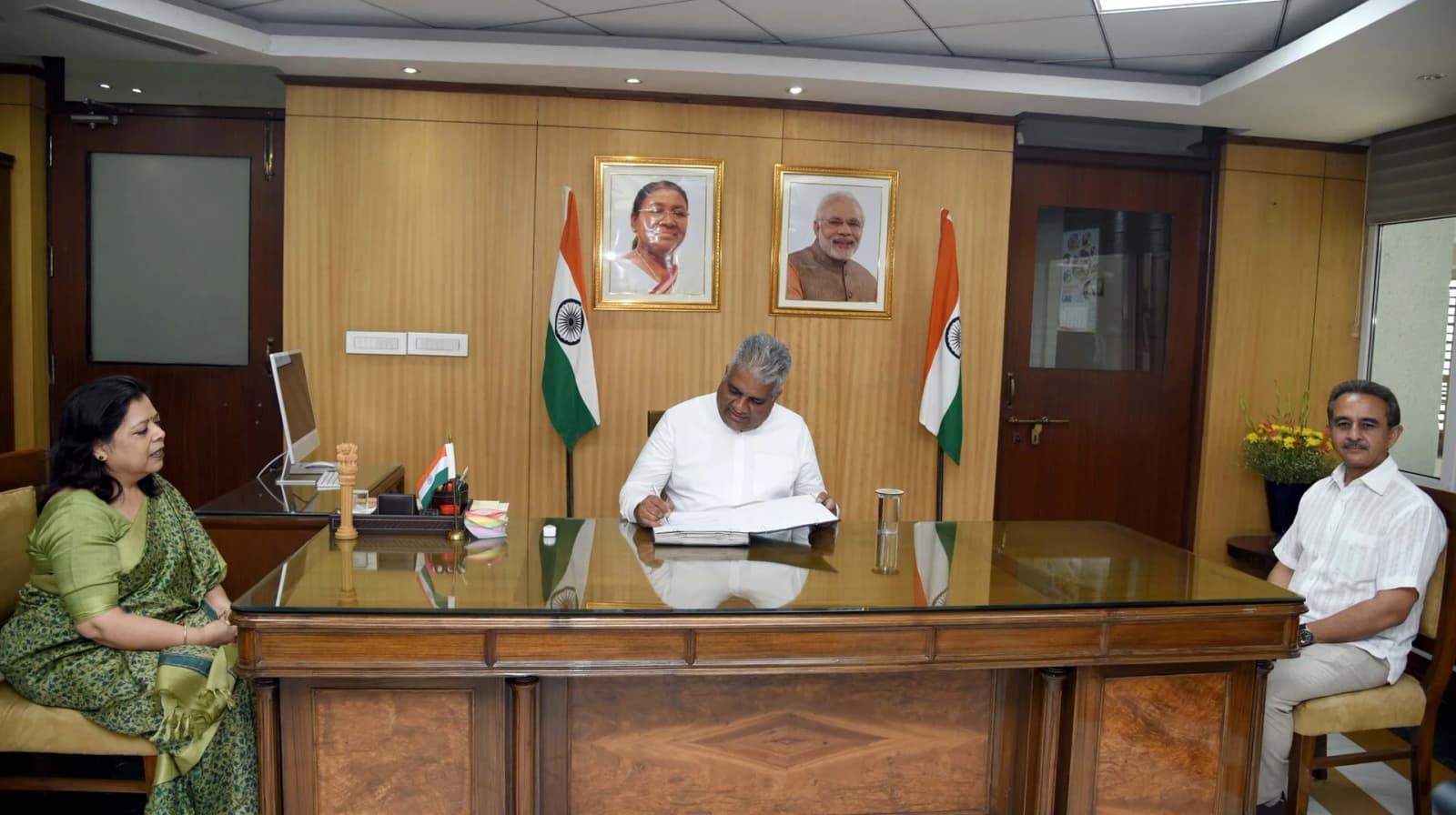
Minister of State for Housing and Urban Affairs Tokhan Sahu opened the meet on 17 November under the theme of moving from water security to ecosystem-based urban development. He urged states to pool knowledge and replicate successful ideas, saying, according to the ministry, that a solution confined to one city helps only that city, while one that is shared could transform a hundred.
Nameeta Prasad, Joint Secretary in the Environment Ministry, called the Himalayan region the water tower of Asia. She said its water crisis comes not from scarcity but from drying springs, pollution, poor infrastructure and rising urban demand, and that hill cities cannot be water-secure unless the ecosystems around them are healthy. She said the National Mission on Himalayan Studies has backed more than 255 projects, over 40 of them on water resources.
Uttarakhand's Urban Development Secretary Nitesh Jha said that as the source of the Ganga and Yamuna, the state owes a duty to every town downstream, and treats the handling of used water and faecal sludge as a commitment. He pointed to Rudrapur's faecal sludge treatment plant, the state's first standalone facility, built with NIUA's support.
Key recommendations
- Disaster risk: build risk assessments into urban planning, make critical infrastructure more resilient and adopt building practices suited to fragile slopes.
- Water: manage water beyond municipal boundaries, protect watersheds and sources, and plan water and sanitation together.
- Carrying capacity: make carrying-capacity studies part of statutory master plans, set common planning parameters across Himalayan states and factor in biodiversity and water availability in land use.
- Money: predictable fiscal transfers, separate infrastructure costing for hill cities, lifecycle financing, stronger own revenues including tourism-linked levies, and more transparent municipal budgets and audits.
Reports and initiatives launched
Ten initiatives and publications were released. They include a carrying-capacity study of Haridwar that looks at how tourism and population pressure strain civic services, and a roadmap for citywide sanitation in Darjeeling. NIUA also launched the Himalayan Urban Bio-Sheds (HUBS) initiative with the Environment Ministry, the National Mission on Himalayan Studies and the International Union for Conservation of Nature. It aims to fold water, waste and biodiversity into one planning framework and is to be piloted in three towns in Himachal Pradesh, Uttarakhand and Sikkim.
Three online courses on sanitation worker safety, inclusion, and resilient water systems went live on the National Urban Learning Platform. The results of Urban Learnathon 2.0 were also announced: of 201 entries, 84 were shortlisted and 18 solutions won awards.
What next
Closing the meet, NIUA chief adviser Rajiv Ranjan Mishra said weak institutional capacity had come up in all four sessions, and that studies such as carrying-capacity assessments must now shape real policies and projects. The HUBS pilots in the three hill states will be the first test of that approach.