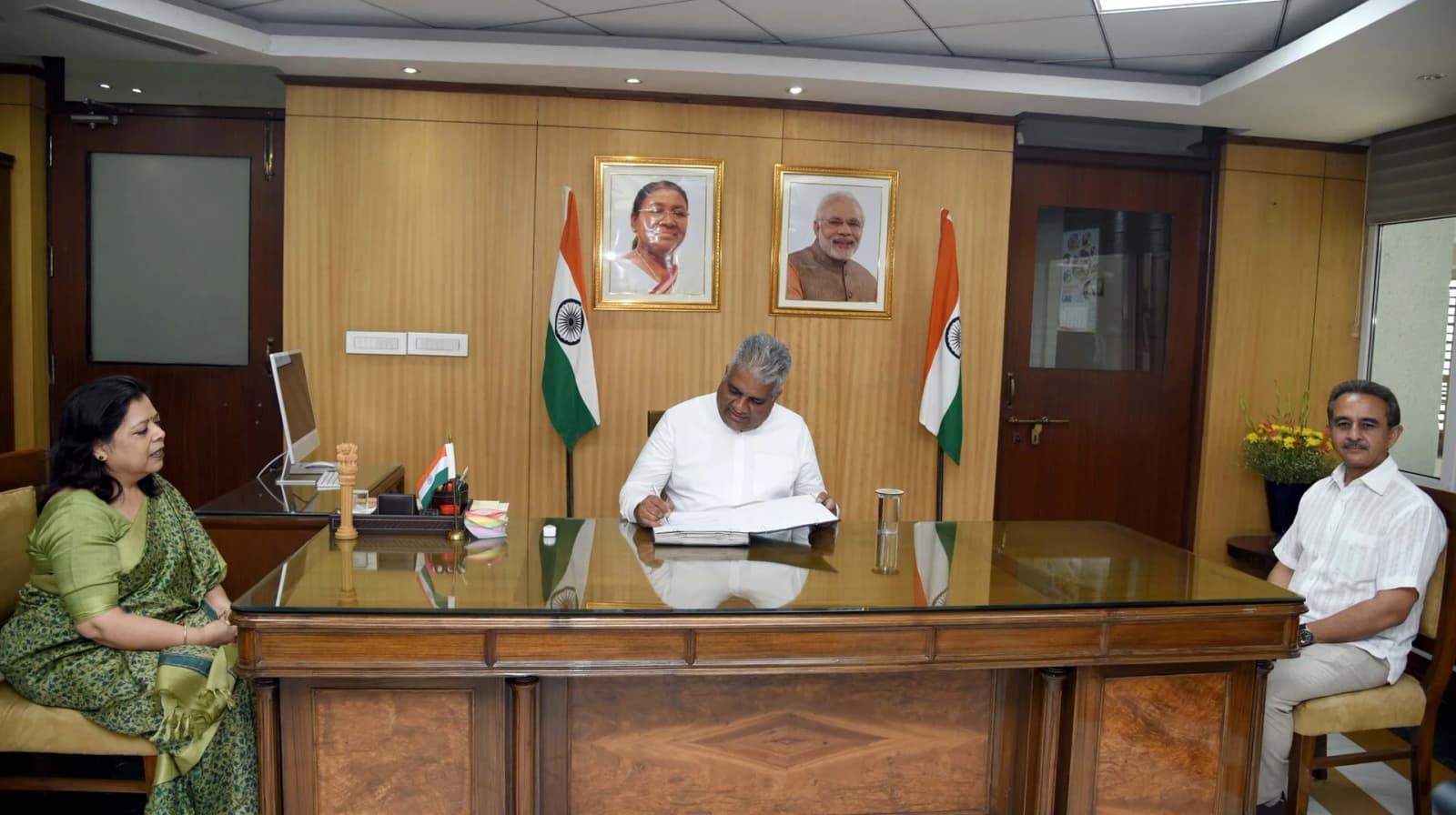
India told the UN climate summit in Antalya, Türkiye, on Wednesday, 18 November 2026, that developing countries should not be made to pay for emissions that richer nations built up over two centuries. Delivering India's national statement at COP31, Union Environment Minister Bhupender Yadav called for climate action based on equity and climate justice, and urged developed countries to deliver the climate finance they have promised.
The Environment Ministry released details of the speech through the Press Information Bureau. Later the same day, Yadav also addressed a ministerial meeting on disaster-resilient infrastructure on the summit's sidelines.
"Higher ambition" cannot mean shifting the burden
According to the ministry, Yadav said global warming is the result of about 200 years of industrialisation and economic growth in some countries, driven by unchecked greenhouse gas emissions. He called it unjustified to expect the Global South to carry the cost of those historical emissions in the name of "higher ambition".
The minister said developing countries cannot be asked to choose between acting on climate and their right to development, decent living standards, health and education. He said fair access to the world's remaining carbon budget is "non-negotiable" for India.
Yadav tied his remarks to the summit's theme of "Dialogue, Consensus and Action". He said honest dialogue, consensus built on equity, and urgent action should guide global climate efforts.
India's positions on the negotiating texts
The statement set out India's positions on several issues under negotiation. Yadav said COP decisions and how they are carried out must rest on equity and on the principle of Common but Differentiated Responsibilities and Respective Capabilities (CBDR-RC).
The ministry said Yadav made three specific points:
- The Mitigation Work Programme should stay "facilitative and non-prescriptive" and should not set targets for countries.
- The Global Stocktake should keep serving to inform countries rather than direct them.
- The Just Transition Mechanism should be anchored in equity.
He also warned against unilateral trade measures that penalise developing countries in the name of climate action. And he called on developed countries to meet their climate finance obligations honestly and without delay.
On India's own commitments, Yadav said the country's Nationally Determined Contributions (NDCs) are in line with the goal of becoming a developed nation, or Viksit Bharat, by 2047 in a sustainable way.
Push for resilient infrastructure
At a ministerial dialogue hosted by the Coalition for Disaster Resilient Infrastructure (CDRI) Yadav said climate negotiations must go hand in hand with action on the ground. The ministry said he called for affordable and sustainable finance, knowledge sharing and capacity building to help developing countries build infrastructure that can withstand disasters.
Several countries raised their own concerns at the meeting, according to the ministry. Namibia spoke about the severe toll of drought on rural livelihoods. Japan urged faster rollout of early warning systems. Trinidad and Tobago, Guatemala and Jordan stressed the need for affordable finance and better access to it.
What comes next
Yadav said COP31 should be judged by how much is actually delivered: commitments put into practice, resources reaching the countries that need them, and proven solutions scaled up. He called for dialogue to build trust, consensus to uphold equity and action to deliver climate justice.
PS · Ministry of Environment, Forest and Climate Change, GODL-India