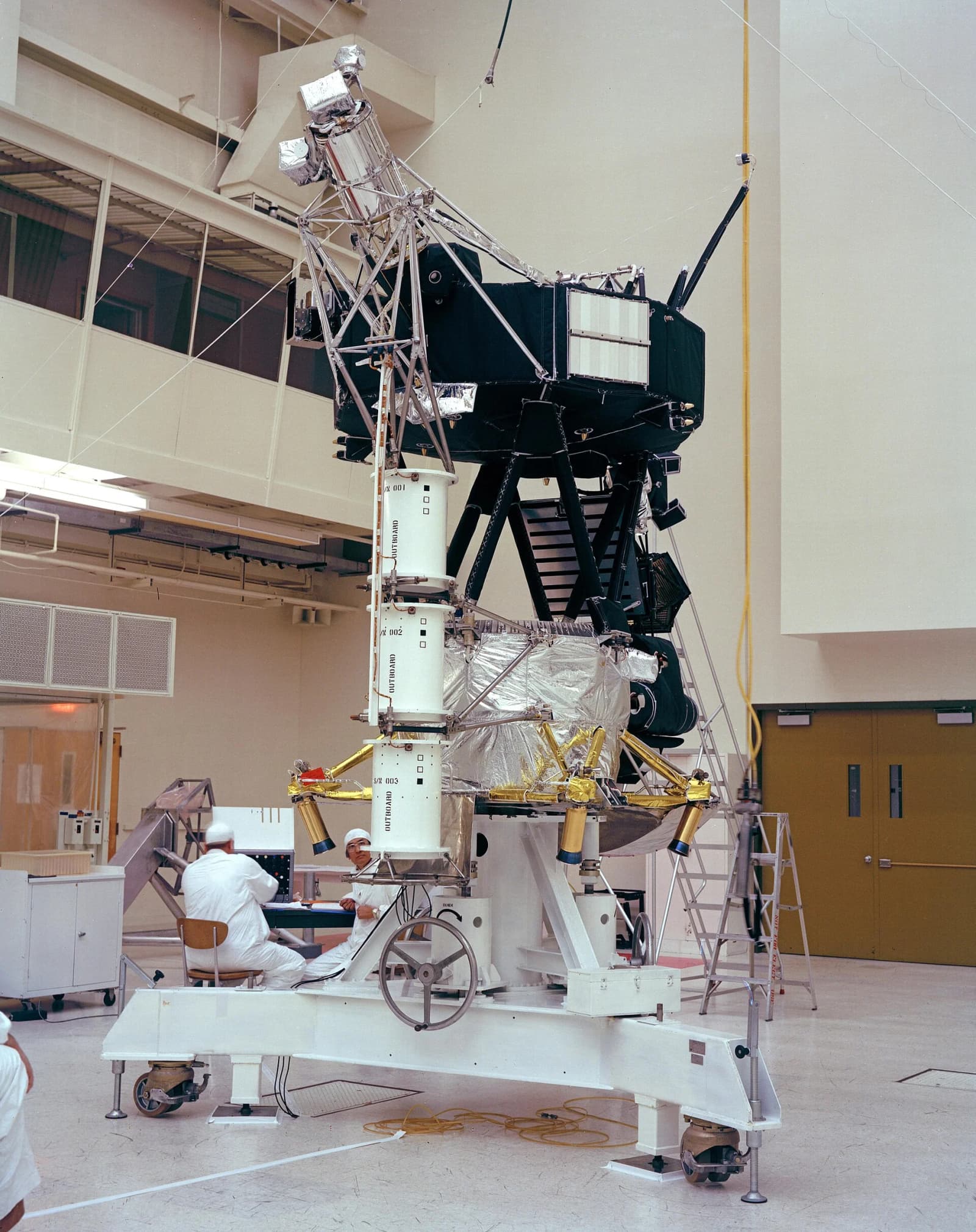
NASA's Voyager 1 spacecraft became the first human-made object to reach one light-day from Earth on Wednesday, 18 November 2026, a milestone the agency set out to confirm on Thursday, 19 November. The probe passed the mark at 10:16:07 UTC (3:46 pm IST) on 18 November, when it was expected to be about 25.9 billion kilometres away. But the celebration comes with a worry: since 14 November, Voyager 1 has been sending a radio signal home without any of its usual data. MapMyTimes reported the milestone and the data gap on 18 November. Here is what it means.
What is a light-day?
A light-day is a unit of distance, not of time: it is how far light travels in 24 hours. NASA's Voyager tracking page puts that at about 16.094 billion miles, or 25.902 billion kilometres, which is the distance Voyager 1 was expected to have reached at 2:16:07 am Pacific time on 18 November. EarthSky, a science news site, gives the same distance as 173.14 astronomical units, meaning about 173 times the average distance between Earth and the Sun.
In practical terms, a radio command sent to Voyager 1 now takes about a full day to arrive, and any reply takes about another day to come back.
Why is it in the news?
It is in the news because no spacecraft has ever been this far from Earth, and because the milestone arrived while the probe was having trouble. According to a NASA mission update dated 18 November 2026:
- On 14 November the mission team found that Voyager 1 had stopped sending science and engineering data.
- A Deep Space Network antenna in Canberra, Australia, still locked on to the spacecraft's carrier signal, but the signal carried no data.
- The carrier signal shows that the attitude-control computer is keeping the spacecraft pointed at Earth and that the antenna and transmitter are working.
- The missing data points to a possible fault in the onboard computer that collects readings from the instruments and formats them for transmission.
NASA said it would confirm the light-day milestone on 19 November using the carrier signal and trajectory calculations. It also noted that engineering problems cannot change the timing, because the spacecraft is coasting away from Earth at a steady speed on a known path.
How did Voyager 1 get this far?
Voyager 1 was launched on 5 September 1977 from Cape Canaveral, Florida, 16 days after its twin, Voyager 2, which it later overtook, the Smithsonian's National Air and Space Museum notes. Both probes now travel at roughly 56,000 kilometres per hour, according to NASA. Voyager 1 crossed the heliopause, the edge of the Sun's protective bubble of particles and magnetic fields, in 2012; Voyager 2 followed in 2018. They remain the only spacecraft operating outside that bubble.
Both carry the Golden Record, a gold-plated copper disc of greetings, music, sounds and images from Earth.
How healthy is the spacecraft?
Voyager 1 is ageing and short of power. It runs on a radioisotope thermoelectric generator, which turns heat from decaying plutonium into electricity, and both Voyagers lose about 4 watts of power a year, NASA said in April. On 17 April 2026 engineers switched off Voyager 1's Low-energy Charged Particles instrument to save power, leaving two science instruments working: one measuring magnetic fields and one measuring plasma waves.
The November data gap is not the first recent scare. NASA says contact was lost for about 48 hours in October 2026, and in 2023 a similar data problem was traced to an onboard computer and eventually worked around. Engineers are now checking whether the October and November problems are linked.
How does it affect you?
For most people, the milestone is a way to grasp the scale of space: a machine built in the 1970s is now so far away that light, the fastest thing in the universe, needs a full day to reach it. It also shows the limits of operating such missions. With a delay of about 24 hours each way, a single question-and-answer exchange with the spacecraft takes about two days, which is why NASA says diagnosing the current fault "may take weeks or longer".
What is established and what is uncertain?
- Established: Voyager 1 reached one light-day from Earth on 18 November 2026; its carrier signal is still being received; it has sent no science or engineering data since 14 November.
- Uncertain: The cause of the data loss, whether it is connected to the October outage, and whether engineers can restore data flow. NASA has not given a timeline for a fix.
What happens next?
Engineers will keep working to find the fault and decide on next steps. On distance, the next markers are already known: EarthSky lists 4 February 2027 as the date Voyager 1 will be one light-day from the Sun, and November 2035 as when Voyager 2 reaches one light-day from Earth. Voyager 1 will complete 50 years in space on 5 September 2027. NASA has said it expects eventually to lose both spacecraft to engineering problems that cannot be fixed, and plans to keep them returning science for as long as possible. Separately, NASA has also paused science on its Mars rover Perseverance and the Odyssey orbiter this week over technical faults.