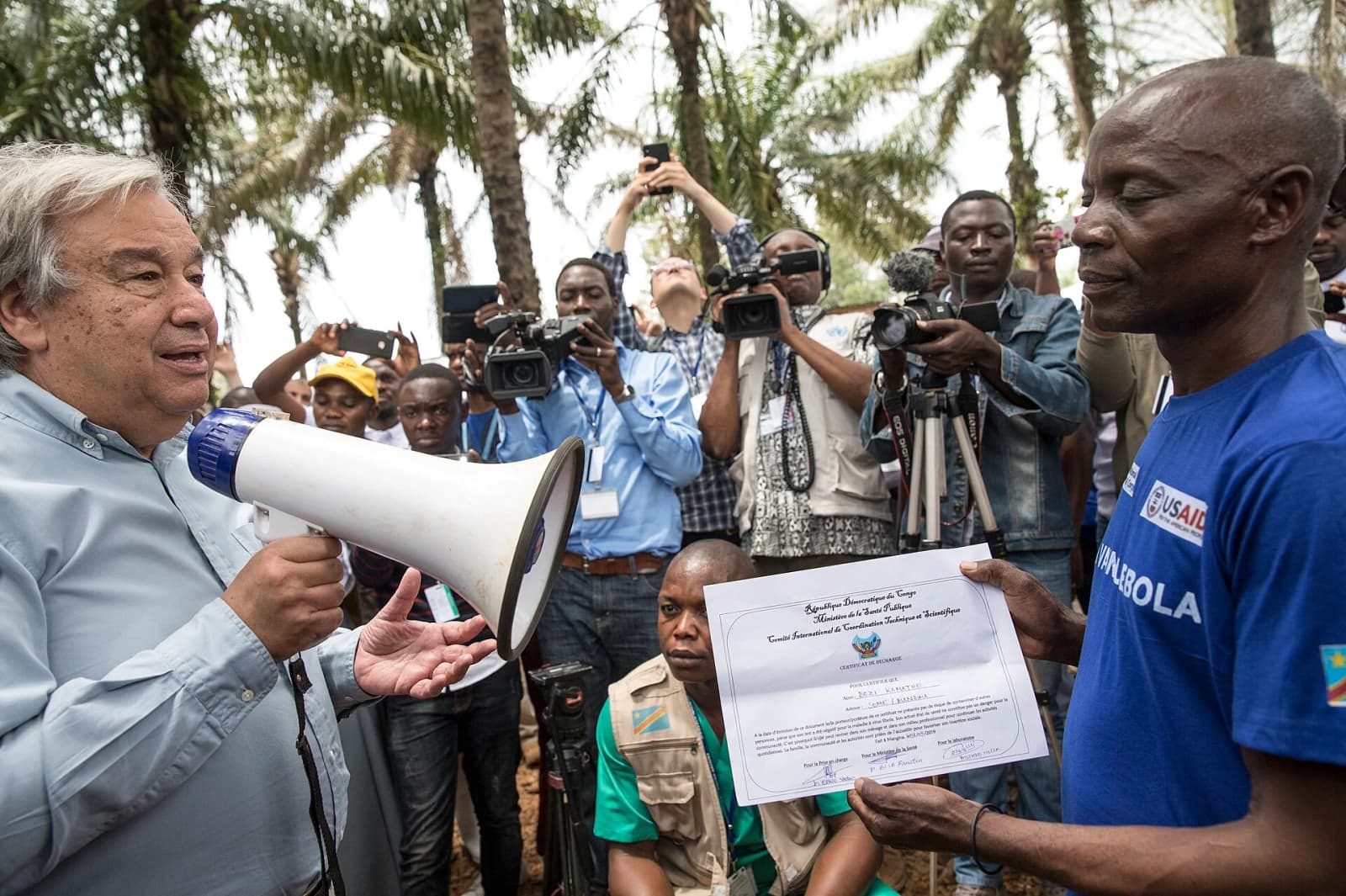
Health workers and aid partners fighting the Ebola outbreak in the Democratic Republic of the Congo (DRC) were forced to shelter inside a hospital maternity ward for more than 24 hours as heavy fighting broke out nearby in Ituri province, World Health Organization (WHO) Director-General Tedros Adhanom Ghebreyesus said on Sunday, 22 November 2026.
Ituri, in the country's north-east, is close to where the current outbreak first emerged and is described as its epicentre. Tedros said the fighting had been going on "since yesterday", meaning since Saturday, 21 November, and had disrupted the Ebola response, Al Jazeera reported, citing his post on X along with AFP and Reuters.
What did the WHO chief say?
Tedros said the clashes were putting patients, their families and health workers at "grave risk". He said the WHO was working to arrange a safe way out for its team and to protect the hospital, its staff and patients. "The best medicine is peace," he added.
The report did not name the hospital or say which armed group was involved in the latest clashes. It did not report any casualties among health staff or patients.
How big is the Ebola outbreak?
It is the DRC's largest and deadliest Ebola outbreak. As of 17 November, the WHO had counted 11,613 cases and 5,678 deaths in the country, according to the report. Ituri and neighbouring North Kivu are the worst-affected provinces.
In a statement on Saturday, the WHO said some areas had seen a slight fall in cases, but that "sustained, high-level transmission continues overall in the country". The virus spreads through contact with bodily fluids.
Why does conflict make it harder?
Violence has repeatedly cut into the response. Earlier in November, armed men believed to be linked to an affiliate of the ISIL (ISIS) group raided villages in North Kivu and killed dozens of people, and patients with confirmed and suspected Ebola fled, according to the report. Government forces are also fighting the Rwanda-backed M23 armed group, which has seized key cities in eastern DRC, making it difficult to move medical supplies to remote areas.
What happens next?
The immediate priority, according to Tedros, is getting the WHO team out safely and protecting the hospital. Whether the fighting in Ituri eases, and how long the response there stays disrupted, was not yet clear on Sunday. MapMyTimes has explained what the Bundibugyo Ebola outbreak is and what it means for India, and reported on Malawi's 21-day isolation rule for travellers from the DRC.
Photo source · MONUSCO Photos, CC BY-SA 2.0