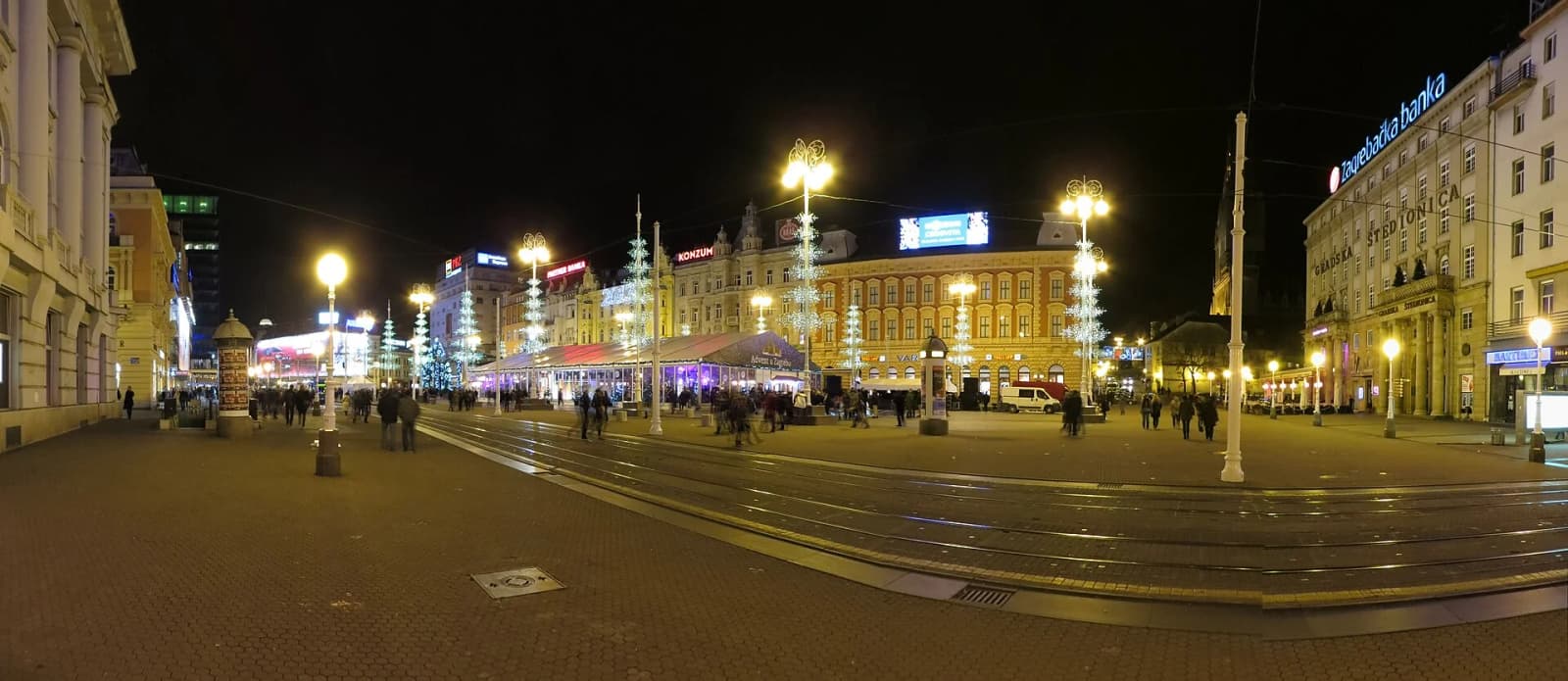
Thousands of people gathered on Ban Jelačić Square in central Zagreb on the evening of Saturday, 21 November 2026, carrying white pillows to commemorate Kristian Josip Periš, a 32-year-old patient who died in a Zagreb psychiatric clinic on 21 October and whose death has led to the detention of eight health workers. A separate gathering in Rijeka drew about 1,000 people, according to a police estimate cited by Croatian media.
The family, who registered the event as a peaceful commemorative assembly and asked that it be kept free of politics, used the slogan "Nećete nas ugušiti" ("You won't suffocate us"). They said they were coming "not with stones, but with pillows".
Why were people carrying white pillows?
The pillows refer to the allegations at the centre of the criminal investigation. Prosecutors suspect that medical technicians struck Periš while he was tied to a bed at the Sveti Ivan Clinic for Psychiatry in Zagreb's Jankomir area, and that two of them pressed a pillow over his face and neck, according to Croatian media reports. These are allegations; the autopsy found multiple injuries, but further findings are needed to establish the cause of death, and all the suspects deny wrongdoing.
What happened at the commemoration?
The programme began at 6.30pm near the Manduševac fountain, where a memorial plaque to Periš had been placed earlier in the day. His sister, Mihaela Periš, spoke through tears about his life and family. "I love you and I will always be proud to be your sister," she said. Singer Marko Kutlić told the crowd that Periš was not an isolated case, saying the family's website had received more than 1,400 messages from people describing their own or relatives' experiences. "Enough is enough! We won't stay silent anymore," he said. Periš's brother-in-law, Moreno, who opened the event, urged anyone who was afraid or in need of help to seek it.
People unable to attend were invited to hang pillowcases from balconies and windows. Similar gatherings were also organised in Split and Zadar, according to local media.
Where does the investigation stand?
A health inspection found that clinic staff had not followed the prescribed protocol during the physical restraint of Periš, according to reports. Four medical technicians were detained on 8 November on suspicion of aggravated murder. Nine days later, a doctor, two nurses and another technician were also placed in custody over concerns that they could influence witnesses; prosecutors suspect they failed to stop treatment that endangered his life. Courts have ordered pretrial detention for all eight, who deny guilt. The clinic's director, Majda Grah, resigned on 12 November, and the clinic dismissed the four technicians.
Prime Minister Andrej Plenković has described the death as a "murder", and Health Minister Irena Hrstić has said an inspection found "irregularities". Hundreds had attended an earlier, student-organised rally in Zagreb on 14 November.
What is the family asking for?
Through their lawyer, Leon Zrnić, the family has set out five demands: an explicit ban on covering a patient's face during restraint; mandatory video surveillance wherever restraint is used; questioning of every staff member who had contact with Periš; a review of sick leave taken by clinic staff after his death; and renaming the clinic after him. The family has published details on its official commemoration website, and oversight of psychiatric institutions sits with the Croatian Ministry of Health.
Why it matters
The case has become one of the most widely followed in Croatia this year, turning a single death into a national debate on patient rights and the use of coercion in psychiatric care. It is the latest of several large weekend gatherings across Europe this month, alongside cost-of-living marches in France and Portugal.
What happens next?
The criminal investigation continues, and the final cause of death has yet to be established. The family has said it will keep pressing for changes to restraint rules in psychiatric institutions.
Photo source · Branko Radovanović, CC BY-SA 3.0