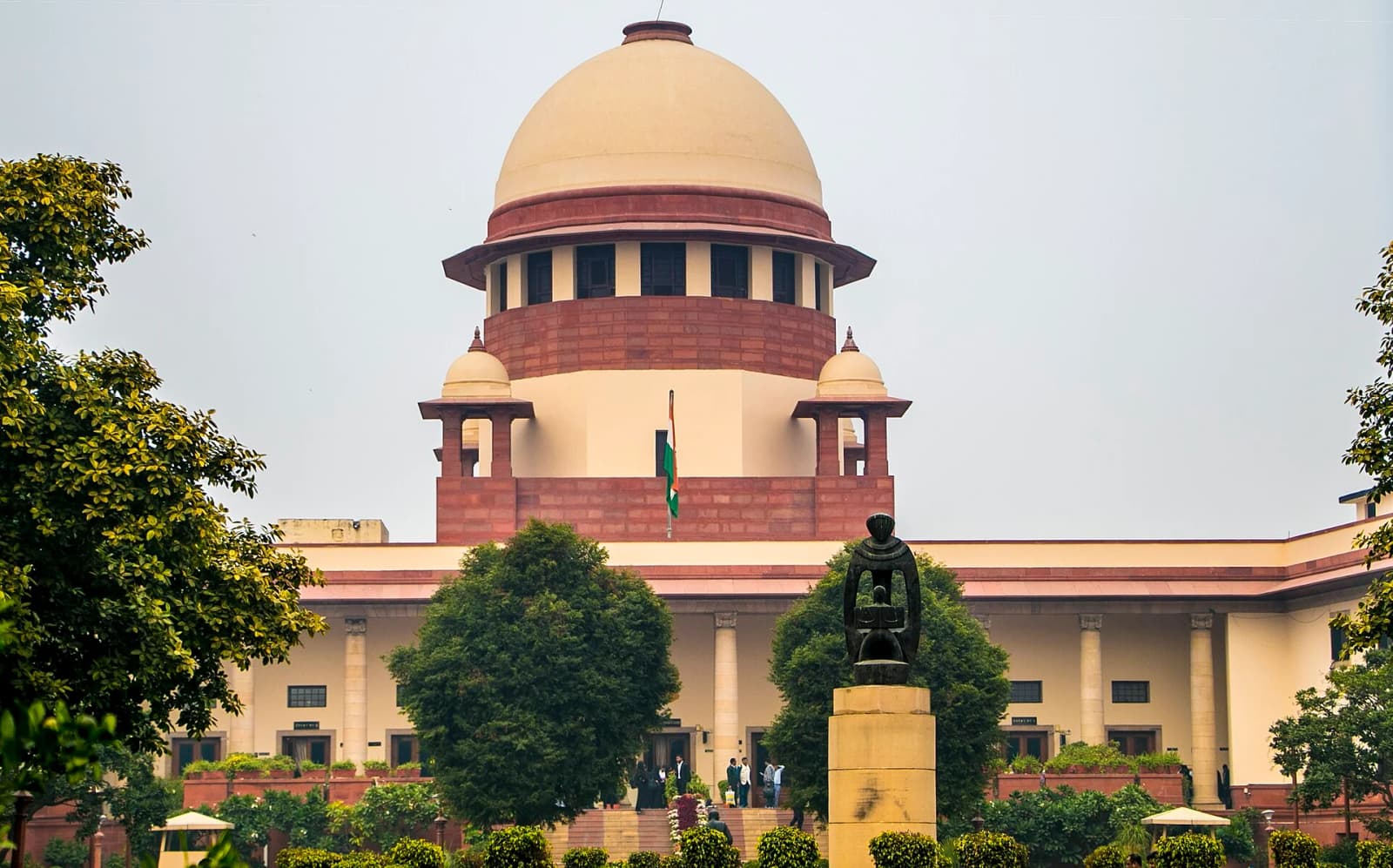
The Supreme Court of India on 23 November 2026 sharply criticised Anil Kumar, the 4th Additional Sessions Judge of Rohtas at Sasaram in Bihar, for convicting the district's then Superintendent of Police (SP) of contempt and fining the officer a symbolic Re 1. A bench of Chief Justice of India (CJI) Surya Kant, Justice Joymalya Bagchi and Justice V Mohana heard the judge's plea in New Delhi against a Patna High Court order that had questioned his conduct, LiveLaw reported.
What did the Supreme Court tell the judge?
The bench told him he had overstepped his jurisdiction and should have left the matter to the High Court. "Your understanding of law is appalling," the bench said, according to Bar and Bench, which also quoted the court as saying: "Enough of adventure. As a judge, you must know your jurisdiction." Referring to the film character, the bench asked: "Now, to become the Bahubali?"
Justice Bagchi said the judge's reading of what counts as an offence committed in the face of the court was wrong. "A failure to comply with your direction is not a crime committed in the face of the court," he said, according to LiveLaw, describing the judge's stance as "aggressive" and adding: "It would have been better if you had left it to the High Court." Justice Bagchi also suggested that the judge attend the National Judicial Academy for training in judicial propriety.
How did a sessions judge come to convict an SP?
According to Bar and Bench, the dispute began with a 2023 judgment in which the judge directed the SP to register a First Information Report against a man for allegedly giving false evidence. In August 2026, the judge initiated criminal contempt proceedings against the officer, and in September found him guilty of wilfully disobeying court directions and imposed the Re 1 fine.
LiveLaw reported that the judge had also called on the District Magistrate and the SP to appear in person, and that he treated the SP's non-appearance as an offence committed in the face of the court. In his order he also asked the Union government's personnel ministry to overhaul the training of Indian Administrative Service and Indian Police Service officers so they are better attuned to the democratic set-up, LiveLaw reported. Bar and Bench said the officer has since been posted to Saran district.
What had the Patna High Court said?
On 8 October 2026, the Patna High Court questioned the judge's conduct, described the situation as "peculiar" and "unprecedented", and directed the Principal District Judge to send a report along with the records, according to Bar and Bench. LiveLaw reported that the State's Advocate General had told the High Court there was a case for an enquiry, a remark to which the judge's counsel objected in the Supreme Court. The High Court matter is listed for 25 November.
What did the Supreme Court finally order?
The bench disposed of the plea with liberty to the judge to approach the High Court, and asked the High Court to consider his explanation-cum-apology sympathetically and close the proceedings. Justice Bagchi said the court would "lessen the pinch" of the High Court's observations, but that the judge must also "stay his hands". The reports did not say that the Supreme Court set aside the judge's conviction of the SP.
Why it matters
The bench's message, as reported, is that a trial judge faced with an officer's non-compliance should leave the matter to the High Court rather than punish the officer himself, and that judges must observe procedural discipline. On the same day, CJI Surya Kant recused himself from the Supertech homebuyers' case.
What happens next
The Patna High Court is due to take up the matter on 25 November, when it is expected to consider the judge's explanation in light of the Supreme Court's request. A written order of the Supreme Court had not been reported at the time of writing.
Photo source · Pinakpani, CC BY-SA 4.0