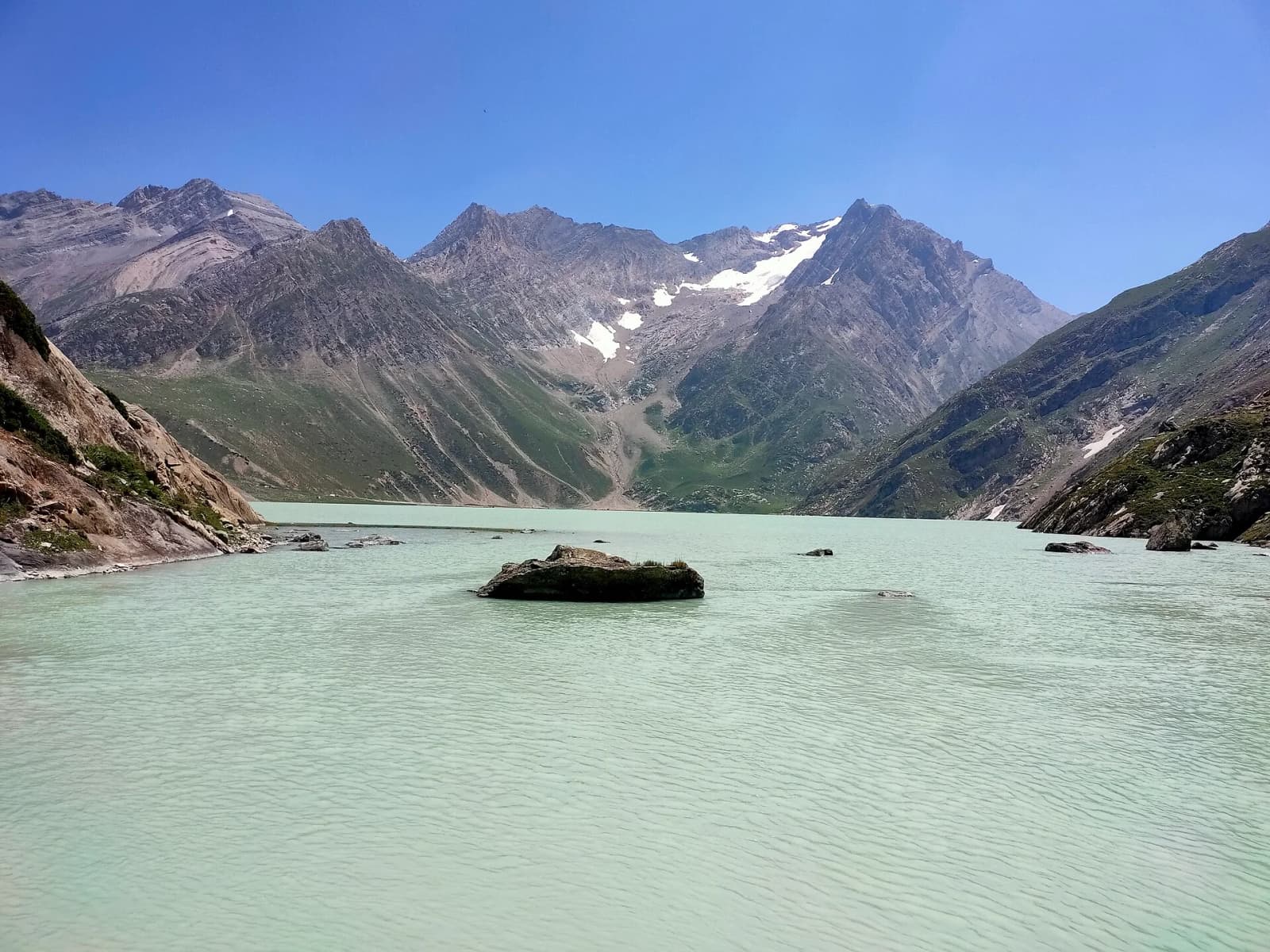
A video showing an earthmover working on the shore of Sheshnag, a high-altitude glacial lake on the Amarnath Yatra route near Pahalgam in Jammu and Kashmir's Anantnag district, drew strong criticism from opposition politicians, religious leaders and environmental activists on 23 November 2026. They said heavy machinery should not be used in such a fragile alpine area.
The video is undated. According to The Hindu, it shows an earthmover filling a site at the edge of the lake, which lies about 3,590 metres (around 11,780 feet) above sea level. The Indian Express reported that the clip appeared to have been posted by an excavator operator on Instagram and showed machines being used to make a road near the lake and dumping soil on its shore. The original post has since been deleted, but the video spread widely on social media over the past day.
What is the work at Sheshnag for?
Official sources told The Indian Express that the digging is part of widening and stabilising the existing track that links Chandanwari in Pahalgam to the Amarnath cave shrine. The newspaper said there had been no official statement from the government on why excavators were being used in the eco-sensitive zone. MapMyTimes could not independently confirm when the video was recorded or which agency is carrying out the work.
Sheshnag is a major halt for pilgrims walking to the Amarnath cave. The lake, fed by glaciers, is roughly a kilometre long and about 0.7 kilometre wide, according to both newspapers. This year's Amarnath Yatra ended on 28 August, The Hindu reported.
Who has objected, and what did they say?
Mohit Bhan, spokesperson of the opposition Peoples Democratic Party (PDP), said Sheshnag was “not just another lake” and pointed to its place in Hindu belief linked to Lord Shiva and the Amar Katha. He said development must not come at the cost of a fragile alpine ecosystem. “Faith and ecology are not competing interests. Both demand protection,” he said.
Mirwaiz Umar Farooq, the Kashmir Valley's chief cleric, called the visuals “very disturbing”. He cited retreating glaciers and recent glacier-related floods in Nepal, and said that while Kashmir has always welcomed pilgrims, better facilities should not come “at the cost of our fragile ecosystem”. He demanded that the work be stopped immediately.
Environmental activist Raja Muzaffar Bhat described the use of the machine as a “disaster” and asked how such heavy equipment had reached the region's glaciers. A Kashmir resident, Suhail Ahmed Khan, said in comments reported by The Hindu that Sheshnag is among 14 glacial lakes in Jammu and Kashmir identified as high-risk for glacial lake outburst floods (GLOFs), and that there was no transparency on environmental clearance or risk assessment. Religious leader Muhammad Sameer Shafi Siddiqui said the lake is a main source of water for the Lidder river, on which many people downstream depend for drinking water and irrigation.
Why this matters
High-altitude glacial lakes are sensitive to disturbance, and people living downstream depend on the rivers they feed. The row adds to wider debate about how to build facilities for large pilgrimages without damaging the landscapes they pass through, a question that has also come up at other pilgrim sites such as Sabarimala's Pamba river.
What is confirmed and what is not
- Confirmed: a video of an earthmover at Sheshnag lake spread on social media and drew public objections on 23 November 2026, as reported by The Hindu and The Indian Express.
- Not yet confirmed: the date of the video, the agency doing the work, whether environmental clearance was obtained, and the GLOF risk classification mentioned by a resident. The Jammu and Kashmir government had not commented publicly by Monday afternoon.
What happens next
Critics have asked the administration to stop the use of heavy machinery at the lake and explain the clearances for the work. Any official statement on the scope of the track-widening project and its environmental safeguards will be key to the next steps.
Photo source · Sauood07, CC BY-SA 4.0