The US space agency NASA said on 24 November 2026 that engineers have locked in the core design of Space Reactor-1 (SR-1) Freedom, a fission-powered spacecraft it wants to launch towards Mars in late 2028, and announced a $39.3 million contract with the Johns Hopkins University Applied Physics Laboratory (APL) in Maryland to build the system that will shed the reactor's excess heat.
According to the NASA announcement, the decisions came out of a mission design review held in October 2026 at NASA's Glenn Research Center in Cleveland, Ohio, attended by NASA, the US Department of Energy and industry experts. NASA said the review moved SR-1 from an early concept towards a defined design.
What is SR-1 Freedom?
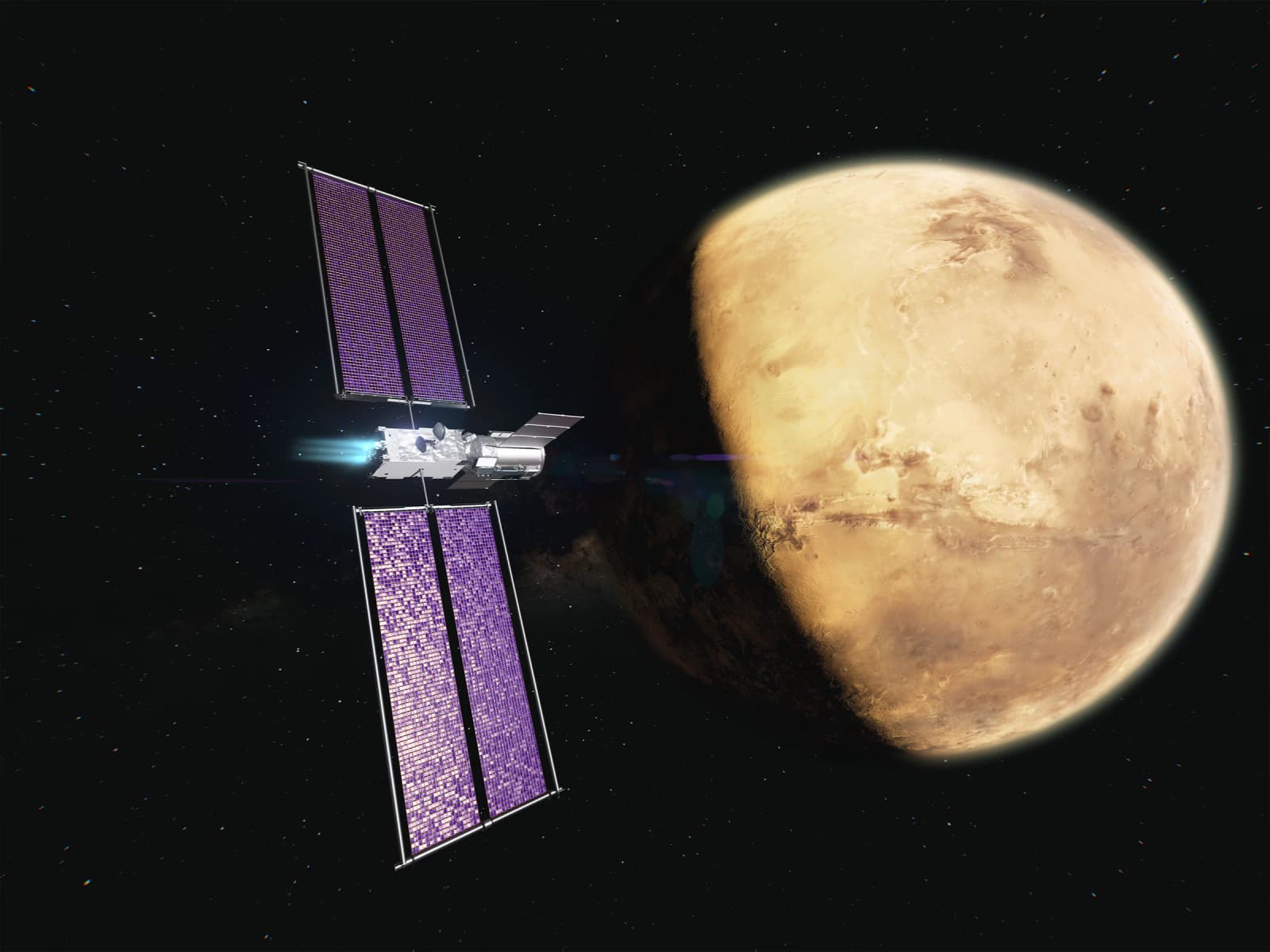
SR-1 Freedom is a spacecraft that would use a nuclear reactor for power and propulsion, and NASA describes it as the first fission-powered spacecraft designed to travel beyond Earth orbit. The agency says it is meant to demonstrate nuclear electric propulsion in deep space for the first time, while also using solar power.
The mission page says the reactor will feed a 20-kilowatt electric closed Brayton cycle power conversion system, run on High-Assay Low-Enriched Uranium, and that the spacecraft will weigh about 12,000 kilograms. Its payload, called SkyFall, is a capsule carrying three helicopters to Mars that NASA says would study Martian geology and climate history and search for signs of ice below the surface.
What did the design review decide?
The review settled three main design choices, NASA said. The boom linking the reactor to the spacecraft's main body, the Power and Propulsion Element, will be shorter than in early illustrations, cutting weight and simplifying assembly. Improved shielding will let the reactor sit closer to the rest of the spacecraft while still protecting electronics and the SkyFall payload from radiation. The communications system is also being upgraded for the trip to Mars, with larger X-band antenna dishes.
Some questions remain open. NASA said the number of radiator panels, the output power of the nuclear power module and how long the reactor will operate are still being evaluated before the final design is set.
What will the $39.3 million contract pay for?
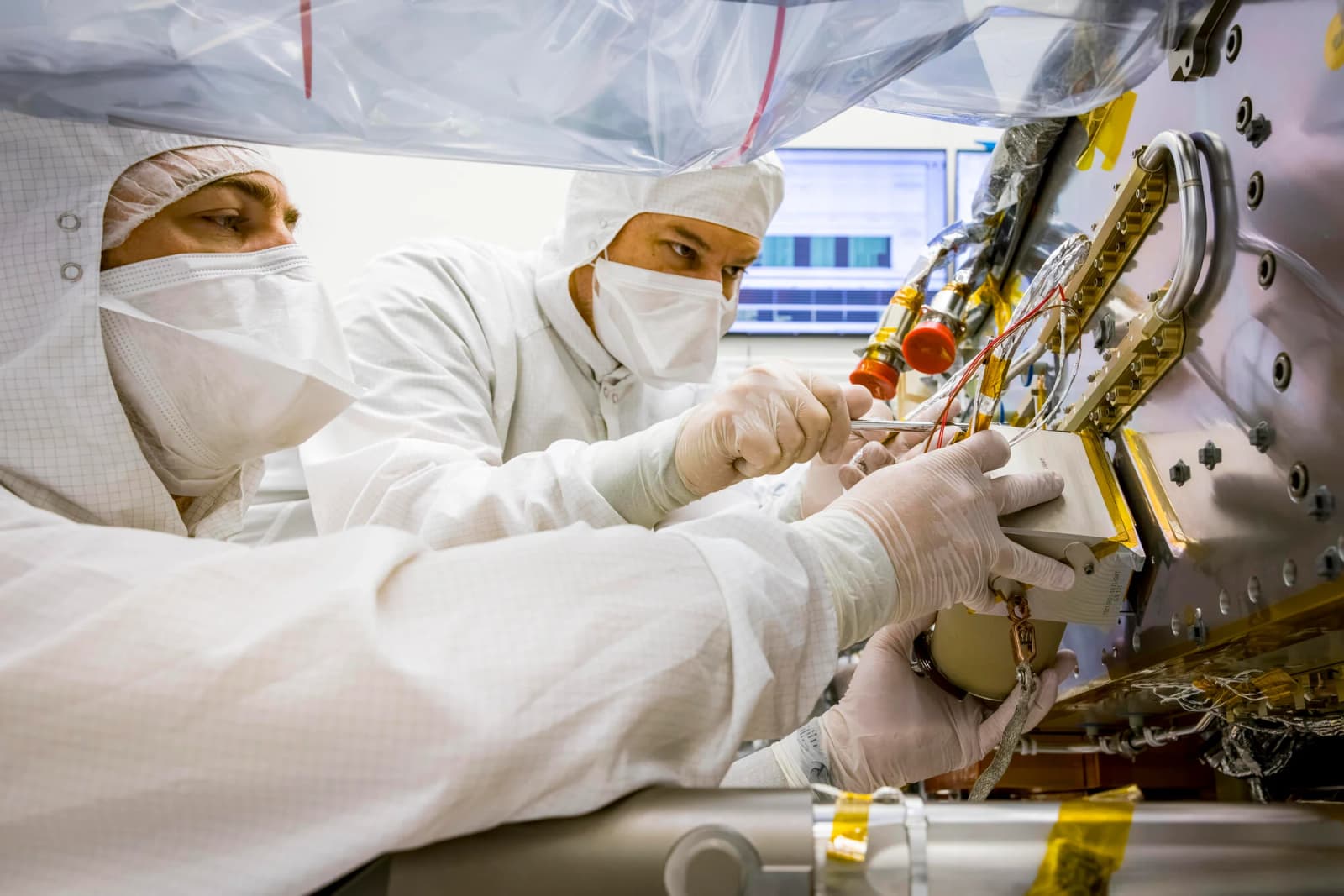
The contract pays APL to design, build, test and evaluate the heat rejection system for the nuclear power module, including flight hardware, NASA said. The system removes surplus heat so the reactor can run safely. APL's commercial partner, Advanced Cooling Technologies, will supply heat pipe and composite radiator technology. The award falls under NASA's Aerospace Research, Development, and Engineering Support II contract.
The heat rejection work adds to earlier pieces of the programme. A Glenn Research Center update published in October said Sierra Lobo Inc. will supply the power conversion system, while the Department of Energy's Idaho National Laboratory is designing and developing the reactor itself.
How will the mission fly?
NASA has outlined a staged profile. After leaving Earth orbit, SR-1 will switch on its reactor and raise power gradually, run it for an initial period, then shut it down while sending back performance data. Solar arrays will power the cruise to Mars. After delivering SkyFall into Martian orbit, the spacecraft will restart the reactor to gather more data in deep space.
"SR-1 marks a pivotal step in how we travel through the solar system," Steve Sinacore, SR-1 Freedom programme director, said in the NASA statement, adding that "the decisions we're making now are laying the tracks for every nuclear-powered spacecraft that follows."
Why does it matter?
NASA argues that future missions will need far more power than solar panels can supply, especially where sunlight is weak or absent. It says SR-1 is meant to show how fission can support long-duration missions and provide reliable surface power for its planned Moon base. The agency is separately seeking industry partners for a reactor on the lunar surface, as MapMyTimes reported on 23 November.
What happens next?
NASA said teams will finish evaluating radiator count, power output and reactor run time to fix the final design, and will keep maturing it with a focus on reducing risk and staying on schedule for the late-2028 launch. No date has been announced for the next major review.
Photo source · NASA/Jonathan North