India's space economy, worth nearly $9 billion today, could grow to $40–45 billion in less than a decade on the back of private companies, Union Minister of State (Independent Charge) for Science and Technology Dr Jitendra Singh said in New Delhi on 24 November 2026, as he urged domestic industry to step up investment in the sector.
Dr Singh, who is also Minister of State for Space and Atomic Energy, was speaking at the fifth India International Space Conclave, a two-day event organised by the Indian Space Association (ISpA) on 23–24 November, according to a Press Information Bureau release. The conclave also saw the launch of a report titled "Space Economy 2036: The India Blueprint".
What did the minister say about the space economy?
He said the sector's value was set to rise more than four-fold, from about $9 billion now to $40–45 billion, with the private sector driving the change. According to the release, he said India's space ecosystem had expanded from single-digit start-ups to nearly 400–500 companies in a few years, and credited the reforms brought in under Prime Minister Narendra Modi.
He listed the setting up of New Space India Limited (NSIL), the creation of the Indian National Space Promotion and Authorisation Centre (IN-SPACe) and the opening of the sector to private players as decisive steps. As examples of progress, he cited Skyroot's maiden launch vehicle flight on 18 July 2026, its multi-mission launch agreement and unicorn status, and Agnikul's work on propulsion, PIB said. All India Radio's news service reported the same $9 billion and $40–45 billion figures from the speech.
Why is the government asking industry to invest more?
Dr Singh called on domestic private players to scale up investment in space and asked industry leaders to help bring in more overseas money, the release said. He pointed to the Anusandhan National Research Foundation and the Research, Development and Innovation (RDI) Fund as mechanisms meant to encourage private participation in research.
He also urged companies to direct more Corporate Social Responsibility (CSR) spending towards research and scientific work rather than only machinery and infrastructure, and called for a stronger culture of "scientific philanthropy".
Space technology beyond rockets
The minister argued that the economic value of space should not be measured only by launches, satellite manufacturing and commercial revenue, but also by savings and better outcomes on the ground. Citing the PM Gati Shakti National Master Plan, he said space-based applications help improve infrastructure planning, keep projects on schedule and cut costs and leakages. He said space technology had uses across almost every ministry, including railways, defence, healthcare and education.
Answering a question on low demand for the industry, he said the problem was largely a lack of awareness about practical applications. On balancing strategic sovereignty with international cooperation, he said the two were not contradictory, and that India should strengthen indigenous capability while staying open to mutually beneficial partnerships.
He also said India had achieved 1,000 kilometres of secure quantum communication in three years under the National Quantum Mission, against an original target of 2,000 kilometres over eight years.
Who else attended?
PIB said the event was attended by Dr V. Narayanan, Chairman of the Indian Space Research Organisation (ISRO) and Secretary, Department of Space; Dr Pawan Kumar Goenka, Chairman of IN-SPACe; and Lt Gen Anil Kumar Bhatt (Retd), Director General of ISpA. According to All India Radio, Dr Narayanan said the Gaganyaan human spaceflight mission was in its final phase, with the rocket and other components ready and work on the orbital module continuing; he gave no launch date.
The conclave comes as India's private space sector gathers pace. MapMyTimes reported on 24 November that the first industry-built PSLV is due to fly in early 2027, and that Pixxel has chosen Bengaluru for a satellite factory.
What happens next?
Dr Singh said the government was open to suggestions from industry, including on spreading the space ecosystem to more states and drawing in students, and that ideas such as an international space innovation alliance could be explored.
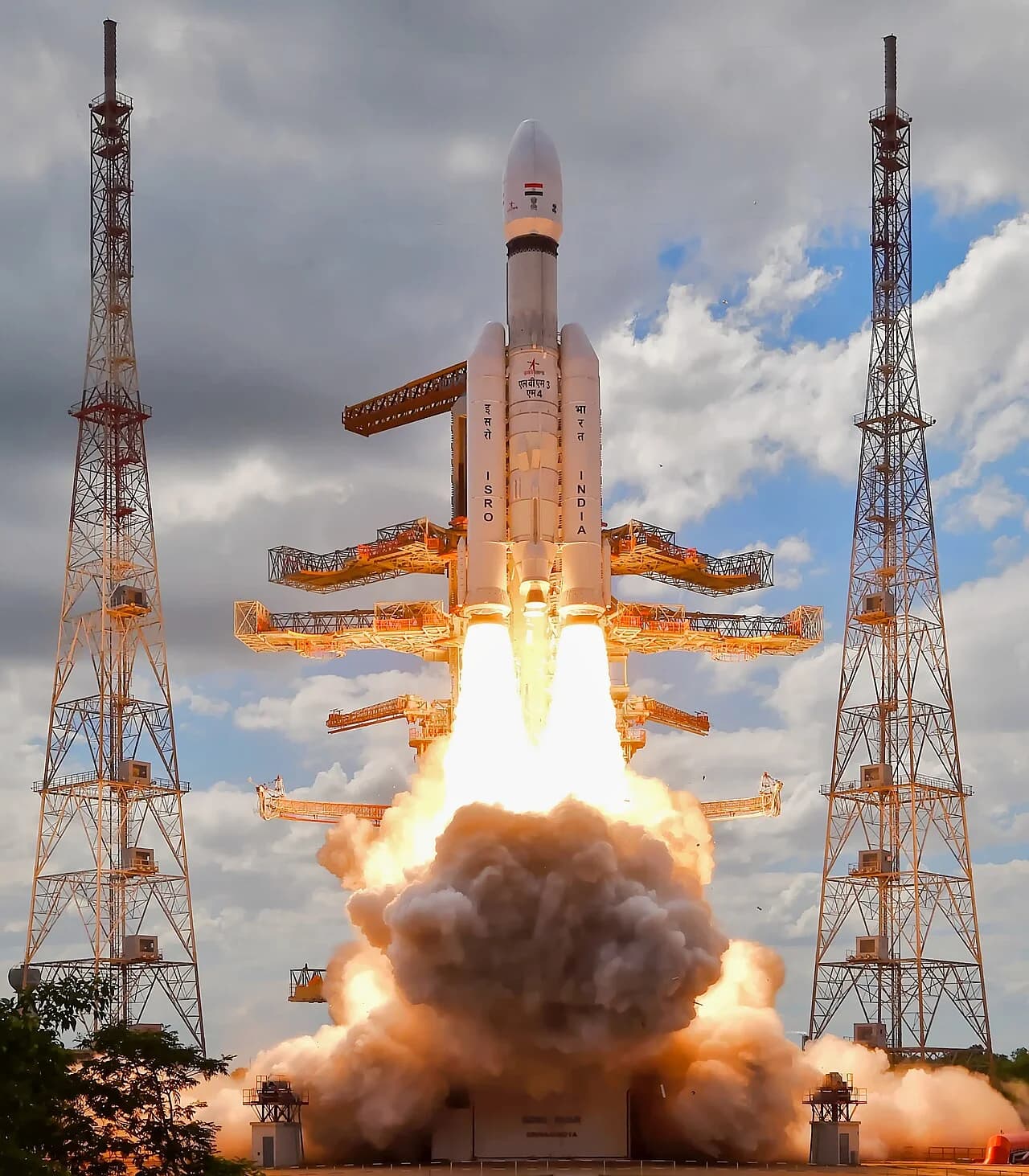
Photo source · Indian Space Research Organisation, GODL-India