The United States space agency NASA on 23 November 2026 asked industry to submit proposals to design and test Lunar Reactor-1 (LR-1), a small nuclear fission reactor intended to become the first to generate electricity on the Moon. In an announcement on its website, NASA said it wants a launch-ready system by 2030 that can run on the lunar surface for at least five years. Proposals are due by 21 December.
What is NASA asking companies to build?
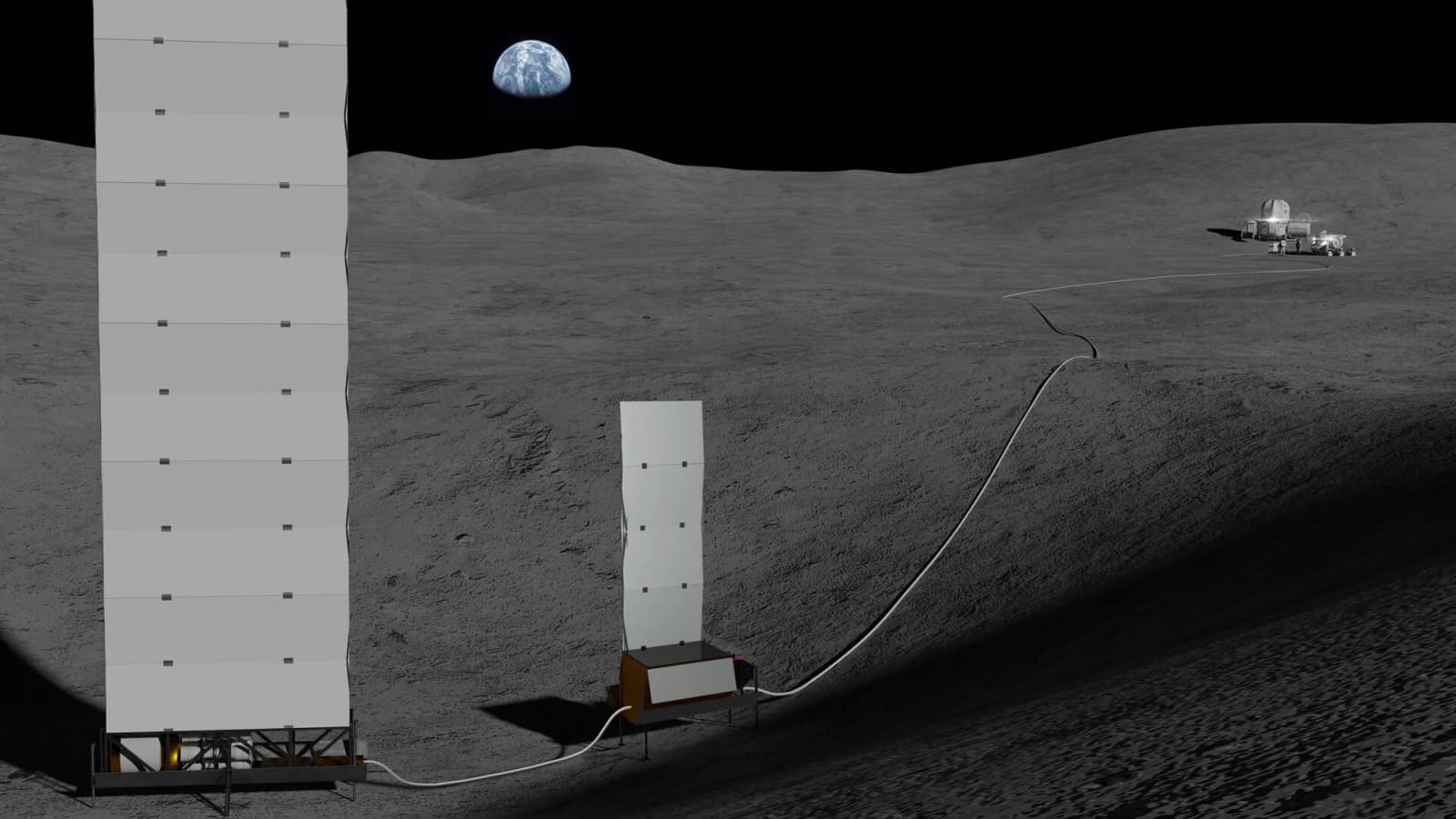
NASA wants industry partners to develop a small fission power system that produces 20 kilowatts of electricity. The agency said that is roughly enough to power about 16 average US households on Earth for a year. On the Moon, NASA said, the energy could support future habitats, communications systems, rovers, scientific instruments and other infrastructure for its planned Moon Base.
The solicitation, titled the Space Power and Reactor Capabilities Request for Proposals, is posted on the US government's SAM.gov contracting portal. NASA said it requires the reactor to meet the US Department of Energy's safety standards for nuclear operations. The agency added that while the main aim is to advance LR-1's technology, testing and flight design, it may issue further task orders for other space nuclear power systems.
The final request incorporates feedback NASA gathered after releasing a draft in August and holding an industry day in September at the Ohio Aerospace Institute in Cleveland, the agency said. NASA did not publish a budget figure for the project in its announcement.
Why does the Moon need a nuclear reactor?
A reactor can produce power without sunlight, which solar panels cannot do during the long lunar night. NASA noted that a night on the Moon lasts about 14 Earth days, and that a reactor would be especially useful at sites where sunlight is limited or absent. The agency also pointed out that dust storms on Mars can block sunlight for months, and solar power grows weaker the farther a spacecraft travels from the Sun.
"A reliable source of safe and abundant energy will be vital to future exploration of the lunar and Martian surface," said Brian Giblin, NASA's Lunar Reactor-1 program manager. He described the request as "an important step forward as NASA partners with industry to establish an enduring human presence on the lunar surface," adding that space nuclear systems "will provide continuous power to NASA assets in any environment without dependency on sunlight."
How does this fit into US space nuclear plans?
The 20-kilowatt target and 2030 date follow a White House initiative on space nuclear power announced in April 2026. Aviation Week reported on 14 April that the initiative directs NASA to develop a fission reactor producing at least 20 kilowatts and to fly a variant of it to the lunar surface by 2030, with higher-power reactors to follow in the 2030s.
LR-1 is managed by NASA's Space Reactors Division together with the Department of Energy. The same division is developing Space Reactor-1 (SR-1) Freedom, which NASA said is scheduled to launch in 2028 to deliver three SkyFall helicopters to Mars and demonstrate nuclear electric propulsion, a technology that uses reactor-generated electricity to drive a spacecraft's engines.
What is confirmed, and what is not yet known?
Confirmed so far are the reactor's power level, the 2030 launch-readiness goal, the five-year minimum operating life, the safety requirement and the 21 December proposal deadline, all stated by NASA. Not yet known are which companies will bid, how much the contracts will be worth, where on the Moon the reactor would be placed, and which rocket or lander would carry it. NASA has also not said when it will choose its partners.
Why it matters
NASA has framed steady power as essential for a base that must operate through two-week lunar nights. If its timeline holds, LR-1 would be what the agency calls the first nuclear reactor designed to provide electricity on the Moon. Whether it can be designed, tested and certified safe in the roughly four years left before 2030 will depend on the proposals that arrive by 21 December and the funding that follows.