Researchers at the National Institute of Technology (NIT) Rourkela in Odisha have developed an electrochemical process that recovers struvite, a slow-release fertiliser, from human urine without adding external magnesium salts, according to a release issued by the Press Information Bureau in Bhubaneswar on 23 November 2026. The findings have been published in the Journal of Water Process Engineering.
What did the NIT Rourkela team build?
The team built a system in which magnesium electrodes slowly dissolve as an electric current passes through urine. The magnesium ions released this way combine with nutrients already present in the urine to form struvite, a mineral that can be applied to crops as a slow-release fertiliser.
Conventional recovery of phosphorus and nitrogen from urine usually relies on chemical precipitation, which needs a steady supply of alkaline chemicals and magnesium salts, raising chemical use and running costs, the release said. The electrochemical route avoids that by generating magnesium inside the reactor.
Prof. P. Balasubramanian, Associate Professor in the Department of Biotechnology and Medical Engineering, described the process as a "chemical-free route for nutrient recovery" and said generating magnesium ions in situ made the technology "compact, modular, and well-suited for decentralised nutrient recovery".
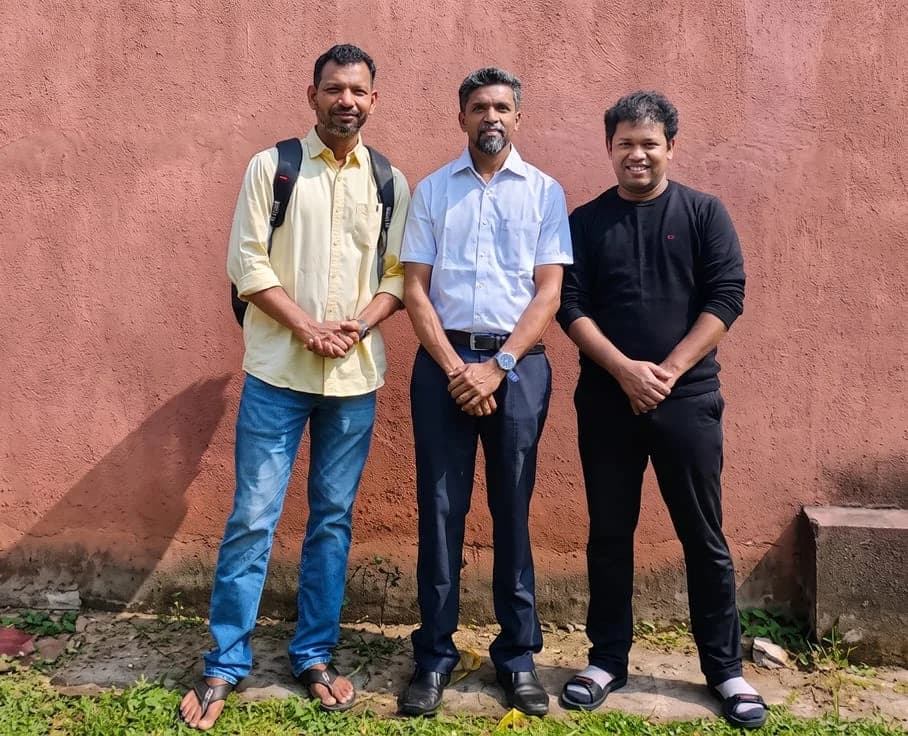
The research was co-authored by Prof. Balasubramanian and Prof. Sivaraman J., both Associate Professors, Prof. Bikash Chandra Maharaj, Assistant Professor, and research scholar Alisha Zaffar.
How well did it work?
In laboratory tests using urine collected from male urinals, the team ran two reactors with working volumes of 5 litres and 35 litres. Phosphorus recovery exceeded 98% in the smaller reactor and 91% in the scaled-up one. X-ray diffraction and Fourier-transform infrared spectroscopy confirmed the recovered material was pure struvite.
To deal with sludge building up on the electrodes, which can block current and cut efficiency, the researchers periodically reversed the direction of the current, a technique known as reverse polarisation, to clean the electrode surfaces and keep magnesium dissolving evenly.
In plant trials, struvite from the process supported the growth of basil, cowpea and okra comparably to commercially available NPK (nitrogen-phosphorus-potassium) fertilisers, according to the institute.
Is it economically viable?
Not on its own, the researchers say. Prof. Balasubramanian said their techno-economic analysis found that recovering struvite alone from a 35-litre reactor was not viable because of high operating costs, and that it had to be combined with recovery of other nutrients such as ammonium sulphate. In a scaled-up 500-litre pilot system, the integrated process showed a payback time of 6.55 years and an internal rate of return of 13%, he said.
Why it matters
Phosphorus and nitrogen are core ingredients of NPK fertilisers, whose conventional production is energy-intensive and expensive, the release noted. Turning urine into a fertiliser input could reduce dependence on industrial production while also easing wastewater management. The work adds to a run of recent Indian laboratory results on waste and pollution, including IASST Guwahati's sunlight-driven material for breaking down the pollutant pyrene.
What happens next?
The team plans to develop continuous-flow electrocoagulation systems, run field trials of struvite-based fertiliser, adapt the technology for green hydrogen recovery and carry out a full life-cycle assessment. These remain plans; no timeline for field deployment has been announced.