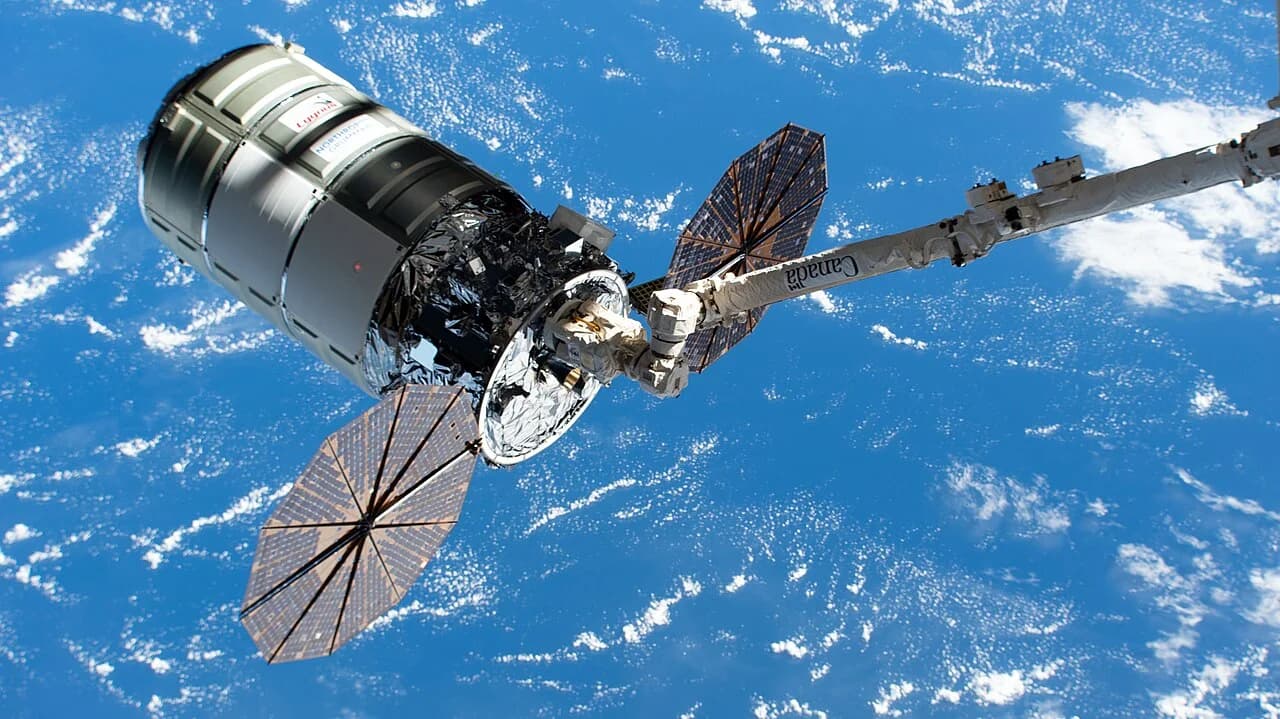
NASA, Northrop Grumman and SpaceX said on Monday, 23 November 2026, that the NG-25 Cygnus XL cargo mission to the International Space Station is on track to launch no earlier than Sunday, 29 November, at 10:47 a.m. EST (9:17 p.m. IST), from Cape Canaveral Space Force Station in Florida. Officials gave the update at a pre-launch news teleconference, reported live by Spaceflight Now.
The uncrewed spacecraft, named S.S. James 'Jim' Lovell, will ride a SpaceX Falcon 9 from Space Launch Complex 40. The first-stage booster, B1096, flying for the ninth time, is due to land back at Landing Zone 40.
What is NG-25 carrying?
NG-25 will deliver about 11,000 pounds (roughly 5,000 kg) of cargo, science experiments and hardware to the orbiting laboratory. The load includes fresh food, hatch seal covers and tools for upcoming spacewalks, according to the briefing.
Jennifer Buchli, chief scientist of NASA's Low Earth Orbit Program, outlined the science manifest. It includes a follow-up to a muscle-loss experiment first flown during Expedition 65 and a nanomedicine study aimed at cancer and osteoarthritis.
How will Cygnus reach the station?
If the launch goes ahead on 29 November, Cygnus is scheduled to arrive on Tuesday, 1 December, at 2:35 a.m. EST (1:05 p.m. IST). NASA astronauts Jessica Watkins and Luke Delaney will use the station's Canadarm robotic arm to capture the spacecraft and berth it to the Unity module. Officials said Cygnus may also carry out one or more reboosts, small engine burns that raise the station's orbit, if NASA asks for them.
Are there any concerns?
Gaurang Patel, operations integration manager for NASA's Low Earth Orbit Program, said no issues were being tracked with the spacecraft or the rocket, though the team was watching the weather. He also noted that some team members had been affected by flooding in Brevard County, Florida.
The bigger questions are about future flights. Dave Schiller, Northrop Grumman's vice president for civil space and sciences, said the company has not committed to a readiness date for its own Antares 330 rocket. "We will share any additional details about availability as they become available," he said. One Falcon 9 remains available for Cygnus, and Schiller said: "we do not anticipate a gap in any of the launch provider launch manifests for Cygnus." Repairs to the NG-22 spacecraft are continuing, with no timeline yet for its return to flight, officials said.
Why does it matter?
With Antares 330 not yet ready, Cygnus continues to depend on SpaceX rockets to reach the station. Jared Metter, SpaceX's director of flight reliability, said NG-25 is the third cargo mission to the station that SpaceX is flying, and noted that the company's CRS-35 Cargo Dragon had recently splashed down.
The briefing came in a busy stretch for launches. MapMyTimes earlier reported on SpaceX's record pad turnaround at Vandenberg and on the postponed Ariane 6 launch of Amazon Leo satellites.
What happens next?
Teams will continue preparations towards the 29 November launch window, with weather the main factor to watch. Looking further ahead, officials said the first Lunar Infrastructure Demo mission, which will use repurposed Gateway hardware, is planned for the end of 2027, with two more planned for the ends of 2028 and 2029.