SpaceX launched a batch of classified satellites for the US National Reconnaissance Office (NRO) from Vandenberg Space Force Base in California on 22 November 2026. A Falcon 9 rocket carried the NROL-136 mission off Space Launch Complex 4E at 4:23 a.m. local time (12:23 GMT, 5:53 p.m. IST). According to Spaceflight Now, the pad was turned around in record time for the base.
The NRO said on X that NROL-136 had launched at 7:23 a.m. Eastern Time from Vandenberg and called the mission a success, local broadcaster KSBY reported.
What did NROL-136 carry?
It carried an undisclosed number of satellites for the NRO's "proliferated architecture", a large constellation of smaller spy satellites in low Earth orbit. Neither the agency nor SpaceX has said how many satellites flew or what instruments they carry.
Space.com reported that the satellites were developed with SpaceX and Northrop Grumman. Citing the NRO's mission website, it said the network is meant to widen coverage and improve the "capability and resilience" of US intelligence work in space.
Spaceflight Now said NROL-136 was the 15th launch dedicated to the constellation and the fourth this year. The NRO began deploying the network in May 2024 with NROL-146. Space.com said the previous proliferated mission was NROL-179 on 19 June 2026, and that this was the sixth NRO launch of the year to low Earth orbit, all of them on Falcon 9.
How did the booster do?
The first-stage booster, B1097, was flying for the 14th time. Its earlier flights included NASA's Sentinel-6B ocean satellite, the NROL-172 and USSF-259 national security missions, the Transporter-17 rideshare and eight Starlink launches.
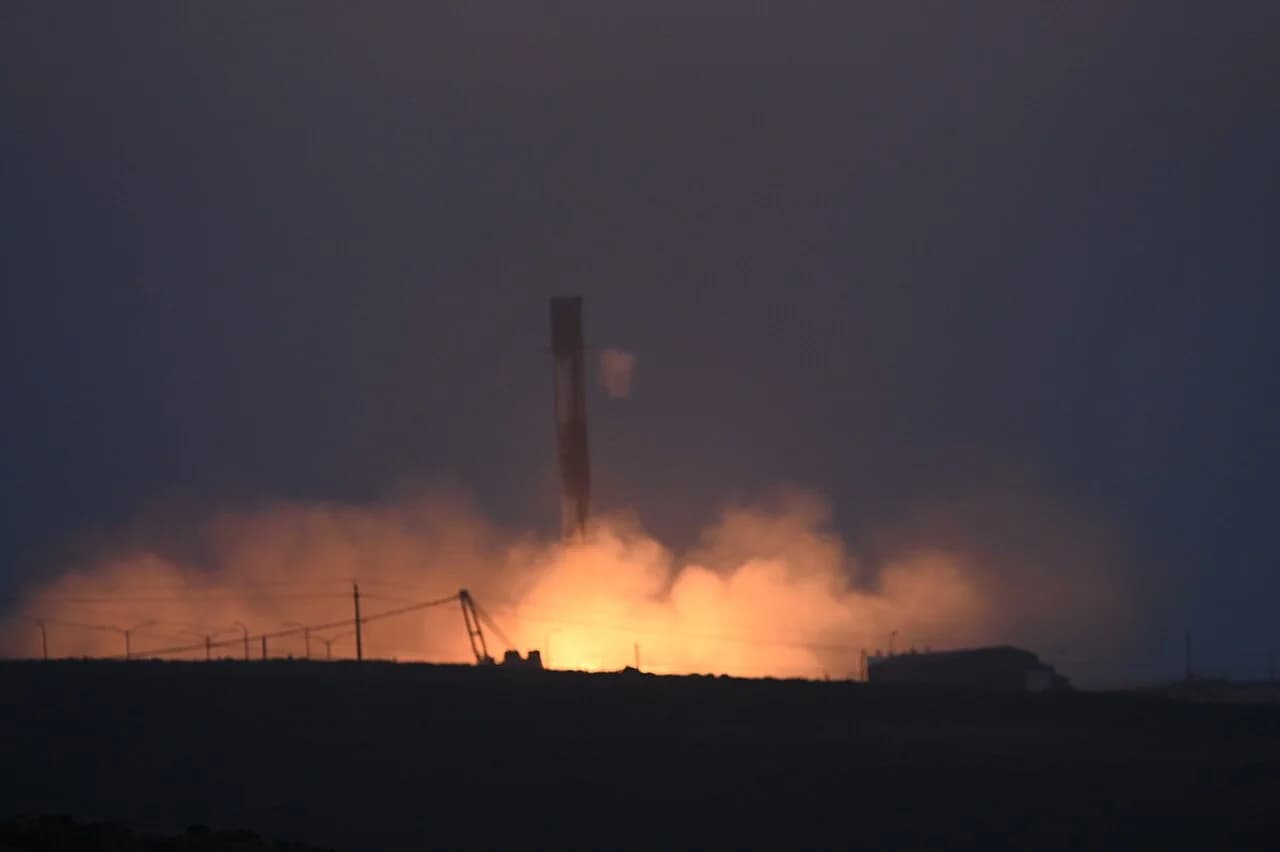
About two minutes after liftoff it separated from the upper stage and flew back to the coast. It landed at Landing Zone 4, next to the pad, roughly seven and a half minutes after launch. Spaceflight Now counted it as the 38th landing at that site and the 680th Falcon booster landing overall.
What record did Vandenberg set?
NROL-136 left the same pad that SpaceX had used for a classified US Space Force launch, USSF-317, on 21 November. Spaceflight Now put the turnaround between the two launches at 32 hours, 3 minutes and 21 seconds. That beats the Vandenberg record of 55 hours, 48 minutes and 21 seconds, set in June, by more than 23 hours.
The outlet also said the time was shorter than SpaceX's previous best for any pad, about 45 hours between two Starlink launches from Cape Canaveral in January.
Why does it matter?
Faster pad turnarounds let SpaceX fly more often from California, where missions bound for polar and other high-inclination orbits usually launch. For the NRO, each proliferated launch adds satellites to a network built to depend less on a few large, costly spacecraft. The details of what this batch will do remain classified.
Before the launch, KSBY warned residents of the Central Coast that the returning booster could cause one or more sonic booms. Local conditions decide how far such booms carry.
What next?
SpaceX has more launches lined up this week. Pre-launch schedules list another Space Force mission, USSF-266, for 24 November. The NRO has not announced the date of the next proliferated architecture launch.