The Government of Estonia decided on Thursday, 20 November 2026, to suspend all road crossings on its land border with Russia from 1 December, cutting off the main overland route used by travellers between the two countries. The suspension covers the movement of people and vehicles at the five road checkpoints of Narva-1, Narva-2, Koidula, Luhamaa and Saatse, and will be reviewed after six months, according to the Estonian Ministry of Foreign Affairs.
The ministry said rail freight is not covered by the new restriction and will continue under existing arrangements, subject to strict customs checks. On 21 November, Euronews reported that residents on both sides were hurrying to cross before the deadline.
Who is affected by Estonia's border closure?
Anyone planning to travel by road or on foot between Estonia and Russia will be affected from 1 December. Euronews, citing Estonian broadcaster ERR, reported that annual crossings had fallen from more than 4 million before 2022 to about 760,000 in 2026, with the Narva–Ivangorod crossing accounting for about 447,000 of them, according to AFP.
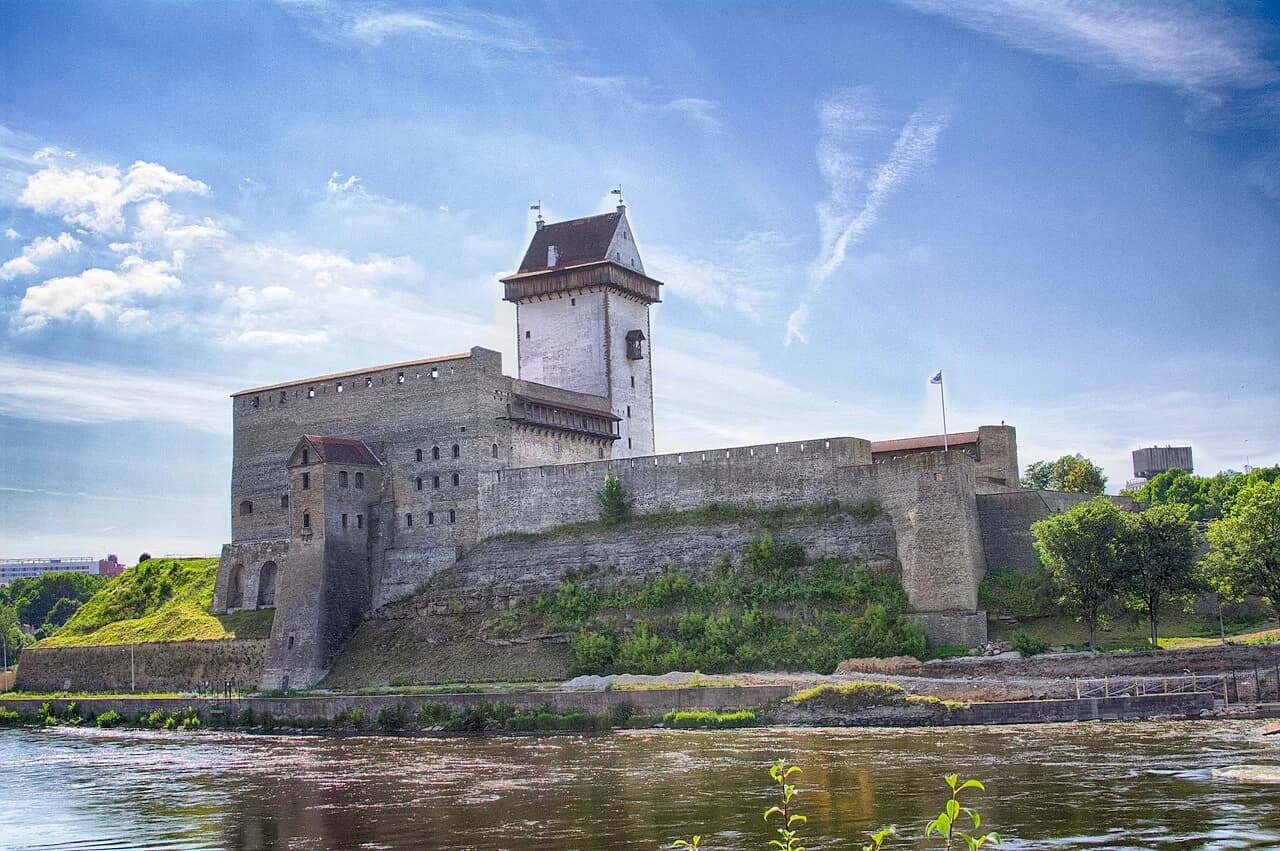
Narva, a city of more than 50,000 people, sits on the River Narva directly opposite the Russian town of Ivangorod. Russia had already suspended vehicle traffic through the Narva crossing in February 2024, but pedestrians were still able to cross there until now.
Why did Estonia close the crossings?
Estonia says the closure is a response to what it calls Russia's continued hostile activities against Estonia and Europe. The foreign ministry cited Russia's war against Ukraine, more frequent sabotage and hybrid operations in Europe, and sabotage attacks on Estonian defence companies that it says were organised by Russian intelligence services.
Foreign Minister Margus Tsahkna said the decision was "not a reaction to a single incident" and that "Estonia cannot allow Russia to use cross-border movement to recruit and influence people." He added that closing the border "will not eliminate all threats originating from Russia".
The decision follows an attempted arson attack on the night of 14 November at the premises of drone maker Threod Systems in Viimsi, near Tallinn. Euronews reported that eight people from Latvia were detained and that Estonia's Internal Security Service has said Russia's military intelligence agency, the GRU, was behind it. Those allegations have not been tested in court. Prime Minister Kristen Michal said Estonia would not let Russia exploit its openness, Euronews reported.
How has Russia responded?
Moscow has denied involvement in the sabotage attacks. Kremlin spokesman Dmitry Peskov called the allegations unfounded, while Russian Foreign Ministry spokeswoman Maria Zakharova accused Estonia of infringing the rights of Russian citizens and threatened political and diplomatic countermeasures, according to Euronews.
What should travellers do now?
Estonia's foreign ministry strongly advises its citizens against travelling to Russia and has urged Estonians already there to plan their return well in advance, warning that the remaining open routes may be much longer and more expensive. Euronews reported that travellers will mostly have to go through neighbouring countries, mainly Latvia, and that for people without cars, flying may be the only practical option.
In Narva, Mayor Jaan Toots has asked the national government to consider humanitarian exemptions so residents can visit elderly relatives, attend funerals or deal with urgent family matters, and has warned of losses for local hotels, restaurants and shops, Euronews reported. The government has not announced any such exemptions so far.
Is this part of a wider pattern?
Yes. Finland closed its land border with Russia in December 2023, and Latvia, Lithuania and Poland have sharply restricted crossings on their eastern borders in recent years, according to Euronews. Tension in the Baltic region has stayed high this month: on 21 November, drones struck a sanctioned Russian cargo ship in the Gulf of Finland, as MapMyTimes reported, and a Russian missile came down in eastern Poland during an attack on Ukraine, as reported earlier.
What happens next?
The road crossings are due to close on 1 December. The Estonian government says it will review the security situation and the impact of the measure after six months and then decide whether to extend or change it.
Photo source · Andrey Korchagin, CC BY-SA 2.0