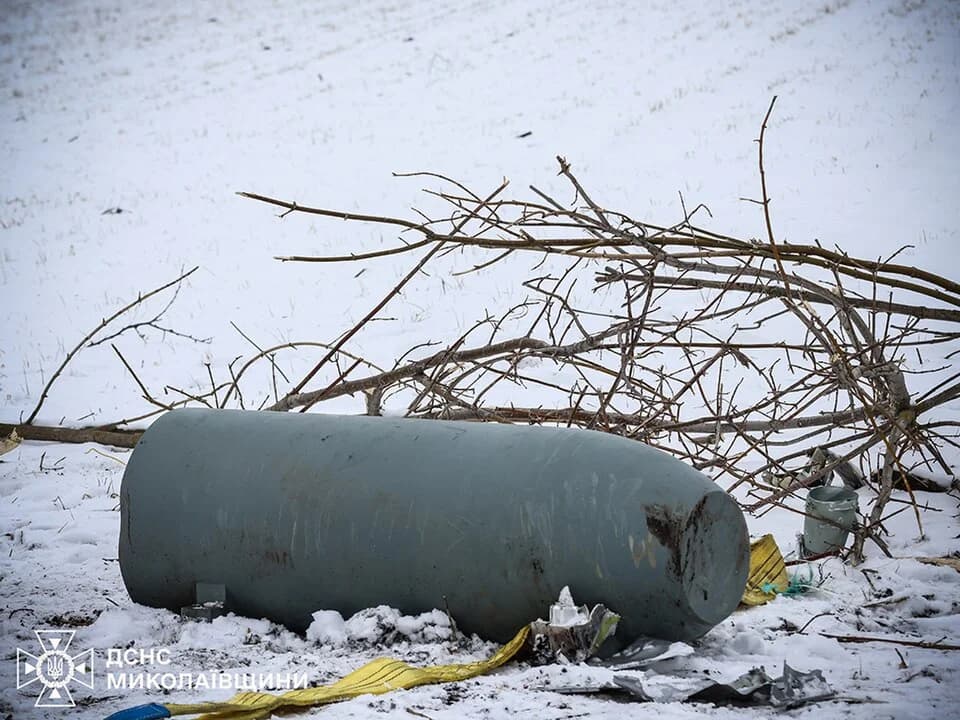
Poland said two Russian missiles and what was probably a jet-powered drone came down on its territory early on Friday, 20 November 2026, during a large Russian air attack on neighbouring Ukraine. Prime Minister Donald Tusk called it an apparently "intentional provocation", noting that the objects fell not far from where European troops had gathered for military drills in support of Kyiv. Nobody was hurt.
Where did the missiles land?
A Russian Kh-101 cruise missile came down in a field at the village of Nowy Lipowiec in eastern Poland, about 60 km from the Ukrainian border, leaving a burning crater several hundred metres from buildings, Notes from Poland reported, citing Defence Minister Kosiniak-Kamysz. A second missile fell at Rudnik nad Sanem, and the likely drone struck the village of Mołodycz.
A local woman told broadcaster TVN that her "whole house shook" at about 6:30 am. Local official Andrzej Szarlip said the missile landed "very close to buildings" but caused no injuries or material damage. Polish authorities reported no damage to critical infrastructure. Poland's Armed Forces Operational Command said it had activated the necessary forces in response to the Russian strikes on Ukraine.
Why does Warsaw see it as deliberate?
Thousands of European soldiers were in south-eastern Poland for the first exercise of a new multinational force being set up by the "Coalition of the Willing" to support Ukraine, with several European defence ministers attending, according to France 24. Tusk said three Russian objects had violated Polish airspace, one of them exploding, and that they fell close to the training area at Nowa Dęba. Nowy Lipowiec is roughly a 90-minute drive from the drills.
"It does seem that we're dealing with an intentional provocation," Tusk said, describing the day as "another instalment in the Russian escalation". Kosiniak-Kamysz said the timing was "no coincidence". Tusk added that Poland would give the United States access to the debris, though he said he did not "always agree with the interpretation of the US side".
How did NATO and Europe respond?
NATO Secretary General Mark Rutte spoke to Tusk about what he called "grave violations of Polish airspace overnight", said NATO jets had been scrambled and described the incident as "clearly dangerous". Tusk said Rutte would be in Warsaw on Saturday, 21 November. The European Union said it stood in "full solidarity" with Poland, Germany called the incident "yet another example of Russia's ongoing provocations", and the French presidency called it a "serious incident". The Kremlin had not commented when France 24 published its report.
What else happened in Ukraine overnight?
The missiles strayed into Poland as Russian strikes killed at least eight people in Ukraine, France 24 reported. The attack came a day after Russian President Vladimir Putin met US President Donald Trump and Chinese President Xi Jinping. Poland is one of five European countries chosen to represent Europe in future US-led talks on Ukraine.
Has this happened before?
Poland has repeatedly reported stray projectiles since Russia's full-scale invasion of Ukraine. According to Notes from Poland, a Kh-101 of the same type exploded in eastern Poland in July 2026, and in September 2026 a jet-powered drone hit a Kyiv–Warsaw passenger train near the border. In September 2025, about 20 Russian drones crossed into Poland, leading Warsaw to invoke NATO's Article 4 consultations. In November 2022, two people were killed when a missile, later found to be a Ukrainian air-defence missile, struck Polish territory.
Other European states on Russia's border have also hardened their stance this week. MapMyTimes reported that Estonia will close all road crossings with Russia for six months and that Denmark expelled Russia's defence attaché.
What happens next?
Rutte is due in Warsaw on Saturday, and Poland has said it will share the missile debris with the United States. Poland has not announced whether it will seek formal NATO consultations over this incident.
Photo source · State Emergency Service of Ukraine, CC BY 4.0