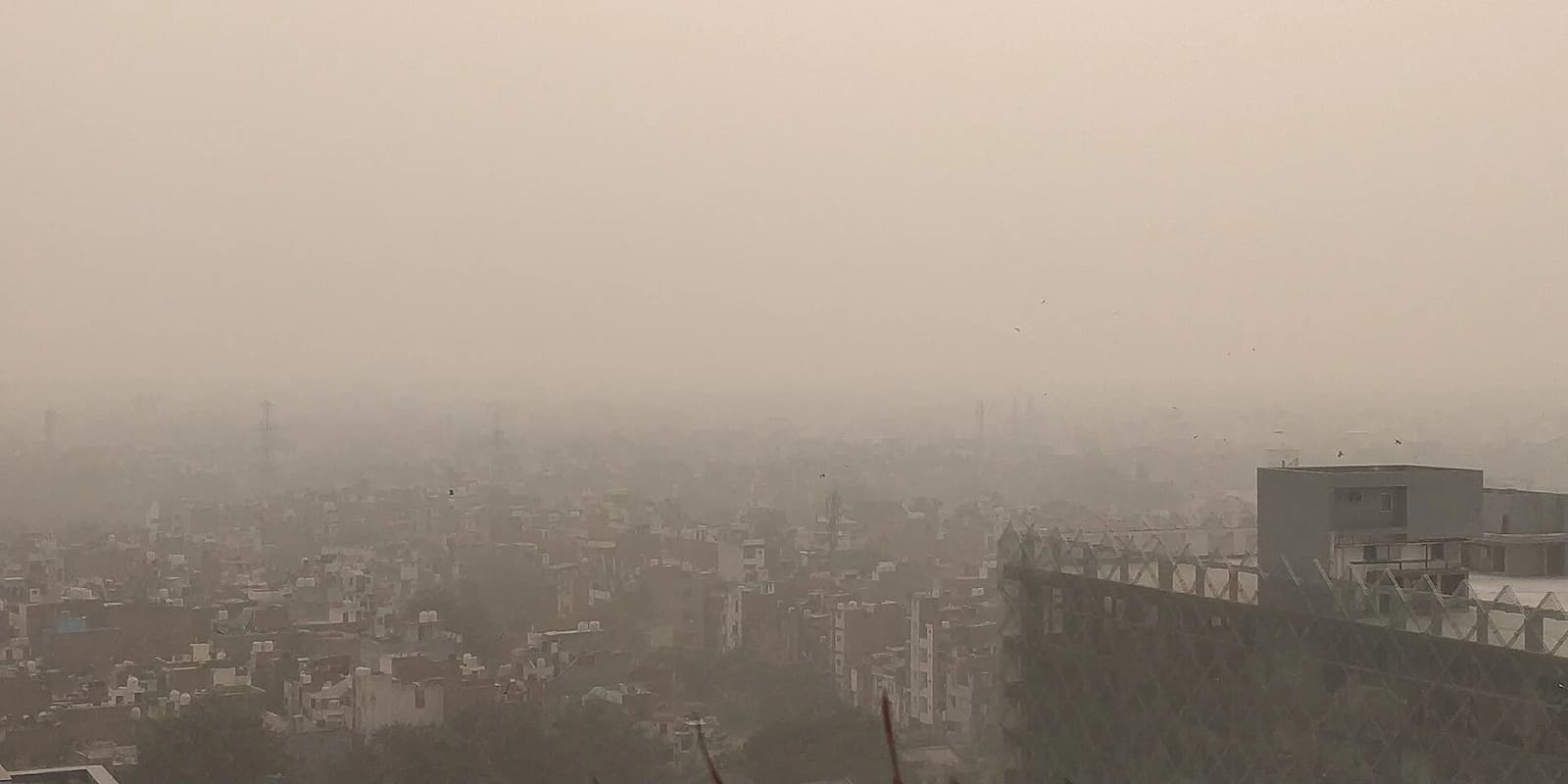
Delhi's air stayed in the 'poor' category on 20 November 2026, and the government's air quality forecasting system expects it to turn 'very poor' on Sunday, 22 November. The Air Quality Early Warning System for Delhi, run by the Indian Institute of Tropical Meteorology (IITM) under the Ministry of Earth Sciences, showed a city AQI of 268 at 9 pm on Friday.
The forecast comes on the last scheduled day of curbs on construction and on office attendance that the Commission for Air Quality Management (CAQM) ordered on 30 October.
How bad was the air in Delhi on Friday?
It was 'poor' overall, with pockets of 'very poor'. Business Standard, citing real-time Central Pollution Control Board (CPCB) data, reported a city-level Air Quality Index (AQI) of 269 at 8 am, with PM2.5 as the main pollutant. Of the 57 monitoring stations that reported valid readings, 53 were above 200 and 14 were in the 'very poor' band (301 to 400). None reached 'severe'.
The worst readings were at Sirifort (348), Jawaharlal Nehru University (336), Pusa (335), Burari Crossing (333) and Chandni Chowk (330). Lodhi Road had the cleanest air, at 162 ('moderate'). In the National Capital Region, Gurugram recorded 291, Greater Noida 236 and Noida 226. Faridabad was 'moderate' at 165.
The air had worsened on Thursday. According to a news agency IANS report, the CPCB's 4 pm daily average rose by 48 points, from 232 to 280, and 16 stations were in the 'very poor' category. The India Meteorological Department (IMD) recorded a minimum of 10.6 degrees Celsius at Safdarjung on Thursday. That was the lowest of the season so far and 1.7 degrees below normal.
What does the forecast say for the weekend?
The Air Quality Early Warning System bulletin forecasts 'poor' air on Saturday, 'very poor' on Sunday and a return to 'poor' on Monday, 23 November. It rates conditions as unfavourable for pollutants to disperse from Friday to Sunday, with light winds of up to 10 to 12 km/h. Minimum temperatures are forecast at 11 to 15 degrees Celsius.
The system's citizen advisory says people with heart or lung disease, older adults and children face greater risk from particle pollution in this range.
Which restrictions are in force?
Stages I and II of the Graded Response Action Plan (GRAP) remain in force across Delhi-NCR. The CAQM revoked the tougher Stage III measures on 17 November after air quality improved.
The CAQM issued separate directions on 30 October under Section 12 of the CAQM Act, 2021, reported the Millennium Post. They capped physical attendance at government and private offices at 50 per cent in Delhi, Gurugram, Faridabad, Sonipat, Ghaziabad and Gautam Buddha Nagar, and halted dust-generating demolition and outdoor construction across the NCR. Both ran from 5 November to 20 November. Railway, Metro, airport, inter-state bus terminal, hospital, water supply, sanitation, defence and national-importance projects were exempt from the construction halt.
What is not yet confirmed?
As of Friday evening, MapMyTimes had found no public order from the CAQM extending the 30 October directions beyond 20 November. It is also unclear whether a 'very poor' Sunday would lead the commission to bring back Stage III measures, which are tied to AQI levels.
The Union Environment Minister, Bhupender Yadav, had ordered zero tolerance on pollution violations in Delhi-NCR this week. The IMD has also warned of dense fog in Delhi and neighbouring states from 20 to 22 November.
Why it matters
A 'very poor' AQI means prolonged exposure is likely to cause breathing difficulty for many people, according to the CPCB's index bands. Elderly residents, children and people with heart or lung conditions should limit strenuous outdoor activity over the weekend, especially in the early morning when calm winds and fog trap pollutants close to the ground.
Photo source · Prami.ap90, CC BY-SA 4.0