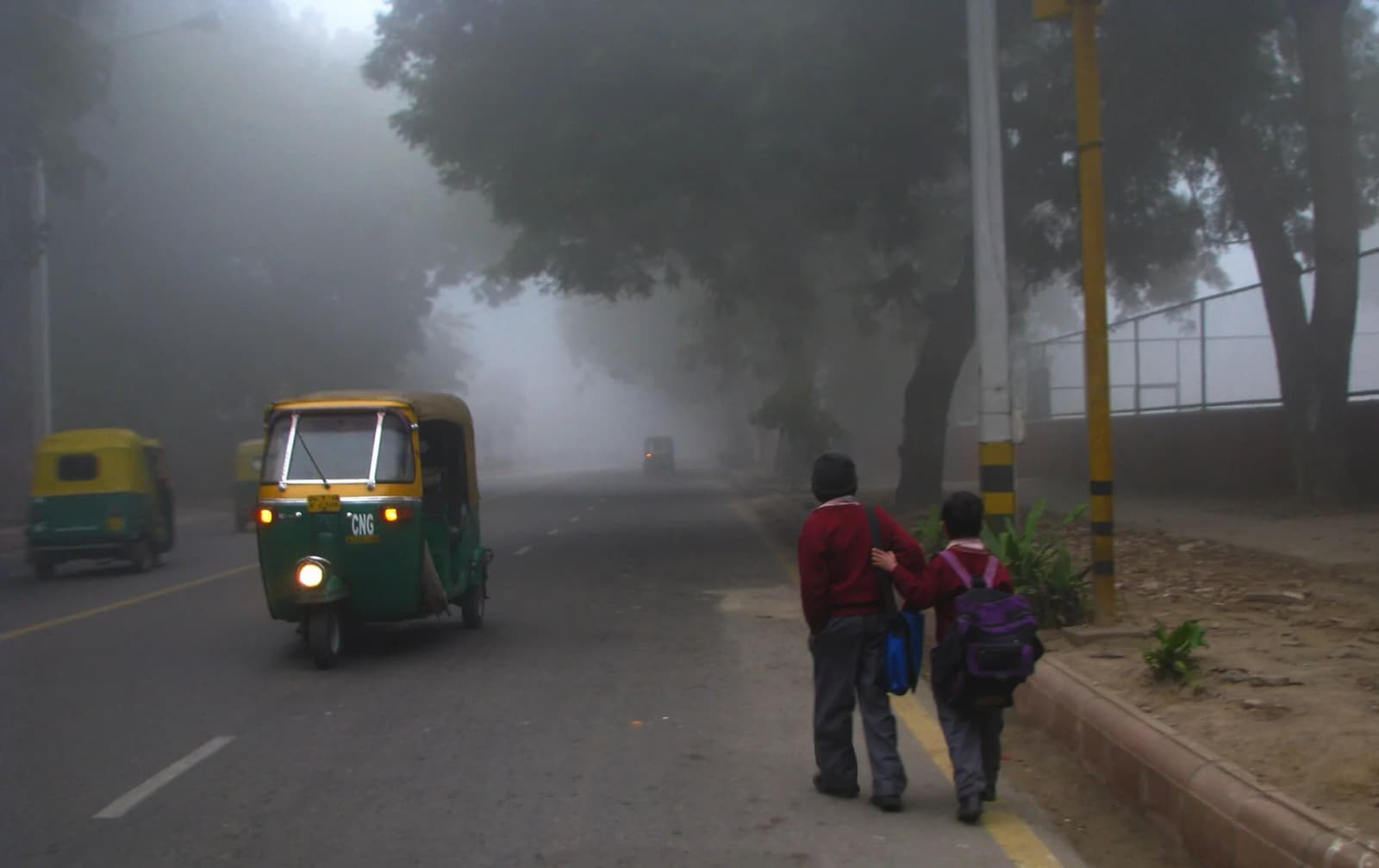
The India Meteorological Department (IMD) has warned that dense fog is very likely at isolated places over Punjab, Haryana, Chandigarh and Delhi from Friday, 20 November 2026, through Sunday, 22 November, with the belt extending to West Uttar Pradesh from 21 November. The warning appears in the department's all-India weather summary and forecast bulletin issued at 8:30 pm IST on Thursday, 19 November.
The fog alert comes as night temperatures across parts of north and central India have dipped below normal, and as much of the weather agency's attention is focused on Severe Cyclonic Storm Akvan in the Bay of Bengal.
Which areas are covered by the fog warning?
The warning covers isolated places in Punjab, Haryana, Chandigarh and Delhi on 20, 21 and 22 November. According to the IMD's day-by-day outlook, West Uttar Pradesh joins the list on 21 November, Uttar Pradesh as a whole is included on 22 November, and dense fog is likely at isolated places in Uttar Pradesh on 23 November. East Uttar Pradesh was also flagged for dense fog on 19 November.
The IMD notes that each day's forecast is valid from 8:30 am IST that day until 8:30 am IST the next day, which means the warning largely concerns night and early-morning hours.
What does the forecast say for Delhi?
Delhi's mornings are expected to be misty rather than blanketed. The Delhi forecast bulletin issued by the IMD's Regional Meteorological Centre on 19 November says Friday will bring mist or shallow fog at many places, with moderate fog at isolated places in the morning, under mainly clear skies. Maximum temperatures are forecast at 25–27°C and minimums at 11–13°C, with no rain.
On Thursday morning, shallow fog formed at a few places in the capital, and the lowest visibility, 700 metres, was recorded at Safdarjung at 6:30 am. Safdarjung logged a minimum of 10.6°C, 1.7°C below normal, and a maximum of 28.1°C. The bulletin says night temperatures are likely to rise by 2–3°C on 21 November before falling by a similar margin.
How cold is it getting elsewhere?
Minimum temperatures on 19 November were below normal at many places over Haryana, Chandigarh and Delhi, and markedly below normal, by more than 5°C, at a few places over West Madhya Pradesh, East Madhya Pradesh, Chhattisgarh and Telangana, the all-India bulletin said. The lowest minimum temperature over the plains of India, 6.5°C, was reported from Sikar in East Rajasthan.
Why does dense fog matter for daily life?
Dense fog mainly disrupts travel. In its impact assessment, the IMD says such fog may affect some airports, highways and railway routes in the affected areas, cause difficult driving conditions and slower journeys, and, unless precautions are taken, lead to some road collisions. It also flags a chance of power lines tripping along routes with very dense fog.
The bulletin also lists health concerns. It says dense fog carries particulate matter and other pollutants that can increase episodes of wheezing, coughing and shortness of breath, may cause breathing problems for people with asthma or bronchitis on long exposure, and can irritate the eyes.
The department's suggested actions include taking care while driving, using fog lights, and staying in touch with airlines, railways and state transport operators about schedules. For human health, the bulletin advises avoiding going out unless necessary and covering the face.
The fog warning overlaps with the season's air-pollution concerns in the capital region. On 19 November, Union Environment Minister Bhupender Yadav directed Delhi-NCR civic bodies to take a zero-tolerance approach to pollution violations.
What else is the IMD tracking?
The same bulletin says Severe Cyclonic Storm Akvan over the west-central Bay of Bengal is likely to cross the North Andhra Pradesh and South Odisha coasts close to Gopalpur by noon on 20 November, with sustained winds of 90–100 kmph gusting to 110 kmph. MapMyTimes has explained what the landfall means for the two states.
What happens next?
The IMD issues updated forecasts several times a day, and the fog outlook for 20–23 November may be revised. Travellers in Punjab, Haryana, Chandigarh, Delhi and Uttar Pradesh can check the latest district-level warnings on the IMD website and with their airline, railway or bus operator before setting out early in the morning.
Photo source · Ministry of Environment, Forest and Climate Change (via Press Information Bureau), Government Open Data License – India