Most countries now have the basic machinery in place to deal with the health effects of climate change, but very few are turning their plans into action, according to a new World Health Organization (WHO) report published on 13 November 2026. The 2025 WHO Health and Climate Change Global Survey says money is the biggest obstacle: 91% of responding countries named a lack of finance as a barrier to carrying out their health adaptation plans.
A record number of countries took part
The survey is based on information that national health authorities reported themselves. WHO says 146 countries responded this time, the highest participation since the survey began. Only 95 countries took part in 2021 and 101 in 2018.
The report describes the institutional groundwork as "more widespread" while implementation "remains shallow". Nine in ten surveyed countries said their health ministry had a focal point for climate change and health. More than half (55%) have a dedicated health and climate change unit inside the ministry. More than half also have a national health and climate change strategy, a health national adaptation plan, or both.
Plans exist, but delivery lags
The gap between planning and doing is the report's central theme. Of the countries with a health national adaptation plan, 38% said they had implemented it not at all or only minimally. The figure rose to 44% for plans or roadmaps meant to make health systems low-carbon.
Money is the main problem, but not the only one. Besides the 91% who cited finance, countries pointed to limited human resource capacity (79%), climate being ranked below other health priorities (69%) and a lack of technical knowledge and evidence (63%). Over two-thirds of countries said they had no funding (20%) or only minimal funding (48%) to put their health adaptation plans into effect.
WHO also found that evidence is not reaching budgets. In all, 98 countries, home to 6.6 billion people, have carried out a climate change and health vulnerability and adaptation assessment. Of these, 68% said the findings at least moderately shaped health policies, but only 37% said they had a similar influence on how staff and money were allocated.
Mosquitoes, water and heat top the risk list
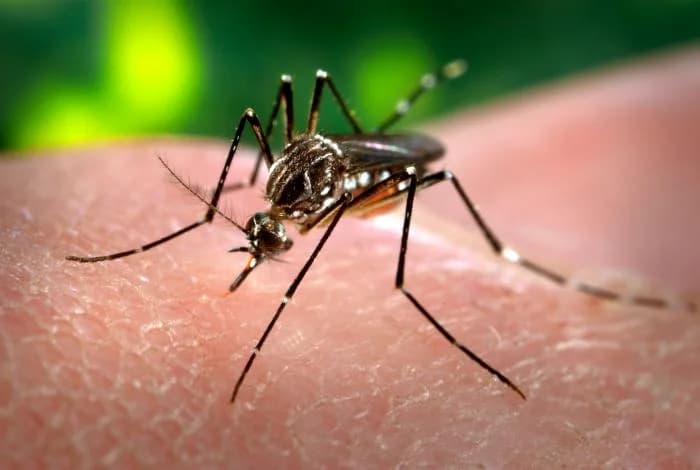
When asked which climate-related health risks they treat as priorities, countries most often named vector-borne diseases such as those spread by mosquitoes (88%), followed by water-related diseases (77%), heat-related illnesses (73%) and impacts on health systems themselves (66%).
Some links between sectors are growing. Close to half of countries (45%) reported formal data-sharing agreements between the health ministry and the national weather service. The report says weather and climate information is increasingly built into programmes for vector-borne disease, heat illness, zoonoses and waterborne disease.
Cutting the health sector's own emissions
Health systems also contribute to the emissions that drive warming, and here progress is described as being at "an early stage". Only 17% of countries have assessed the main greenhouse gas emission hotspots in their health sector, while another 12% are doing so. Routine emissions monitoring exists in just 7% of countries, and only 12% have a national plan or roadmap for low-carbon health systems.
Poorer countries left behind
The report flags a clear equity gap. Low-income countries reported less workforce training, fewer health facility resilience assessments, weaker emissions monitoring and poorer access to finance, even though they often face serious climate-related health risks. Access to international, external or private funding among low-income and lower-middle-income countries rose from 28% in 2021 to 43% in 2025, WHO says, but only 28% of low-income countries reported such access, against 50% of lower-middle-income countries.
Why it matters and what comes next
The findings arrive as governments meet at the COP31 climate conference in Antalya, Türkiye, where finance for adaptation has been a central issue in the talks. WHO says the survey sets the baseline for tracking its Global Action Plan on Climate Change and Health and the climate goals in its Fourteenth General Programme of Work.
The agency lists the priorities ahead as moving from plans to funded implementation, building workforce skills, improving monitoring, widening access to finance, speeding up the shift to low-carbon health systems and making sure lower-income countries are not left behind.