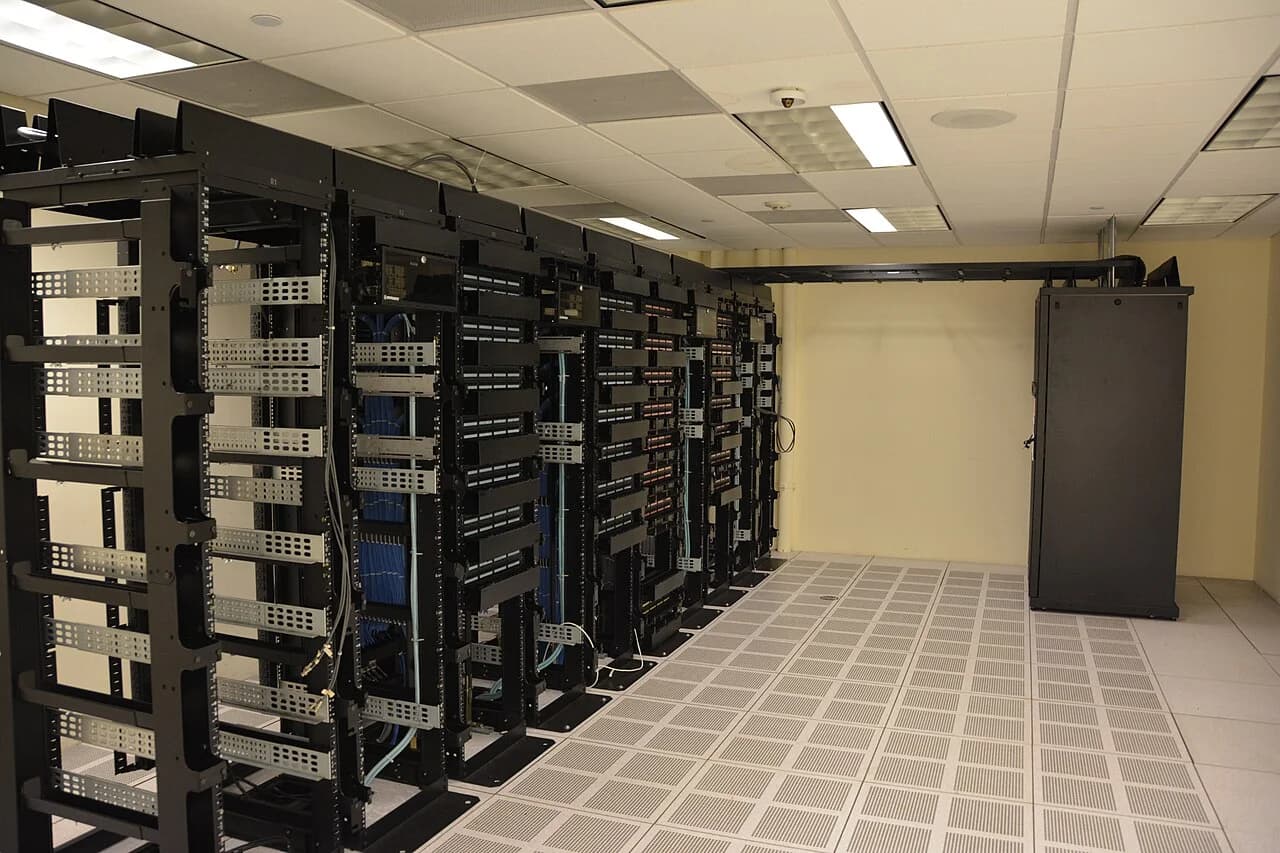
United States President Donald Trump said on Friday, 20 November 2026, that American technology companies that build data centres in other countries would face what he called a "tremendous tax", in remarks at a White House news conference in Washington. He did not say how large the tax would be, what law would be used to impose it, or when it might take effect.
According to CNBC's report on the news conference, Mr Trump presented the plan as a way to keep data centre investment inside the United States. Companies that still wanted to build abroad "can, but we're going to put a tremendous tax on them," he said. "We're going to fight very hard for the data centers."
Is this a formal policy yet?
No. Mr Trump indicated the idea was new even inside his administration. "I haven't even said that to my people. But I'm telling them now they're here," he said, as quoted by CNBC. The Associated Press, in a report carried by The Korea Times, also said he gave no details and had not yet briefed his own officials. Neither report described any executive order, draft legislation or tax rate.
Mr Trump did not name specific countries. He described the places competing for these facilities as locations that "have energy, and they have everything," CNBC reported.
Which companies could be affected?
CNBC noted that Alphabet, Amazon, Microsoft, Meta and Oracle have already built data centres outside the United States. Building abroad lets cloud providers serve customers from nearby facilities, and is sometimes needed to meet local regulatory requirements, the broadcaster said. Amazon, Google, Microsoft and Oracle did not immediately respond to CNBC's requests for comment.
For governments and companies elsewhere that are courting American cloud and artificial intelligence (AI) investment, the remarks add a new layer of uncertainty. Until a concrete proposal is published, it is unclear whether any tax would apply only to new projects or also to facilities already under construction.
Why is Trump pushing this now?
The comments come as data centres face growing resistance in American towns. The AP reported that local opposition has become a bottleneck, with communities blocking municipal permits, and that hostility to data centres was a major issue in the recent midterm elections, which Democrats won to take control of Congress.
Mr Trump urged communities to accept the projects while extracting benefits from developers. "Make them pay you, make them pay your community, but don't shut them off," he said, according to the AP.
CNBC cited its own All-America Economic Survey, in which 64% of registered voters said they opposed an AI data centre being built within 10 miles of their home, while 13% said they would support one.
The announcement follows the US Senate's passage this week of a permitting bill aimed at speeding up energy projects, which MapMyTimes reported would also make data centres pay for grid upgrades. Technology shares have been under heavy pressure on Wall Street, where the S&P 500 and Dow closed in correction on an AI-led sell-off.
What happens next?
Any tax on overseas investment by US companies would need a legal basis, and none was set out on Friday. Investors, cloud companies and foreign governments will be watching for a written proposal from the White House or the Treasury that spells out the rate, scope and timing.
Photo source · Carl Lender, CC BY 2.0