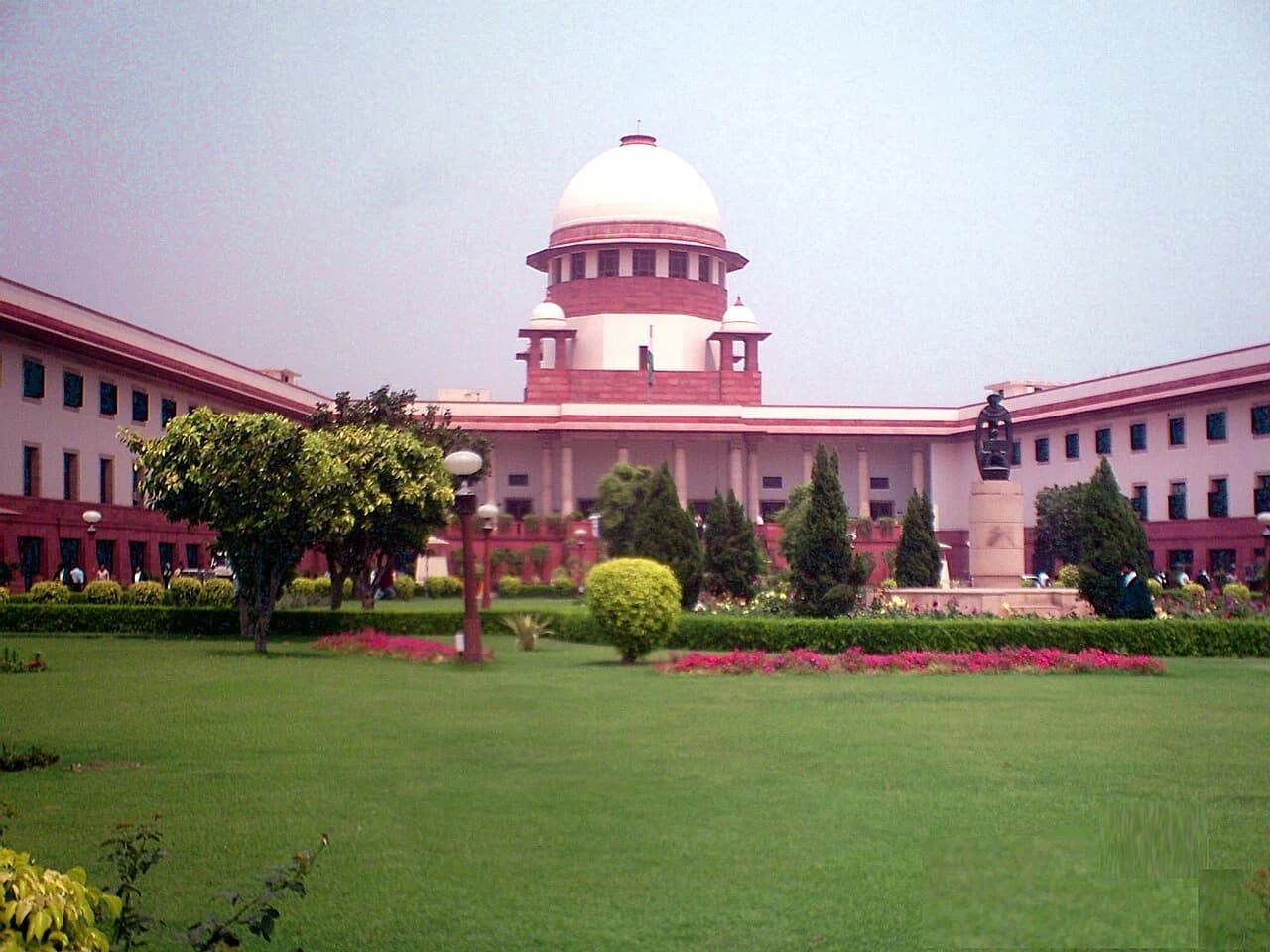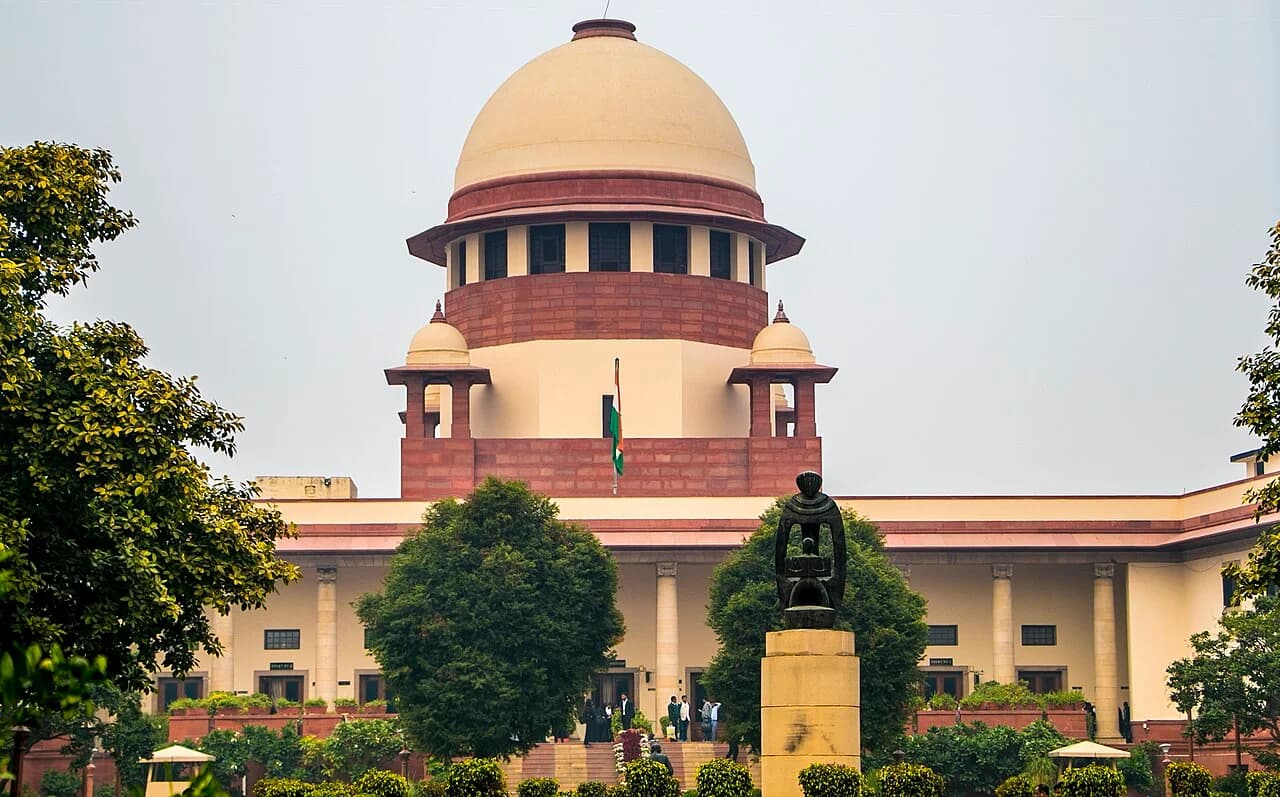
The Supreme Court of India has named former Supreme Court judge Justice (Retd.) Sanjay Karol to head a reconstituted Special Committee that will check thousands of competing claims to plots in the Okhla Enclave project in Sector 91, Faridabad, Haryana. A bench of Justice Vikram Nath and Justice Sandeep Mehta passed the order on 20 November 2026, and the signed copy was released on 23 November 2026.
The order, issued in Okhla Enclave Plot Holders Welfare Association v. Union of India and Others, says the dispute has been "complicated beyond imagination" by nearly four decades of court and administrative proceedings, overlapping groups of claimants and conflicting records.
What is the Okhla Enclave dispute?
It is a decades-old fight over plots in a private residential colony that was never fully delivered. According to the order, M/s Durga Builders Private Limited and its associate entities acquired about 235 acres in the revenue estates of Sehatpur, Agwanpur and Ismailpur villages in 1985 for a colony first called Okhla Enclave and later renamed Edenburg City. The Department of Town and Country Planning (DTCP), Haryana, granted seven colonisation licences, and plots were split into Economically Weaker Section (EWS), No Profit No Loss (NPNL) and General categories.
The case began as a writ petition filed in 1996, which the Supreme Court decided on 3 October 2019. The court has since continued to hear applications on carrying out that judgment.
Why was the committee reconstituted?
The committee needed a new head because its earlier chairperson, former judge Justice (Retd.) Vikramajit Sen, resigned. The order records that a report he submitted on 16 January 2023 found 1,011 eligible allottees in Phase I, which the court accepted on 11 July 2023. In a later round, 2,036 claims were received for Phase II scrutiny.
Before that scrutiny could finish, the court was told that by 25 March 2025 local DTCP officials had sanctioned building plans for 480 claims that the committee had not yet verified. The order describes this as a "grave administrative irregularity" that let unverified claimants move ahead of verified allottees. Justice Sen then sent his resignation to the Chief Justice of India on 17 November 2025 and repeated it in letters in June and August 2026, which stalled Phase II.
How short is the land?
The court said the shortage of plots on the ground is severe. Against 866 verified NPNL allottees, only about 150 vacant NPNL plots are available, a deficit of 716. In the General category, 49 verified buyers are competing for a single vacant plot, the order notes.
What has the court directed?
- Claimants who have not yet filed complete documents get a final three weeks from 20 November 2026 to submit them to the Haryana government's Nodal Officer, who will forward them to the committee. Any allotment to them stays subject to the court's final orders.
- New applicants must attach a demand draft of Rs 10,000 in favour of the State of Haryana; the money goes into an escrow account for the committee's expenses.
- The committee will verify titles in pending Phase II claims, look for duplicate or fraudulent sale deeds, audit possession of the 1,011 verified allottees and identify encroachers.
- It will look into the building plans sanctioned by DTCP for unverified claimants and recommend remedial and disciplinary action.
- It will propose how to share out the limited land, including options such as a lottery, layout changes or refunds, and whether unused EWS land can be converted to NPNL plots or group housing.
- General category buyers' claims will be checked individually, without the "one plot per family" restriction.
The court fixed the chairperson's honorarium at Rs 60 lakh, to be paid by Haryana in three instalments with Rs 20 lakh upfront, and allowed the state to recover the amount from the developer. Haryana must also give the committee records, staff and a venue.
What happens next?
The committee has been asked to try to finish its scrutiny and submit a sealed-cover report within four months. The matters are listed for further hearing on 2 March 2027.
The case is one of several long-running housing disputes before the Supreme Court, which is also hearing the Supertech homebuyers' case.
Photo source · Subhashish Panigrahi, CC BY-SA 4.0