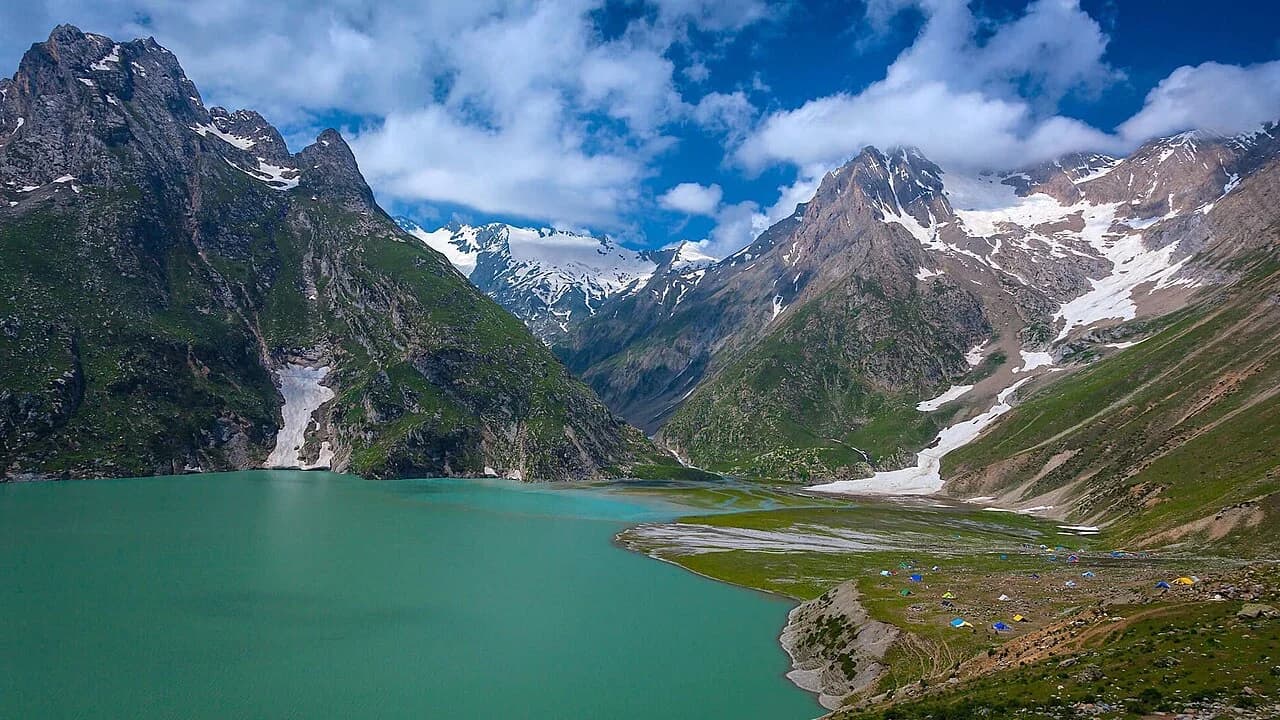
This is a MapMyTimes opinion piece. On 23 November 2026, a video showing a crawler excavator cutting earth near Sheshnag Lake, the high-altitude glacial lake on the Pahalgam route of the Amarnath Yatra in Anantnag district of south Kashmir, set off a storm of criticism. The Border Roads Organisation (BRO) has defended the work as routine and safe. That may well be true. But in a landscape this fragile, "trust us" is not enough. The public should see the paperwork. (MapMyTimes reported the controversy here.)
What do we actually know?
We know that a video, reportedly uploaded by a machine operator on social media, shows an excavator doing road work near the lake. According to The Tribune, the BRO said on Monday that it was "carrying out post-Amarnath Yatra works in compliance with all applicable safety norms and environmental safeguards", that it was widening tracks and stabilising vulnerable stretches, and that it was taking measures for the safe disposal of excavated material and to protect natural drainage. Officials said the work was confined to existing tracks, and the BRO called social media claims of new construction "incorrect".
What we do not know is just as important. No public document so far shows who approved this particular stretch of work, what environmental assessment, if any, was carried out, or how excavated debris is being handled at that altitude. Apni Party president Altaf Bukhari has even asked the authorities to first verify whether the video is genuine, according to the Kashmir Observer.
Why does Sheshnag need extra care?
Sheshnag needs extra care because it is not an ordinary lake. It is listed among 14 high-risk glacial lakes identified in Jammu and Kashmir, as CPI(M) MLA Mohammad Yousuf Tarigami pointed out in his statement reported by Greater Kashmir. He described it as surrounded by loose moraine and steep slopes, and warned that any damage could travel downstream to Pahalgam and communities along the Lidder river. He cited the 2013 Kedarnath disaster and the 2023 South Lhonak lake outburst in Sikkim as examples of what can go wrong in high mountains.
The worry also has a history. In November 2023 the BRO, under its Project Beacon, announced that the first vehicles had reached the Amarnath cave shrine via the Baltal side, a move that drew sharp criticism even then. Many in Kashmir now fear a similar push on the Pahalgam axis.
The strongest case for the BRO
It is only fair to state the other side clearly. Large numbers of pilgrims walk these tracks every summer, and narrow, crumbling paths are themselves a safety risk. Widening and stabilising tracks after the Yatra season, when crowds are gone, is sensible timing. Machines can do in weeks what manual labour would take years to finish. Mr Tarigami himself said he is not against better roads for pilgrims, tourists and residents. Mirwaiz Umar Farooq made the same point: improving facilities has never been the issue. Nobody serious is arguing that the route should be left unsafe.
What should happen now?
The answer is not to stop all work by reflex, but to replace suspicion with documents. Three steps would help:
- Publish the clearances. The BRO and the Jammu and Kashmir administration should put out the project sanction, the stretch covered, and any environmental or forest clearances obtained, as Mr Tarigami has demanded.
- Get an independent site check. A team of glaciologists and geologists should inspect the area around the lake and publish a short public report on slope stability and debris disposal.
- Set a clear limit. The government should state plainly whether motorable access is planned anywhere near Sheshnag. A clear yes or no would end much of the speculation.
Development in the high Himalaya will always involve trade-offs. But a lake that is officially counted as high-risk deserves more than a defensive press statement. If the BRO's work is as careful as it says, publishing the record costs it nothing, and it would show that pilgrim safety and the safety of the mountain can go together.