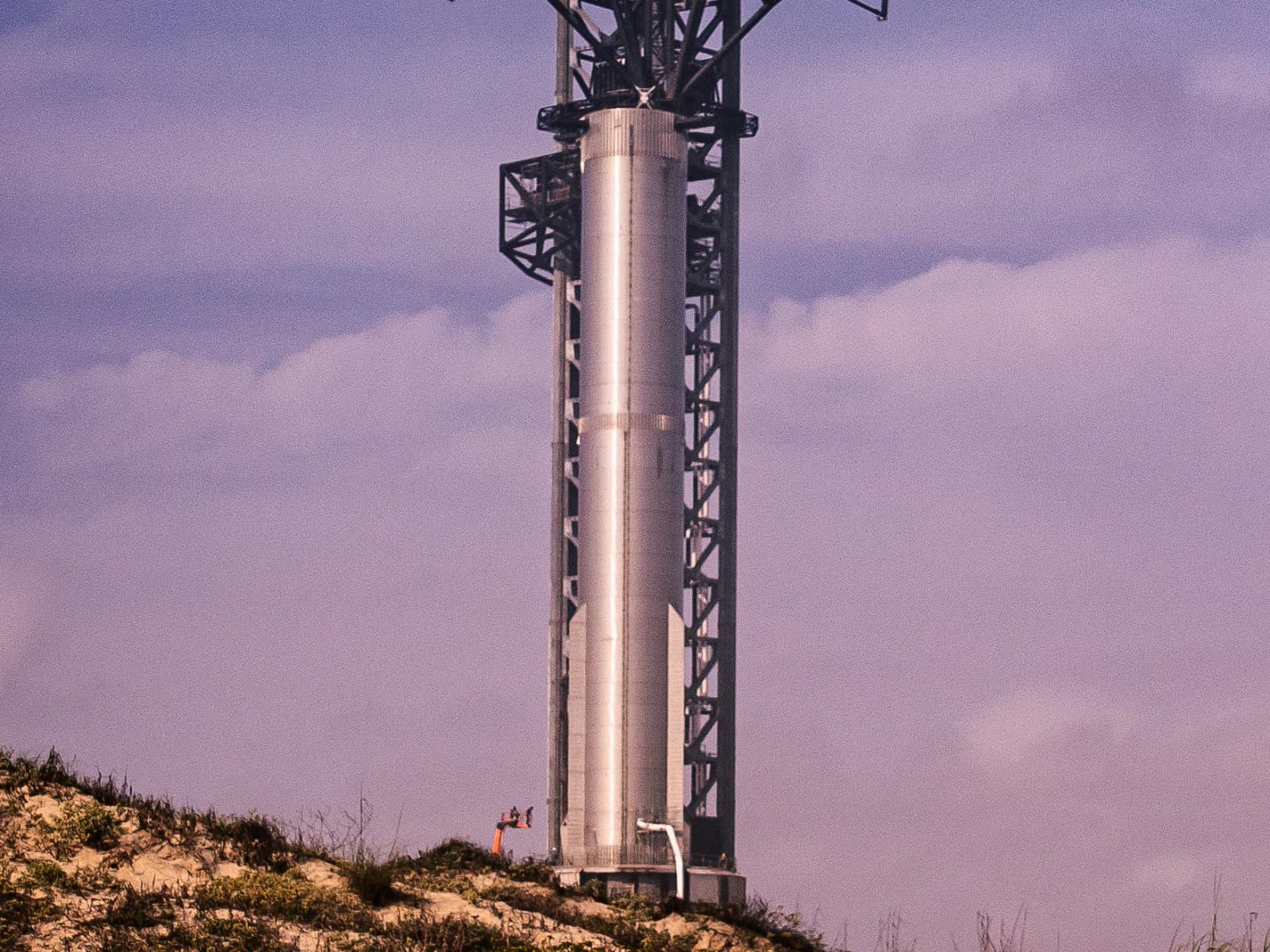
SpaceX on Saturday caught the upper stage of its Starship rocket with the giant mechanical arms of its launch tower in Texas after the vehicle returned from orbit. It is the first time the company has brought a Starship spacecraft back from an orbital flight to the same site it launched from and held it in the tower.
The vehicle, known as Ship 42, settled into the tower's "chopsticks" at Starbase at about 4:20 pm US Eastern Time on 14 November (about 2:50 am IST on Sunday), roughly 22 and a half hours after lift-off, according to SpacePolicyOnline and other reports. SpaceX celebrated on X, writing: "Mechazilla catches Starship!"
What happened on Flight 15
Test Flight 15 lifted off from Starbase at 5:47 pm Eastern Time on Friday, 13 November. It was the first time SpaceX tried to catch both stages of the rocket on the same mission, CNBC reported.
Only half of that plan worked. The Super Heavy booster did not return to the tower. SpaceX said its guidance, navigation and control system judged that the booster was not in the right position and sent it to an offshore splashdown in the Gulf of Mexico instead. CNBC reported that the booster exploded before it hit the water. Teslarati quoted Elon Musk as saying the booster ran short of propellant because its engines slightly underperformed, and that fixes include more consistent Raptor engines and a software change to shut them down about a second earlier.
The ship itself went on to circle Earth 14 times. During the flight it released 26 of SpaceX's newest, larger Starlink V3 internet satellites, which are too big for the company's Falcon rockets, SpacePolicyOnline noted. Teslarati reported that cameras on some of those satellites photographed the ship's heat shield, and SpaceX said the images showed it was fit for re-entry. On Saturday morning the company posted that pad and tower systems were "go for catch". The ship then fired its engines to leave orbit, came back through the atmosphere and was caught.
Why it matters
Catching both stages so they can be inspected and flown again quickly is central to SpaceX's plan to cut launch costs sharply. CNBC noted that Starship is needed in the near term to put up more Starlink satellites, which it called the company's main profit centre; one Starship can carry up to 60 Starlink V3 satellites, according to the company.
The catch also matters for NASA. SpaceX holds a contract to build a version of Starship as a lunar lander for the Artemis programme. That plan depends on refuelling Starships in orbit using repeated tanker flights, something SpaceX has not yet demonstrated. NASA Administrator Jared Isaacman congratulated the team, describing the catch as "almost magic", SpacePolicyOnline reported.
Before this mission, SpaceX had caught the Super Heavy booster three times, but never the ship after an orbital flight. The previous test, Flight 14 two months ago, reached orbit but ended with a splashdown in the north Pacific.
Disruption to flights
The mission did cause some disruption on the ground. CNBC reported that Hawaii's Department of Transportation briefly paused some West Coast flights because of the risk of debris. Both that order and a separate, unrelated nationwide ground stop by the US Federal Aviation Administration have since been lifted.
What happens next
SpaceX is still investigating why the booster diverted. According to Teslarati, Musk said the booster loss does not change the timeline for "high volume, fully reusable Starship flights", and he has said he expects Starship to reach a weekly launch rate in the first half of 2027. The company has not announced a date for Flight 16. The FAA is also holding virtual public meetings from 17 to 19 November on plans for more Starship launches from Starbase.
PS · Mobilus In Mobili, CC BY-SA 2.0