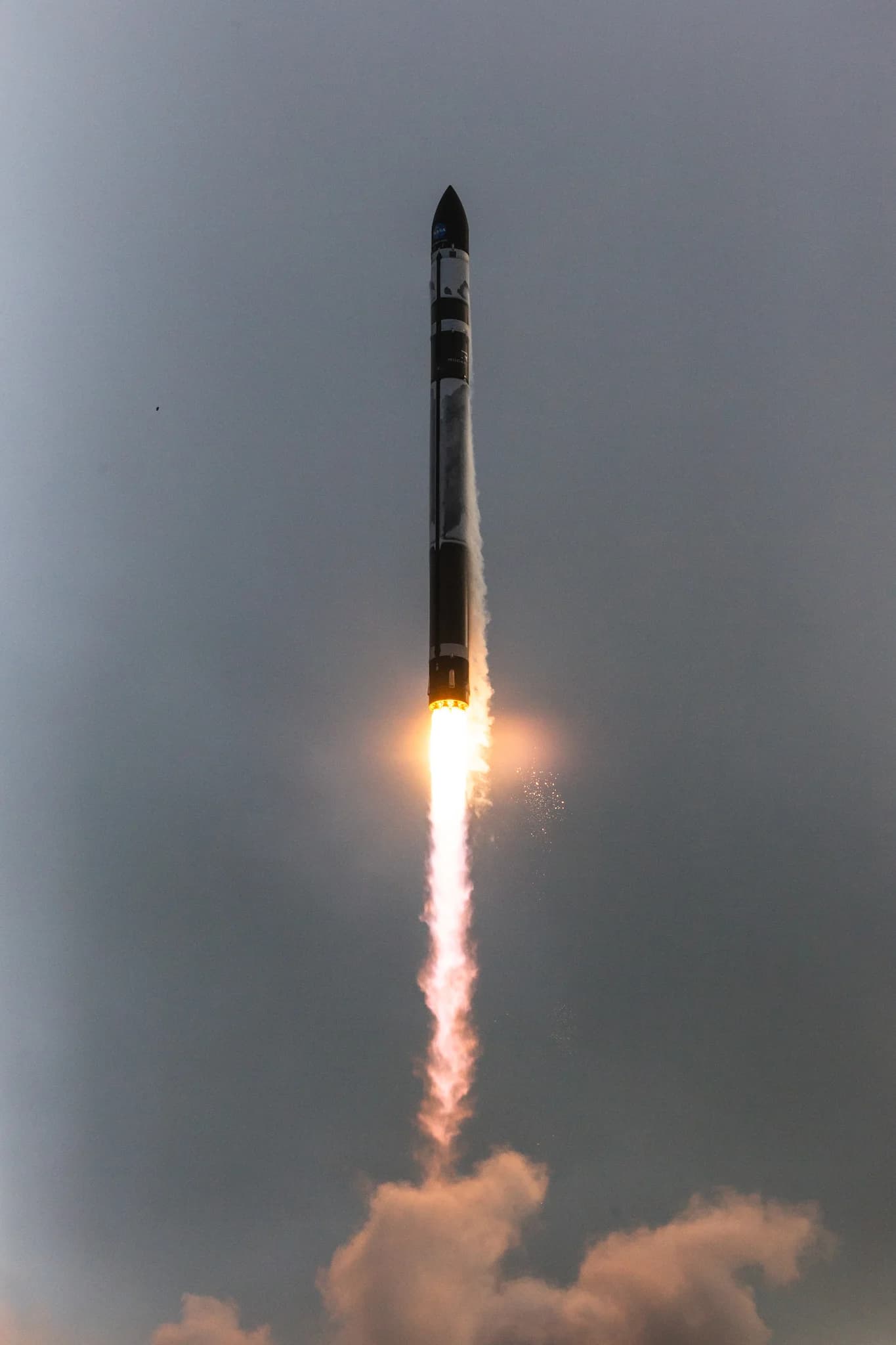
Rocket Lab's Electron rocket flew for the 100th time on 14 November 2026. The mission carried a Japanese radar imaging satellite into orbit, and the company says no commercially developed rocket has reached 100 launches faster.
The mission was called "The Mountain God Rises". It lifted off at 6:30 pm local time from Rocket Lab's Launch Complex 1 on New Zealand's Māhia Peninsula, which was 05:30 UTC or 11 am IST. Electron placed the YAMATSUMI-II satellite, also designated QPS-SAR-19, into a 575-km low Earth orbit for Japanese Earth-observation company iQPS (Institute for Q-shu Pioneers of Space), Rocket Lab said.
A milestone nine years in the making
Electron began flying in 2017 and first placed a payload in orbit in January 2018. The two-stage rocket is 18 metres tall and can carry up to about 300 kg to low Earth orbit. It flies from New Zealand and from Virginia in the United States. Rocket Lab says it has deployed hundreds of satellites for commercial, national security and scientific customers.
Founder and CEO Sir Peter Beck said few rockets ever reach 100 launches in their whole working life, and Electron got there faster than any other commercially developed vehicle. He credited the Rocket Lab team, thanked repeat customers, and said the next 100 Electron launches are already booked, so the company is "only accelerating from here".
Radar eyes that see through cloud
YAMATSUMI-II is a synthetic aperture radar (SAR) satellite. SAR satellites carry their own radar, so they can image the ground at night and through cloud. The spacecraft uses a large, lightweight antenna that is folded for launch and opened once in orbit. Reports after the launch said the satellite made its first contact with the ground and deployed its antenna.
This was Electron's 11th flight for iQPS, and the customer has had 100% mission success since 2023, according to Rocket Lab. Only 11 days earlier, on 3 November, Electron's 99th mission, "The Sea God Surveys", launched the QPS-SAR-20 satellite, WADATSUMI-II, from the same pad.
iQPS aims to have 24 satellites in operation by May 2028 and to keep expanding the constellation through 2030. Its long-term goal is to image selected areas roughly every 10 minutes. The company has booked seven more dedicated Electron launches through 2030.
Why it matters
Small launchers have often struggled to fly regularly enough to make money. Electron's run of launches, which made this its 21st launch of 2026, shows that a dedicated small-satellite rocket can build a steady customer base. For countries such as India, whose private space start-ups are building their own Earth-observation and SAR constellations, Electron's record is a useful benchmark for how quickly a launch provider can increase its flight rate.
Rocket Lab also describes Electron as the foundation for Neutron, a larger medium-lift rocket it is developing. For now, Electron's order book means more flights are coming. The company says satellites and components it has built have flown on more than 1,700 missions.
What next
iQPS will spend the coming weeks checking out YAMATSUMI-II in orbit before the satellite starts imaging. Rocket Lab has more iQPS missions booked, and it says its launch rate will keep rising.