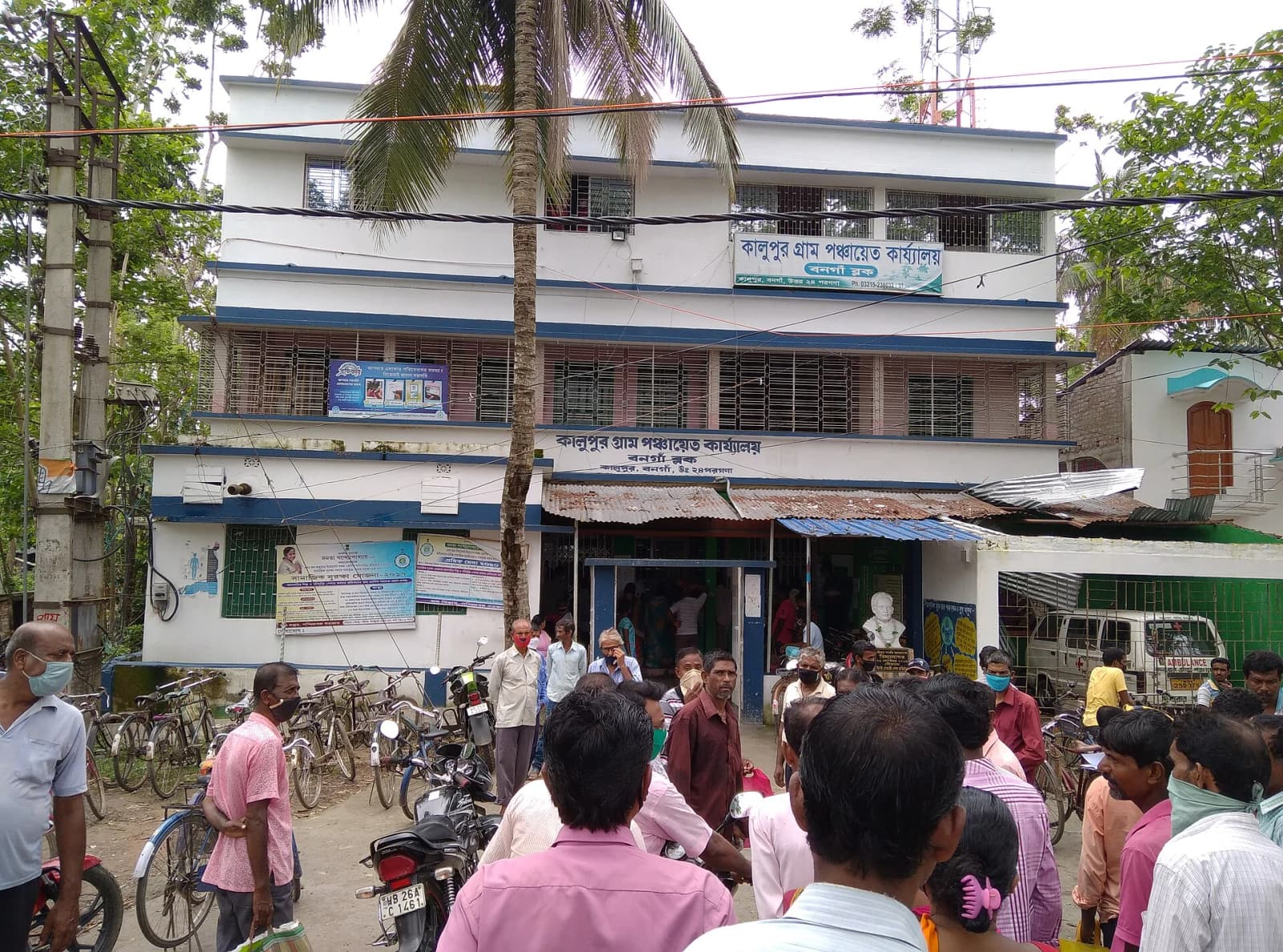
Village councils across India still rely on money from the Centre and states for about 90 per cent of their income, the Mumbai-headquartered Reserve Bank of India (RBI) said in a report released on 19 November 2026. The second edition of its "Finances of Panchayati Raj Institutions" report found that Gram Panchayats' finances improved in 2022-23 and 2023-24, but that their own revenue remains a small slice of what they spend.
The biennial report, themed "Local Finances and Capacity Building in Rural India", studies a balanced panel of 2.25 lakh Gram Panchayats over 2022-23 to 2024-25, the central bank said in a press release. It was prepared by the Division of Local Finances in the RBI's Department of Economic and Policy Research.
Where does a Gram Panchayat's money come from?
Mostly from higher levels of government. According to the RBI, intergovernmental transfers made up about 90 per cent of Gram Panchayats' total receipts, while own source revenue (OSR) contributed only about 10 per cent.
Even that own revenue is not mainly tax. The RBI said OSR was driven largely by non-tax receipts such as interest income, Panchayati Raj programme funds and user charges.
What do panchayats spend on?
Water supply and sanitation took the biggest share, about 40 per cent of total spending, the report found. The RBI said spending patterns reflected the mandates of the Fifteenth Finance Commission as well as convergence with national schemes and missions.
The central bank noted clear progress in rural roads and connectivity, electrification, water supply, sanitation and community assets. It added, however, that gaps between states persist in how far these services reach people, their quality and whether they actually work.
Why it matters
The report flags a risk for fast-growing villages. As some large Gram Panchayats turn into small urban local bodies or Town Panchayats, their duties may expand faster than their money and administrative capacity, the RBI warned.
To manage that shift, it called for transitional fiscal support and capacity building, along with a gradual strengthening of own revenue through better collection and rationalised property taxes and licence fees.
How does this compare with the first report?
The RBI's first edition, released on 24 January 2024, drew on data from 2.58 lakh panchayats for 2020-21 to 2022-23. Its press release said about 95 per cent of panchayat revenue came as grants from higher levels of government, and that delays in setting up State Finance Commissions added to their constraints. It also said uneven data on panchayat revenue and spending made their fiscal health hard to assess. Because the two editions cover different years and sets of panchayats, their headline shares are not directly comparable.
The new report comes as the Centre pushes other rural governance programmes. A day later, on 20 November, Panchayati Raj Minister Rajiv Ranjan Singh urged states to set time-bound plans for SVAMITVA property cards.
What happens next?
Both editions of the report are available on the RBI website. The central bank has invited feedback and comments on the report, which can be sent to the Director of its Division of Local Finances in Mumbai or by email.
Photo source · খাঁ শুভেন্দু, CC BY-SA 4.0