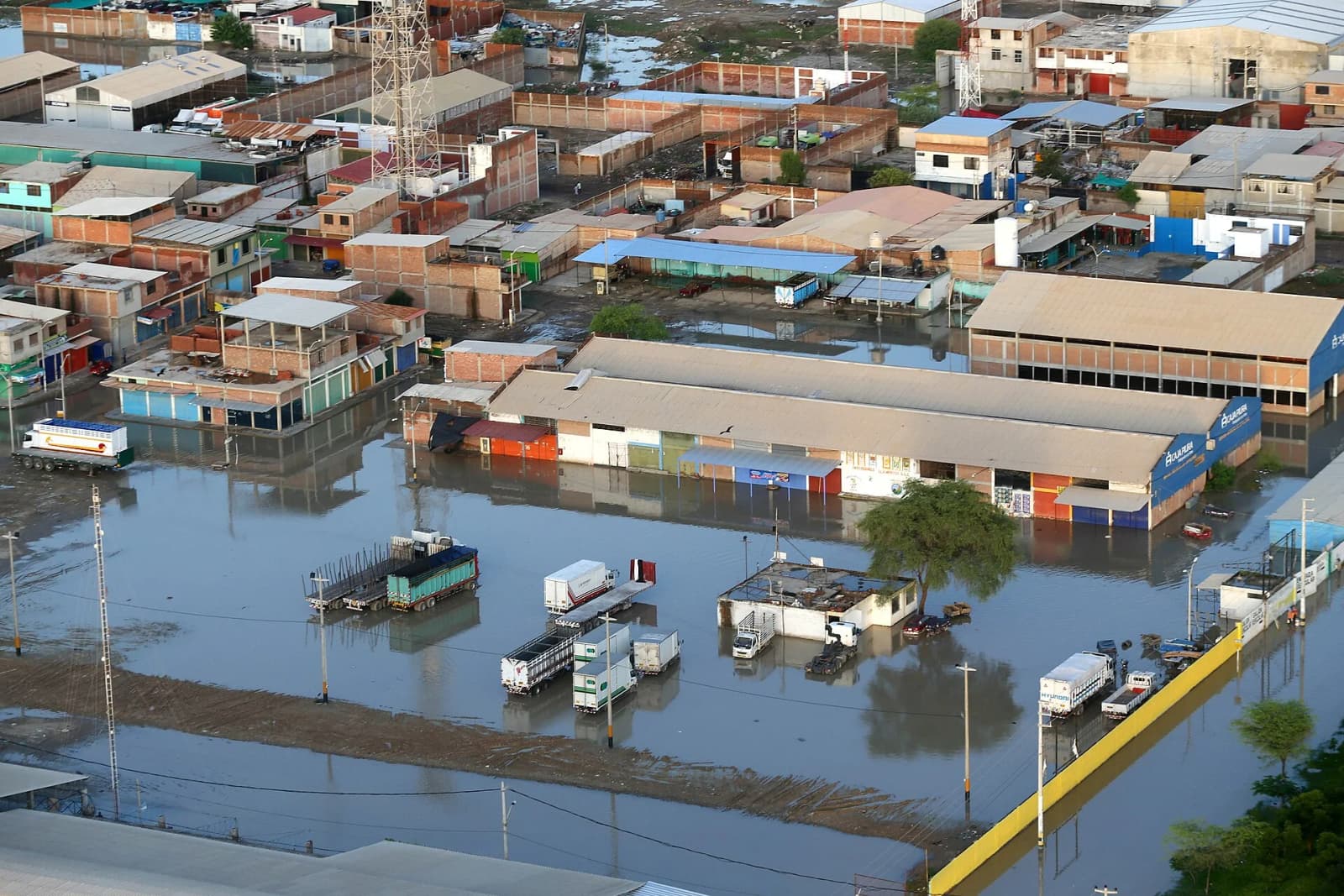
Floods linked to an exceptionally strong El Niño have swamped cities on both sides of the Peru–Ecuador border, with Ecuador's disaster agency putting the national death toll at 34 on Friday, 27 November 2026, as waist-high water filled the streets of Piura in northern Peru after 12 hours of continuous rain.
Ecuador's National Secretariat for Risk Management (SNGR) said about 47,000 people had been affected, according to figures reported by AFP via France 24. In Peru, the head of the National Institute of Civil Defence (INDECI), General Luis Vásquez, estimated that around 2,000 families in Piura were affected and would be moved to shelters.
How bad is the flooding in Peru?
Piura, the capital of the northern region of the same name, was flooded by dawn on Friday after heavy rain that began on Thursday. Local news site El Búho reported that about 50 people were trapped inside a shopping centre, that strong currents swept away motorcycle taxis and parked vehicles, and that around 700 families in the Ignacio Merino neighbourhood were affected.
Al Jazeera reported that rising water forced the José Cayetano Heredia Hospital in Piura to move patients with respiratory infections to its auditorium. The armed forces deployed personnel and pumps, though residents complained of delays and some machines reportedly stopped for lack of fuel.
Further north, the Tumbes River reached an extreme flow early on Friday. The National Meteorology and Hydrology Service of Peru (SENAMHI) recorded 1,982.03 cubic metres per second at its El Tigre station at 9 am, above the critical threshold, and about 80 metres of a navy barracks perimeter wall collapsed, according to El Búho. SENAMHI kept a red alert in place for Piura and Tumbes until Sunday, 29 November.
The Peruvian navy blamed El Niño for heavy ocean swells that damaged infrastructure along the Pacific coast and forced dozens of ports to close temporarily. President Keiko Fujimori postponed a trip to Colombia to deal with the emergency and said she would visit affected areas, Al Jazeera reported.
What is happening in Ecuador?
In Ecuador, the toll of 34 dead covers the period since the government declared an El Niño emergency on 29 August. The SNGR has also recorded 23 injured and about 31,000 homes affected. It says 32 rivers have burst their banks and 17 more are being monitored, with Esmeraldas, Guayas, Los Ríos and El Oro the worst-hit provinces.
In the coastal city of Manta, in Manabí province, two rivers overflowed. Residents waded through chest-deep water and firefighters used canoes to reach them. One resident, Fernanda Navarrete, told AFP she had lost beds, clothing and appliances and had not seen flooding on this scale in about 30 years.
Why is El Niño causing this?
El Niño is a warming of sea-surface temperatures in the central and eastern equatorial Pacific that shifts wind and rainfall patterns worldwide. Al Jazeera noted that this year's episode is projected to be the strongest on record and that Peru and Ecuador are among several Latin American countries that have declared national emergencies over it. According to official figures cited by France 24, the 1997–98 El Niño, the strongest since 1950, killed nearly 300 people in Ecuador.
The flooding comes a day after United Nations agencies warned that El Niño and conflict will deepen hunger, as covered in MapMyTimes' report on how El Niño pushed the UN's hunger hotspots to 16.
What happens next?
SENAMHI has forecast moderate to heavy rain in northern Peru through the weekend. Peruvian authorities are working with the Piura regional government to open more shelters, while Ecuador's risk agency continues to monitor rising rivers. Casualty figures in both countries may change as assessments continue.
Photo source · Galería del Ministerio de Defensa del Perú, CC BY 2.0