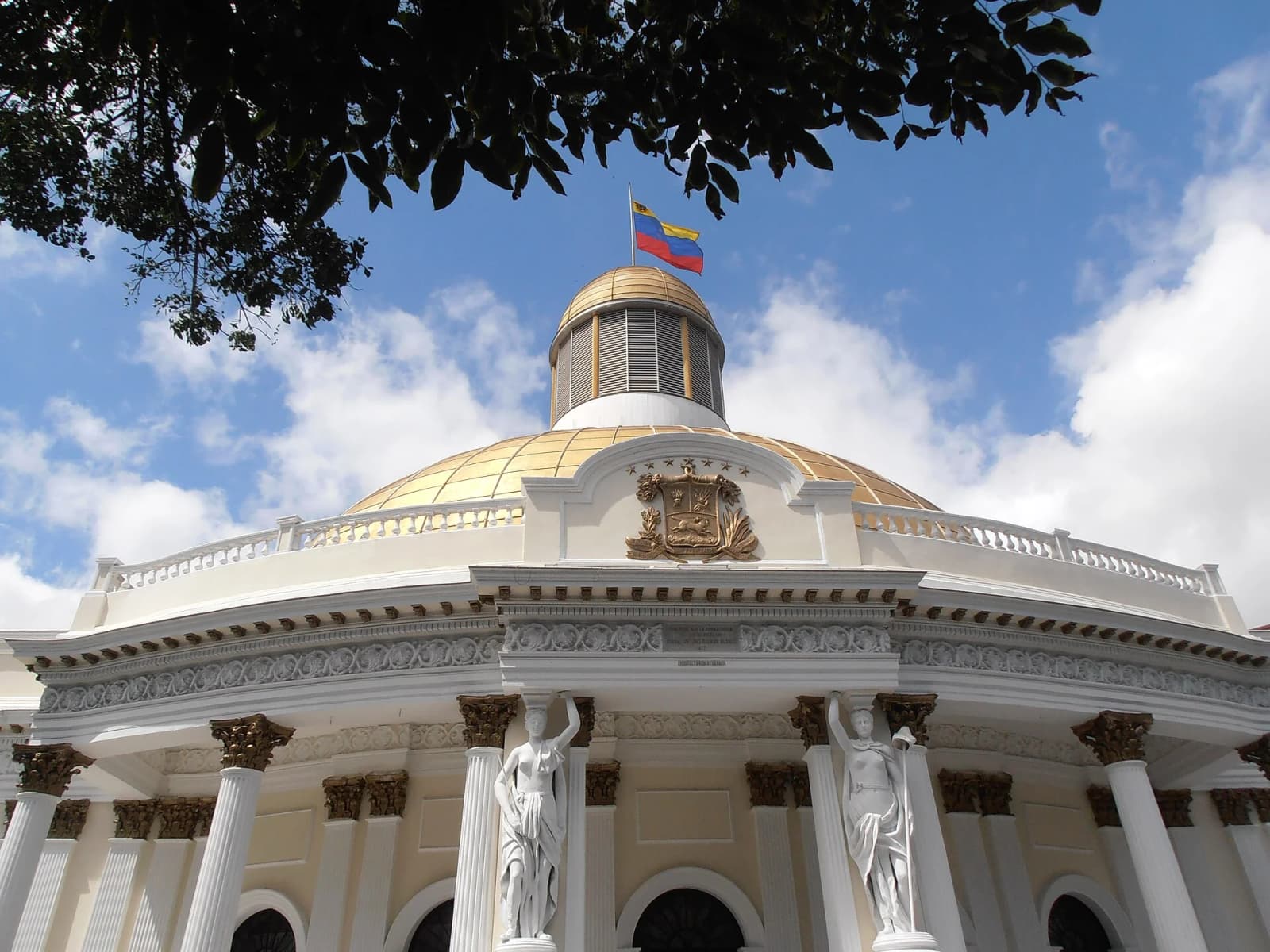
Venezuela's National Assembly will move to repeal a 2024 law that threatened opposition figures with up to 30 years in prison and decades-long bans from public office for supporting international sanctions, Assembly President Jorge Rodríguez announced in Caracas on Thursday, 26 November 2026.
Rodríguez, who also leads the government's delegation in talks with the opposition, said he would present the repeal to the legislature on Tuesday, 1 December, Argentine daily La Nación reported. "We want to inform the country that we are going to take the legislative initiative," he said, adding that the law "responded to a very specific moment" in the country's situation.
What does the law do?
The Organic Law Liberator Simón Bolívar against the Imperialist Blockade was approved in November 2024 under then-President Nicolás Maduro. According to La Nación, it provides for prison terms of up to 30 years and political disqualification of up to 60 years for people who promote international sanctions against the government. Al Jazeera noted that it was passed shortly after the 2024 election that Maduro claimed to have won amid widespread allegations of fraud, and that critics said it enabled political persecution.
Rodríguez said no Venezuelan had been subjected to the law's most severe penalties and described the repeal as a contribution to the dialogue, Infobae reported. The watchdog group Transparencia Venezuela has said the law lacks solid constitutional foundations and is incompatible with a plural democracy.
Why is this happening now?
Venezuela has been governed since January by an interim administration led by Delcy Rodríguez, Jorge Rodríguez's sister, after United States forces seized Maduro, according to Al Jazeera. The US-backed government has been negotiating with parts of the opposition, and that dialogue agreed to review several laws, including this one.
Infobae reported that the talks, held under US auspices, closed their fourth round on 23 November. The two sides have also agreed to review the Comptroller General's law, which has been used to bar opposition leaders from office, and are discussing renewal of the Supreme Court and the rules governing political parties.
Does this let María Corina Machado run for office?
Not automatically. La Nación and Infobae reported that Machado's ban rests on a separate legal basis, Article 105 of the Comptroller General's organic law, which remains under discussion in the talks. Machado, the Nobel Peace Prize laureate who won the 2023 opposition primary but was barred from the 2024 vote, returned from exile in October and is widely expected to run if an election is called, Al Jazeera said.
On Thursday, Machado launched neighbourhood assemblies to gather proposals for a future government programme. About 2,000 meetings were held on the first day in Venezuela and abroad, according to AFP, with participants answering 19 questions on topics including election dates, justice, wages and pensions. Delcy Rodríguez promised free and fair elections at the United Nations in September but has not set a date.
Infobae also reported that Jorge Rodríguez said former opposition candidate Edmundo González Urrutia, in exile in Spain for more than two years, can return "whenever he wants".
What happens next?
The repeal is expected to be formally introduced in the National Assembly on 1 December. No timetable has been given for a final vote, and the separate disqualifications affecting opposition leaders will depend on the outcome of the ongoing negotiations.
Photo source · Juliovila, CC BY-SA 3.0