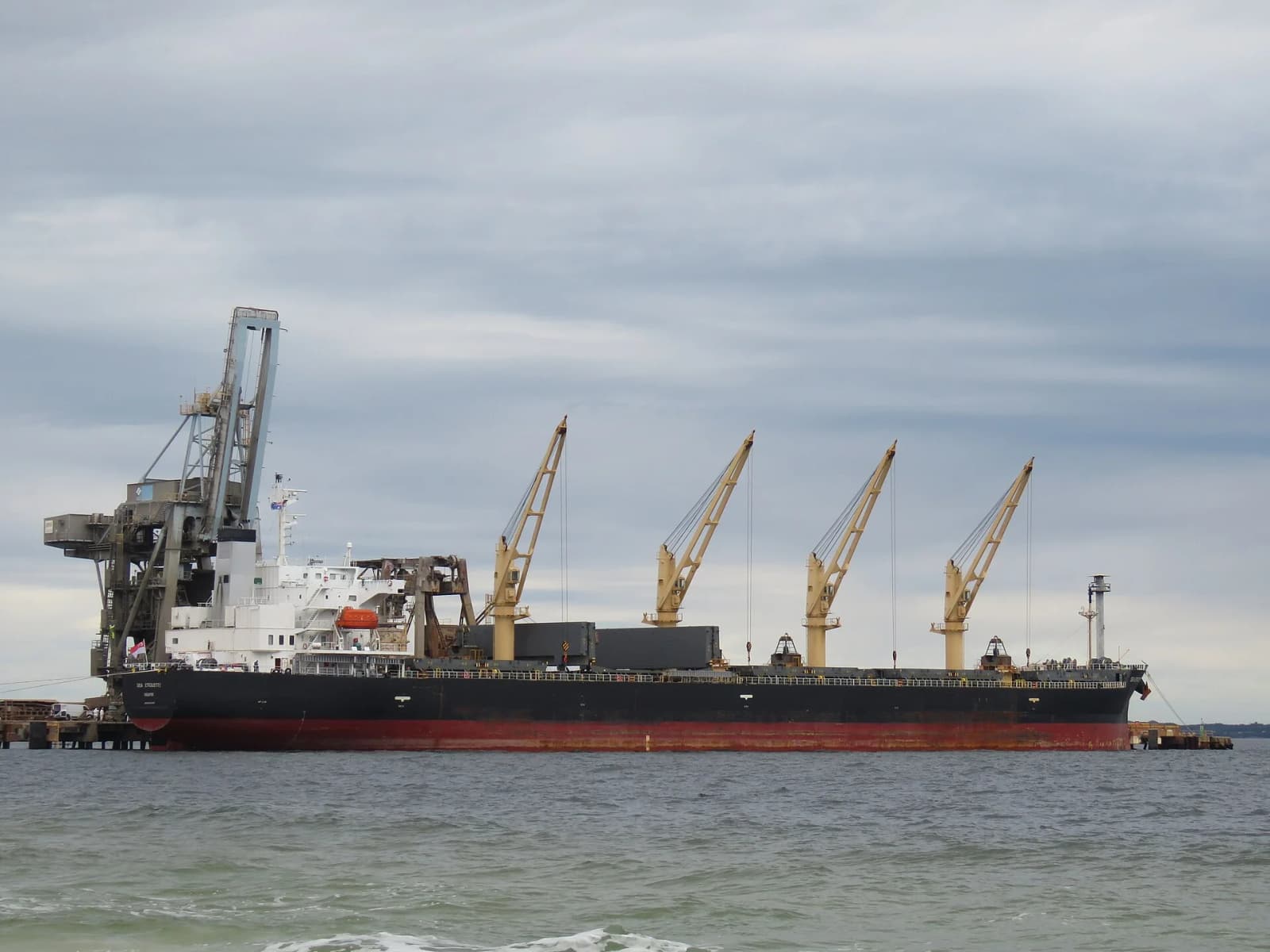
A United States military aircraft disabled the Palau-flagged bulk carrier M/V Pacific Archer in the Gulf of Oman on Thursday, 26 November 2026 (US time), after the ship left the Iranian port of Bandar Abbas and, according to US Central Command (CENTCOM), tried to slip through the American naval blockade of Iranian ports. CENTCOM said in a statement released on Friday, 27 November, that the civilian crew was not hurt.
What happened to the Pacific Archer?
The ship was hit at the stern by precision munitions fired from a US military aircraft, which knocked out its propulsion, CENTCOM said. The command said the crew had ignored several warnings before the strike. It also released a short video, about eight seconds long, that shows a projectile striking the rear of the vessel and an explosion, Stars and Stripes reported.
The vessel had sailed from Bandar Abbas, a major port on Iran's southern coast, and was attempting to move through regional waters when it was stopped. US officials have not publicly said what the ship was carrying, and the strike's exact time of day has not been disclosed.
How large is the US blockade operation?
According to CENTCOM, US forces have redirected 158 commercial vessels that complied with orders during the blockade and have disabled six that refused. The blockade of Iranian ports has been in force since mid-July, Fox News reported, while Stars and Stripes described the wider US-Iran conflict as being about nine months old.
How has Iran responded?
Iranian Navy commander Shahram Irani said on state television on Friday that Iran would carry out operations that would not only break the naval blockade but also push the enemy out of the region's waters, according to the Associated Press as cited by Stars and Stripes. Tehran has not publicly commented on the specific strike on the Pacific Archer in the reports reviewed.
What did Trump say?
Speaking by phone to US service members from his Mar-a-Lago resort in Palm Beach, Florida, President Donald Trump said victory in the Iran war would come "whenever I want it" and that Washington was giving Iran chances to make a deal, Fox News reported. He also said that if strikes resumed, CENTCOM would hit "Pickaxe Mountain," an underground complex near Iran's Natanz enrichment site, and said he did not expect Iran to accept the proposed US deal.
Background: a tense week in the Gulf
The incident comes during a period of high tension. Stars and Stripes reported that Iran launched attacks last week on Bahrain and Kuwait, both of which host US troops, and that the US responded with airstrikes on an Iranian military site on Qeshm Island. Diplomatic talks between the two countries aimed at ending the war have made no progress, the newspaper said. The aircraft carrier USS Theodore Roosevelt arrived in the CENTCOM area early last week, replacing USS George Washington.
Shipping in and around the Strait of Hormuz has also faced repeated incidents. Earlier this week, Iran's Revolutionary Guards said two oil tankers struck sea mines near Oman's Khasab.
Why it matters
The Gulf of Oman and the nearby Strait of Hormuz are key routes for energy and cargo traffic, so every enforcement action raises the risk of a wider confrontation at sea and adds to costs and uncertainty for shippers, insurers and fuel-importing countries far from the region.
What is confirmed and what is not
- Confirmed by CENTCOM: the ship's name and flag, its departure from Bandar Abbas, the warnings, the strike on the stern, disabled propulsion and no crew injuries.
- Not yet confirmed: the cargo, the owner's response, and whether the ship will be towed to port. One outlet reported the crew was evacuated, but this has not been corroborated.
Further statements from CENTCOM, the ship's operators or Tehran are expected as the vessel's fate is decided.
Photo source · Calistemon, CC BY-SA 4.0