This is a MapMyTimes opinion piece. It responds to reports, confirmed by the World Health Organization's Director-General on Sunday, 22 November 2026, that Ebola responders in DR Congo's Ituri province had to shelter in a hospital maternity ward for more than 24 hours as heavy fighting raged nearby. MapMyTimes reported the incident as it unfolded.
The picture is stark. According to UN News, WHO chief Tedros Adhanom Ghebreyesus said staff and responders hid in the maternity ward "for their lives", while WHO worked with partners to evacuate them. He called for "immediate safe passage" and for the hospital, its staff and its patients to be protected. That this needed saying at all shows how far the rules protecting health care have eroded in eastern Congo.
Why does this attack matter beyond one hospital?
It matters because Ituri is the centre of the world's biggest current Ebola emergency, and the response cannot work if responders cannot move. As of 20 November, the Bundibugyo virus outbreak had reached 11,762 confirmed cases and 5,775 deaths across 68 health zones in eight provinces, UN News reported. Ituri alone accounts for more than 8,000 confirmed cases and 3,791 deaths, a case fatality rate of 47%, and nearly 60% of new infections. Of the 39 new confirmed cases in the latest update, 23 were in Ituri.
Ebola is controlled by slow, patient work: finding every contact, isolating the sick early, and building trust so families bring patients to treatment centres. Every day a team is pinned down by gunfire is a day that chain breaks. UN News noted that many deaths are happening in communities rather than in treatment centres, especially among young children, which is exactly what happens when care cannot reach people. Our explainer on the Bundibugyo outbreak sets out why this strain is hard to contain.
Is this an isolated incident?
It is not. WHO has verified more than 87 attacks on health care in DR Congo since 1 January, according to its Surveillance System for Attacks on Health Care. Earlier in November, Julien Harneis, the UN's Senior Ebola Response Coordinator, warned that more people had recently been killed by Allied Democratic Forces (ADF) fighters than by Ebola, and that violence in southern Ituri and North Kivu "goes unnoticed". On 13 November in Geneva he called contact tracing in ADF-operated areas "a very hazardous idea". WHO describes insecurity as one of the main obstacles to containing the virus.
What is the strongest argument against pushing harder?
The strongest counter-argument is that pressing responders deeper into active conflict zones risks more lives, and that agencies are right to pull back when they cannot guarantee safety. Some will also argue that armed escorts or a heavier security presence could undermine the neutrality that lets health workers be accepted by communities in the first place. Both points are serious. No outbreak response should treat its staff as expendable, and a health service seen as aligned with one armed side can lose the trust it depends on.
But withdrawal has a cost too, and it is paid by patients and children in the very areas where transmission is highest. The answer is not to choose between safety and the response; it is to make safety a condition that armed actors and governments are actively held to.
What should happen now?
First, the immediate evacuation Dr Tedros called for should be completed and confirmed publicly. Second, the Congolese government, the UN and regional partners should seek negotiated, monitored humanitarian corridors around treatment centres and hospitals in Ituri, so that safe passage is a standing arrangement rather than an emergency plea. Third, every verified attack should be documented and published promptly, as WHO's surveillance system already allows, so that the pattern cannot be ignored. Finally, donors should treat protection of health workers as part of outbreak funding, not an optional extra.
Mr Harneis said people in the region are "furious at the lack of action". The trapped responders in that maternity ward are a reminder of why. Protecting those who fight Ebola is not separate from fighting Ebola; it is the precondition for winning.
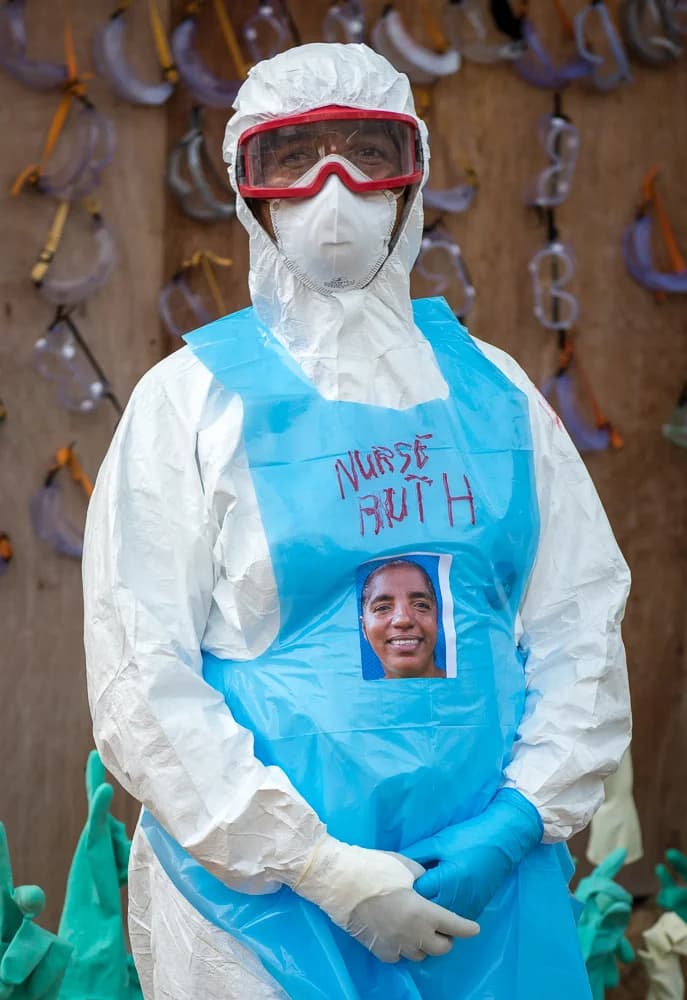
Photo source · Mary Beth Heffernan (photo: Marc Campos), CC BY-SA 4.0