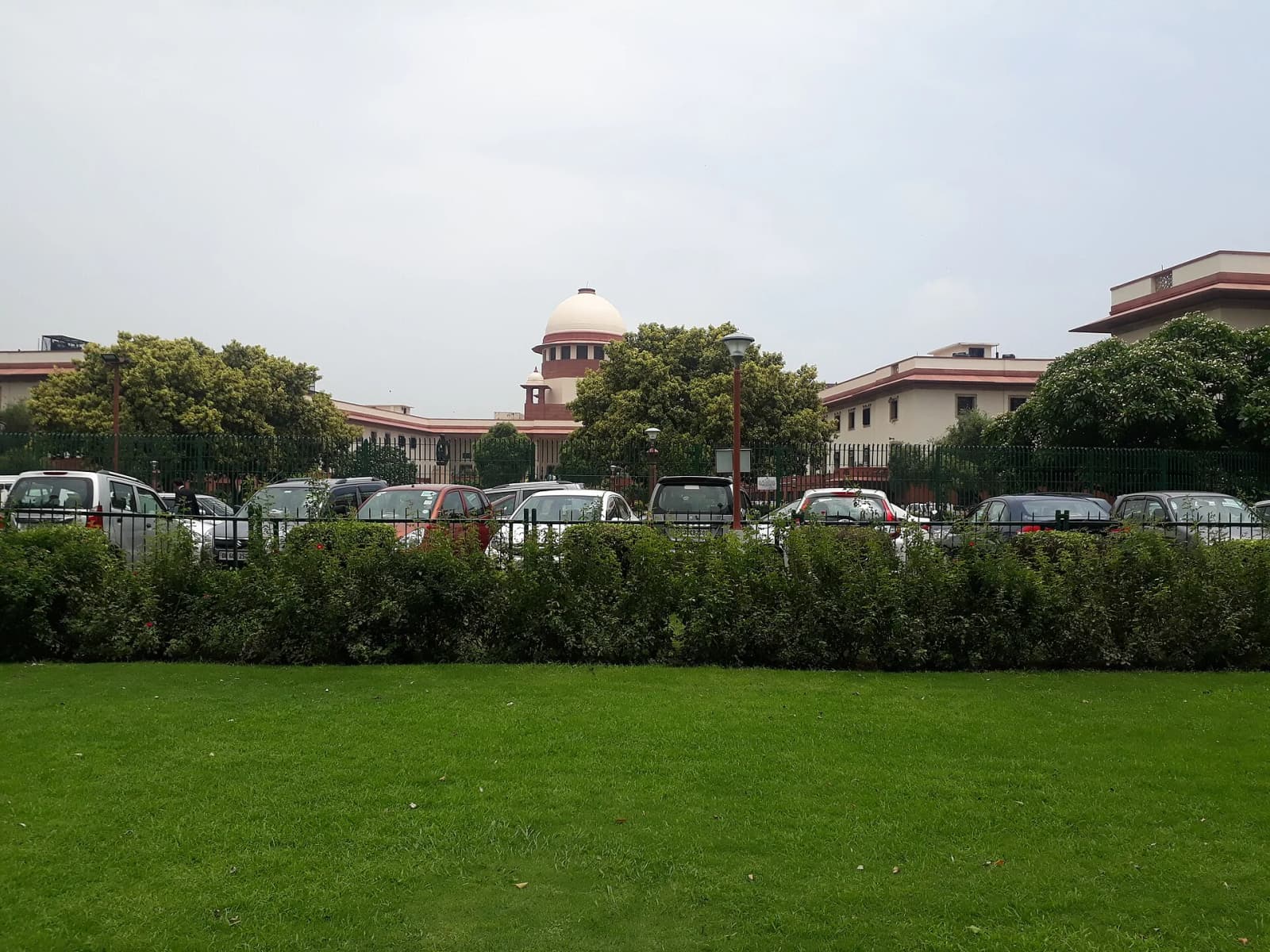
This is a MapMyTimes opinion piece. It responds to the Supreme Court's judgment of 26 November 2026 in New Delhi that quashed the Bihar government's 2023 premature release of former MP Anand Mohan, who is serving a life sentence for the 1994 murder of Gopalganj District Magistrate G. Krishnaiah, and that held victims must be allowed to make a representation before remission is granted. MapMyTimes reported the ruling on Friday. The view below is the MapMyTimes editorial view.
What did the court actually say?
The bench of Justice Dipankar Datta and Justice Sheel Nagu set aside a Bihar notification of 10 April 2023 that deleted the words "or for murder of a public servant on duty" from Rule 481(i)(a) of the Bihar Prison Manual, and quashed the 24 April 2023 order releasing Anand Mohan. In the 54-page judgment, the court called the change a "sudden and selective departure" from a remission policy Bihar had followed since 2002, made without a demonstrated public purpose, and held it "manifestly arbitrary" under Article 14. He has been told to surrender within one month.
The court was careful about what it did not find. It expressly declined to record that the amendment was engineered to free one man, saying the record did not support such a conclusion. Its objection was to an unexplained rule change, not to a person.
Why victims deserve a seat at the table
The more lasting part of the ruling is its recognition that a crime's victims do not stop being stakeholders once the sentence is passed. The judges noted that neither Section 432 of the old Criminal Procedure Code nor Section 473 of the Bharatiya Nagarik Suraksha Sanhita provides for notice to the victim before remission. They read into the Bihar Prison Manual a duty, wherever practicable, to notify a traceable victim or family and to consider their representation. That is fair. Under the rules as they stood, Krishnaiah's widow had no formal opportunity to be heard by the authority before a decision that directly affected her family; she could only challenge it afterwards, by petitioning the Supreme Court.
The ruling also flags a procedural lapse that should worry every state: the presiding judge's opinion relied on in 2023 had been obtained in October 2021, when Anand Mohan was not yet eligible, and no fresh reasoned opinion was sought. Remission is a serious exercise of state power and deserves current, not recycled, inputs.
The strongest case on the other side
There is a serious counter-argument, and it deserves a fair hearing. Remission exists because the criminal justice system is meant to reform, not only to punish. Bihar told the court the 2023 change aimed to bring its manual in line with the Model Prison Manual, 2016 and with other states' frameworks, and both the state and Anand Mohan argued that his good conduct in prison justified release. A reasonable concern about victim participation is that it could make remission more emotive and slower, and could weigh against prisoners whose victims are vocal while others go unheard.
The court anticipated part of this. It said victims get no veto; the authority must still decide independently, treating the representation as one input among many. It also left Bihar free to revise its policy, provided any change has a lawful, bona fide basis and is not tailored to an individual outcome. Good behaviour matters, the judges said, but it cannot by itself replace the rules that govern release.
What should happen now
The constructive path is for this principle to move from a judge-made reading into clear written rules. Parliament could consider adding a victim-notice step to Section 473 of the BNSS, and states could amend their prison manuals so that the process is the same in every jurisdiction rather than dependent on litigation. Such rules should set a time limit for victims to respond, so that eligible prisoners are not left waiting indefinitely, and should require the authority to record reasons that can be reviewed.
States that change remission policy should also publish the purpose and the material behind each change. The Supreme Court's complaint in this case was not that Bihar had a policy it disliked, but that the state could not explain the one it chose. Transparent reasons protect prisoners, victims and governments alike. A remission system that can be defended openly is one that both reform-minded advocates and grieving families have reason to trust.
Photo source · Undeka 11, CC BY-SA 4.0