The Union Cabinet on Friday, 27 November 2026, approved the Constitution (132nd Amendment) Bill, 2026 and a fresh Delimitation Bill in New Delhi, proposing to raise the number of Lok Sabha and Assembly seats in every State and Union Territory by 50% while keeping each State's share of the Lok Sabha frozen until 2051. MapMyTimes reported the Cabinet decision on Friday. This explainer sets out what the proposal does, what is settled and what is still unclear.
What is the 132nd Amendment Bill?
It is a proposed change to the Constitution that would expand legislatures uniformly and use that expansion to bring the one-third reservation for women into force. According to The Hindu's reading of the draft, the Bill provides that the delimitation it triggers "shall provide for an increase of fifty per cent in the number of seats allocated to each State and Union territory in the House of the People", with State and UT Assemblies rising in the same way.
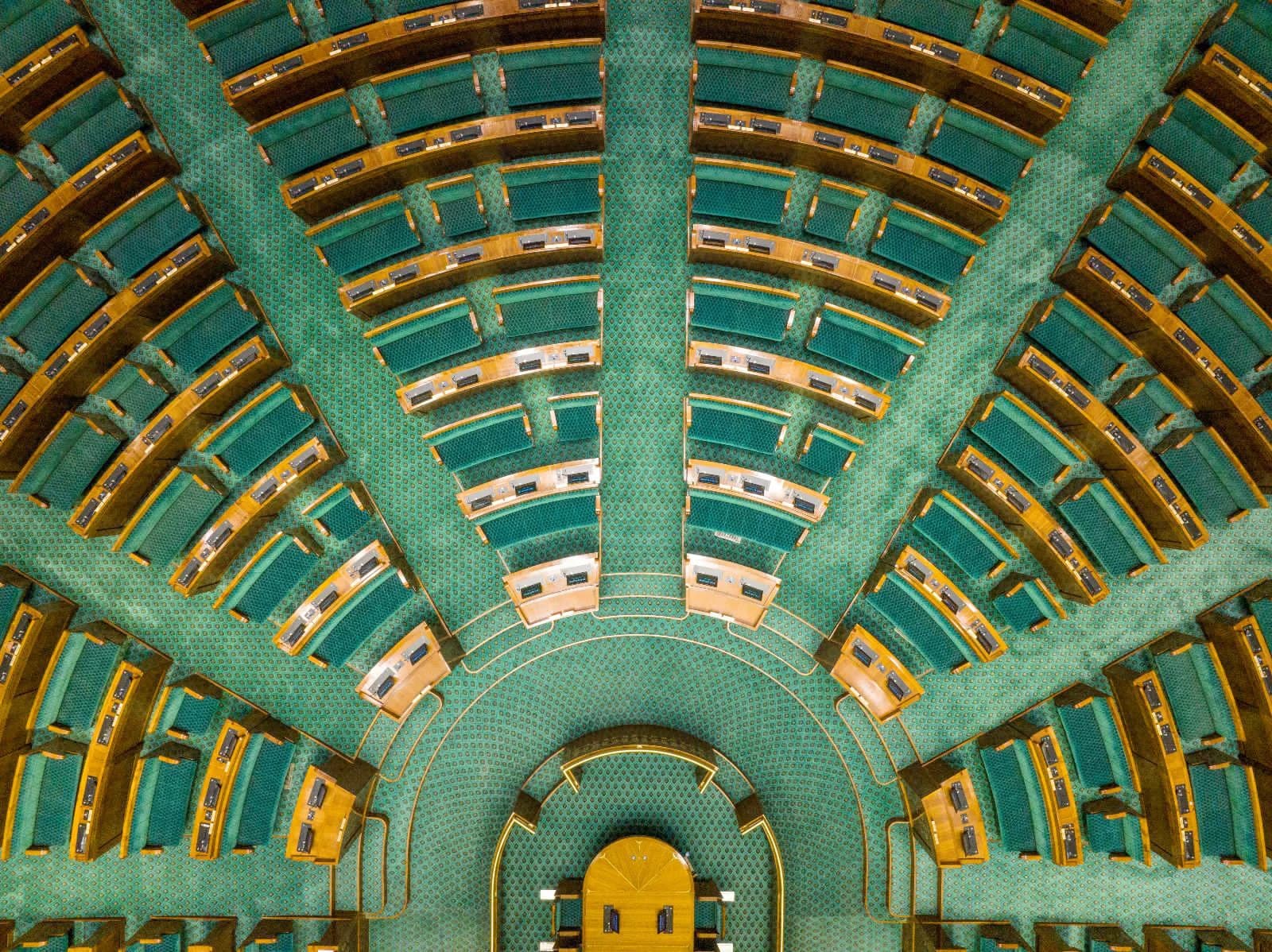
The Lok Sabha now has 543 elected seats. The Bill would lift the constitutional ceiling from 550 to 850, allowing up to 815 members from States and 35 from Union Territories, India Today reported. The ceiling for a State Assembly would rise from 500 to 650.
Why is it in the news?
It is in the news because the Cabinet cleared it on 27 November and the government plans to move it during special sittings of Parliament from 30 November to 3 December, with introduction in the Lok Sabha slated for Monday, 30 November. It also marks a sharp change of course. In April, the Centre moved the Constitution (131st Amendment) Bill, which would have redistributed Lok Sabha seats among States according to the 2011 Census population. According to PRS Legislative Research, that Bill was introduced on 16 April 2026 and negatived in the Lok Sabha on 17 April 2026. India Today reported that it fell short of the two-thirds majority a constitutional amendment needs.
What is the "freeze", and why 2051?
The freeze is the rule that keeps each State's share of Lok Sabha seats fixed regardless of population change. PRS notes that the 42nd Amendment in 1976 froze State-wise seat totals on the basis of the 1971 Census until the first census after 2000, and that the 84th Amendment in 2001 extended this until the first census after 2026, as an incentive for States to pursue population stabilisation.
The new Bill would rewrite Article 82 so that readjustment of the inter-State distribution is not required "until the year 2051", The Hindu reported. The reference to the 1971 Census is dropped, and the distribution among States would instead follow Article 334A, the women's reservation provision. The Hindu noted that the old link between population control and a State's Lok Sabha share is removed; the extended freeze is presented as a special measure to accommodate 33% seats for women.
The reason this matters is regional. Southern States have argued that allocating seats on newer population figures could weaken their voice because their populations grew more slowly than those of several northern States. A uniform 50% increase would broadly preserve each State's share.
How does it affect you?
For most voters, the main effect would be smaller constituencies and possibly new boundaries. India Today cited a May 2026 Carnegie Endowment paper estimating that the average Lok Sabha constituency of around 27 lakh people could fall to around 18 lakh if the House grew by roughly 50%. Gaps between States would remain: on 2011 figures, a Bihar MP represents about 26 lakh people on average against about 16.7 lakh in Kerala, the same report said.
- Boundaries: Constituencies within each State would be redrawn using the latest Census figures published when the amendment takes effect, or the 2011 Census if nothing newer is available, according to India Today.
- Reserved seats: The number of seats reserved for Scheduled Castes and Scheduled Tribes would also be worked out on the latest published Census, replacing references to the 2001 Census.
- Women's quota: One-third of seats in the Lok Sabha, State Assemblies and the Assemblies of Delhi, Puducherry and Jammu and Kashmir would be reserved for women, including women from SC and ST communities, after the first delimitation under the new amendment.
- Sitting members: Current legislatures would be unaffected until they are dissolved, India Today reported.
How does this connect to the 2023 women's reservation law?
The 2023 law created the quota but tied it to a delimitation after a future census, and the new Bill tries to cut that wait. PRS explains that the 106th Amendment of 2023 reserved one-third of seats for women based on the first census after the Act; with Census 2027's reference date set at 1 March 2027, PRS said a delimitation on that census was unlikely to be completed before the 2029 Lok Sabha election. The government wants the quota in place for 2029. India Today reported the Bill proposes a 15-year quota period from the date the 2023 amendment comes into force, which Parliament could extend.
What is established and what is not?
Established: the Cabinet approval, the 50% formula, the new seat ceilings and the 2051 date, all reported from the draft text. Not yet clear: whether the revised companion Delimitation Bill keeps the April version's design, under which a serving or former Supreme Court judge would chair the commission, the Chief Election Commissioner or a nominated Election Commissioner and the State Election Commissioner would be members, and final orders could not be challenged in court, India Today said. The full text of the new Bills had not been introduced in Parliament at the time of writing.
Political reaction is divided. Congress leader Pawan Khera cited past delimitation in Assam and Jammu and Kashmir and questioned the commission's impartiality, while Samajwadi Party chief Akhilesh Yadav alleged that the BJP wanted to redraw constituencies for electoral gain, according to India Today. The Congress has said it wants the quota implemented within the existing 543-seat House. These are claims by political parties and have not been tested.
What happens next?
The next step is introduction in the Lok Sabha on 30 November, followed by debate during the special sittings that run to 3 December. The amendment needs a two-thirds majority to pass, the hurdle the April Bill failed to clear. If it passes, a Delimitation Commission would redraw constituencies, and the PRS record shows the last such commission, set up in 2002, took until 2008 to finalise its orders. How quickly a new map can be ready before 2029 is the open question.
Photo source · Ministry of Parliamentary Affairs, GODL-India