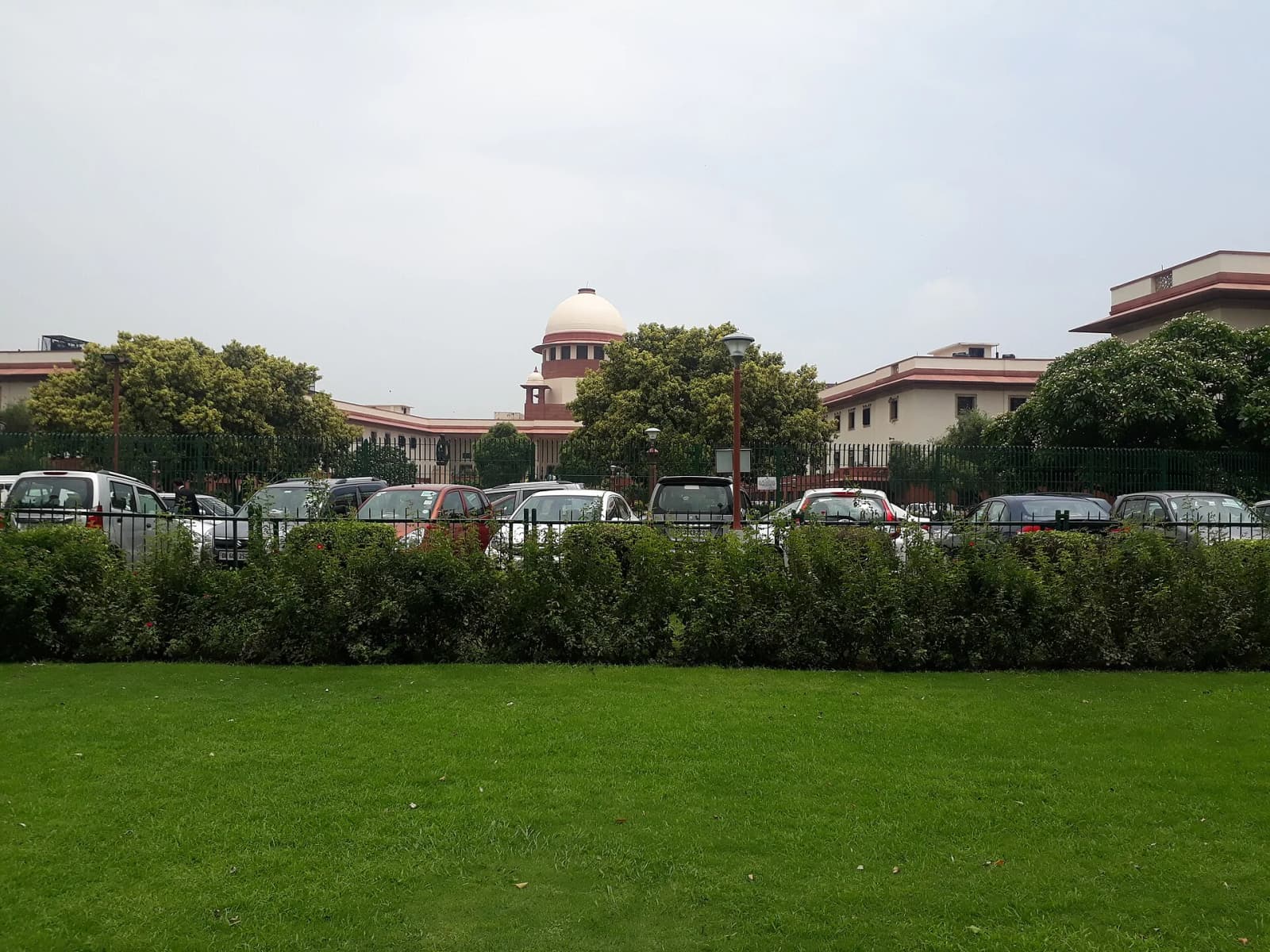
The Supreme Court on Friday, November 27, 2026, declined to mandate a single unified portal for tracing unclaimed bank deposits, mutual funds, insurance payouts, and post-office savings, holding that sector-specific regulatory reforms and centralized search platforms have substantially addressed the core grievances raised in a 2022 public interest litigation.
Why the Supreme Court Disposed of the 2022 PIL
Pronouncing judgment on the petition filed by financial journalist and Moneylife managing editor Sucheta Dalal, a Bench of Justices Vikram Nath and R. Mahadevan concluded that the main concerns behind the plea—the build-up of unclaimed financial assets and procedural hurdles faced by nominees and legal heirs—had seen major institutional progress.
Advocate Prashant Bhushan, representing Ms. Dalal, argued that citizens still lacked a single cross-sector platform spanning bank deposits, securities, insurance policies, and provident funds. While acknowledging that stronger inter-agency coordination may be desirable, the Bench held that designing one unified platform raises questions of policy, technical feasibility, and statutory mandates, since each financial sector operates under distinct legal rules for verification and transmission.
UDGAM, MITRA, and Rs 6,453 Crore Restitution Drive
The court placed on record initiatives including the Reserve Bank of India's UDGAM portal launched in August 2023—subsequently expanded to 30 banks accounting for roughly 90% of unclaimed funds in the Depositor Education and Awareness Fund (DEAF) by value—as well as SEBI's MITRA portal for mutual fund investors.
According to Department of Financial Services submissions cited in the ruling, unclaimed financial assets worth approximately ₹6,453 crore were restored to rightful claimants as of April 18, 2026, under the nationwide 'Aapki Poonji, Aapka Adhikar' campaign across 748 districts, with over three lakh claims processed through March 2026. The Bench also highlighted the Banking Laws (Amendment) Act, 2025, allowing up to four nominees per account, alongside revised RBI norms providing 15-day death claim settlement and simplified procedures up to ₹15 lakh for accounts without nomination.
Court Refuses Omnibus Penalties or Broad Probes
Rejecting requests for an across-the-board probe into unclaimed deposits linked to government bodies, welfare schemes, and charitable trusts, the Bench clarified that the mere existence of balances transferred to DEAF does not imply illegality. It also declined omnibus penalty orders against banks while affirming that the RBI may inspect specific defaults and take action under law, leaving individual claimants free to approach competent authorities.