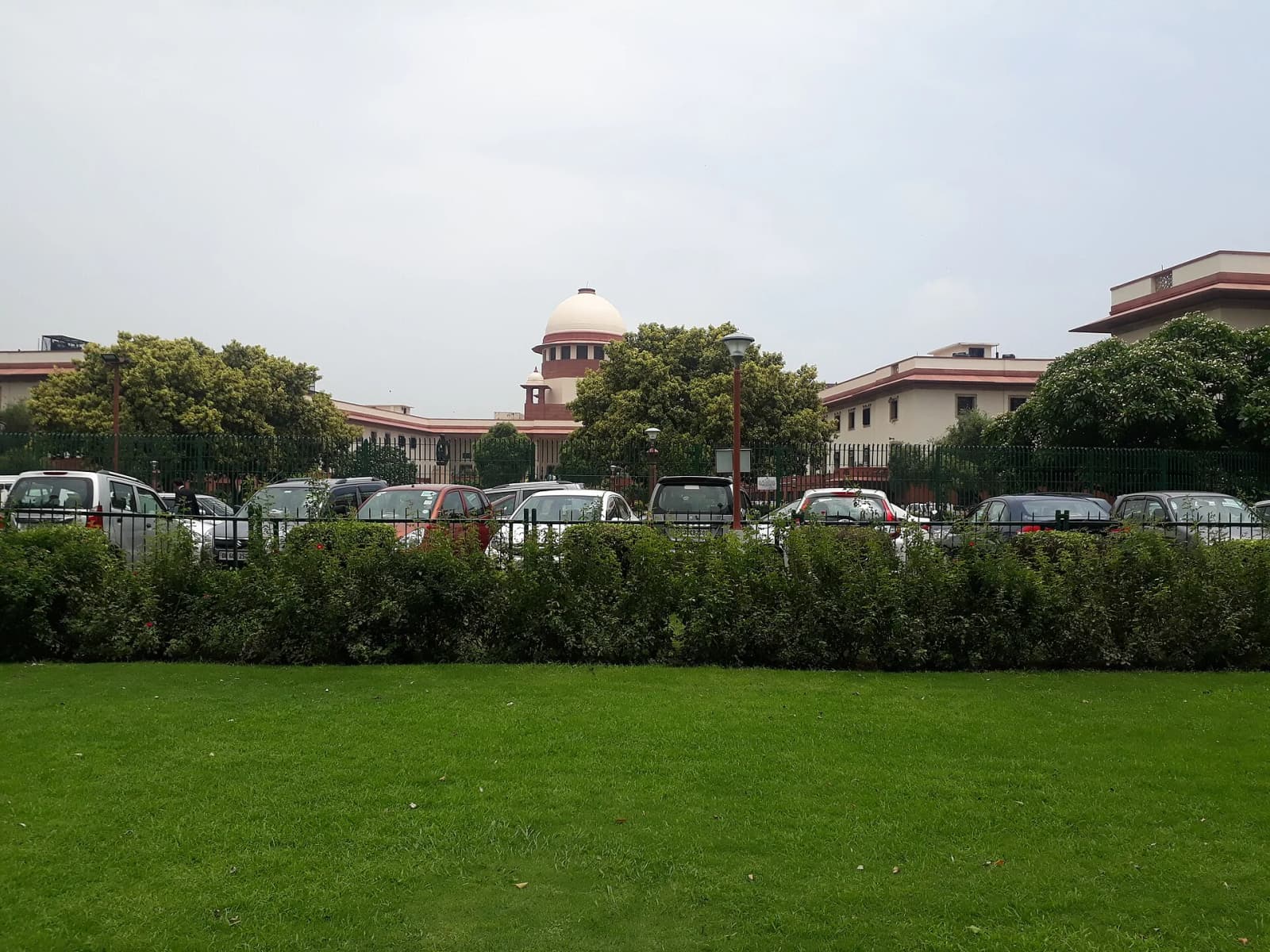
The Supreme Court on Friday, November 27, 2026, directed that Karthigai Deepam be lit on the deepathoon (stone pillar) atop Thirupparankundram hill in Madurai on Saturday, November 28, under Central Reserve Police Force (CRPF) protection, while suspending the Arulmigu Subramaniaswamy Temple Board of Trustees and issuing contempt show-cause notices to senior Tamil Nadu officials.
Temple Trustees Suspended, Former Judges Named Receivers
Rejecting the Tamil Nadu government's contention that it did not interfere with customary decisions of the temple administration, a Bench of Justices Aravind Kumar and Vipul M. Pancholi held that failure to carry out the court's November 20 order amounted to "wilful disobedience" arising from a "pre-meditated conspiracy" between State authorities and temple trustees.
Two days earlier, the ceremonial lamp had been lit only at the customary Deepa Mandapam rather than the disputed stone pillar located near the Sikandar Badusha Dargah atop the hill. Ordering immediate corrective steps, the Bench suspended the temple trustees and appointed former Meghalaya High Court Chief Justice S. Vaidyanathan and former Madras High Court judge Justice V. Parthiban as court Receivers to supervise Saturday's ceremony in consultation with temple stanikars.
Security Cordon and Contempt Notices for December 15
The court directed central forces to provide security and ordered a 50-metre perimeter around the Sikandar Badusha Dargah, clarifying that access and worship rights at the dargah must remain unaffected. Authorities may carry the flame from the Deepa Mandapam or light a fresh lamp at the deepathoon, and members of the public were permitted to light lamps on the hill on November 28.
At the same time, the Bench issued show-cause contempt notices to the Tamil Nadu Chief Secretary, Director General of Police, Madurai District Collector, Madurai Police Commissioner, Hindu Religious and Charitable Endowments (HR&CE) Commissioner and Deputy Commissioner, and the temple chairperson, Executive Officer, and trustees, ordering them to appear in person on December 15. The Chief Secretary must also file a personal affidavit within 10 days detailing communications between State and district officials under Article 144.
Scope of the Interim Order and January Hearing
"When this court speaks, it speaks with the authority of the Constitution. It has to be obeyed," Justice Kumar observed, stressing that executive officials and trustees cannot read discretion into judicial orders. The Bench emphasized that Saturday's directive is a one-time interim contempt-stage measure creating no future equities for any party, and listed the main dispute over hilltop religious rights for hearing in the second week of January 2027.