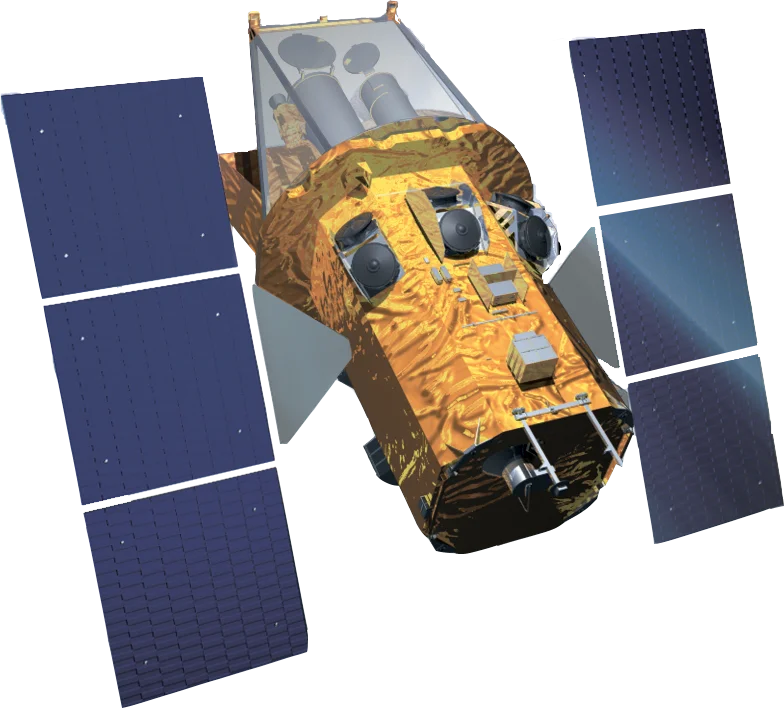
NASA’s Neil Gehrels Swift Observatory has ended its science mission after nearly 22 years of observing powerful cosmic events. The spacecraft made its final observation on 20 October 2026, NASA said.
In an update on 2 November, NASA said the U.S. Space Force predicted re-entry at approximately 3:30 a.m. Eastern Standard Time on 4 November, with an uncertainty of 11 hours. The estimate can change. NASA expects most of the spacecraft to burn up, though some components may survive; the location depends on the timing. NASA and the Space Force continue to monitor the prediction.
Launched in November 2004, Swift was designed to detect gamma-ray bursts and rapidly alert other observatories for follow-up observations. NASA says its orbit fell below about 275 kilometres, where increased atmospheric drag made it impossible for the telescopes to maintain the steady pointing needed for science.
An attempted commercial rescue mission designed to raise Swift’s orbit ended without a boost. Swift resumed observations afterwards, before its operations team prepared the spacecraft for re-entry. Its observations remain available for research.
Sources: NASA mission update, 23 October 2026: https://science.nasa.gov/missions/swift/nasas-swift-mission-ends/ ; NASA re-entry update, 2 November 2026: https://science.nasa.gov/blogs/swift/2026/11/02/nasas-swift-observatory-to-re-enter-atmosphere/
Image: NASA illustration of the Swift spacecraft, not a photograph of its re-entry. NASA via Wikimedia Commons, public domain: https://commons.wikimedia.org/wiki/File:Swift_Observatory_spacecraft_model_2.png
 World