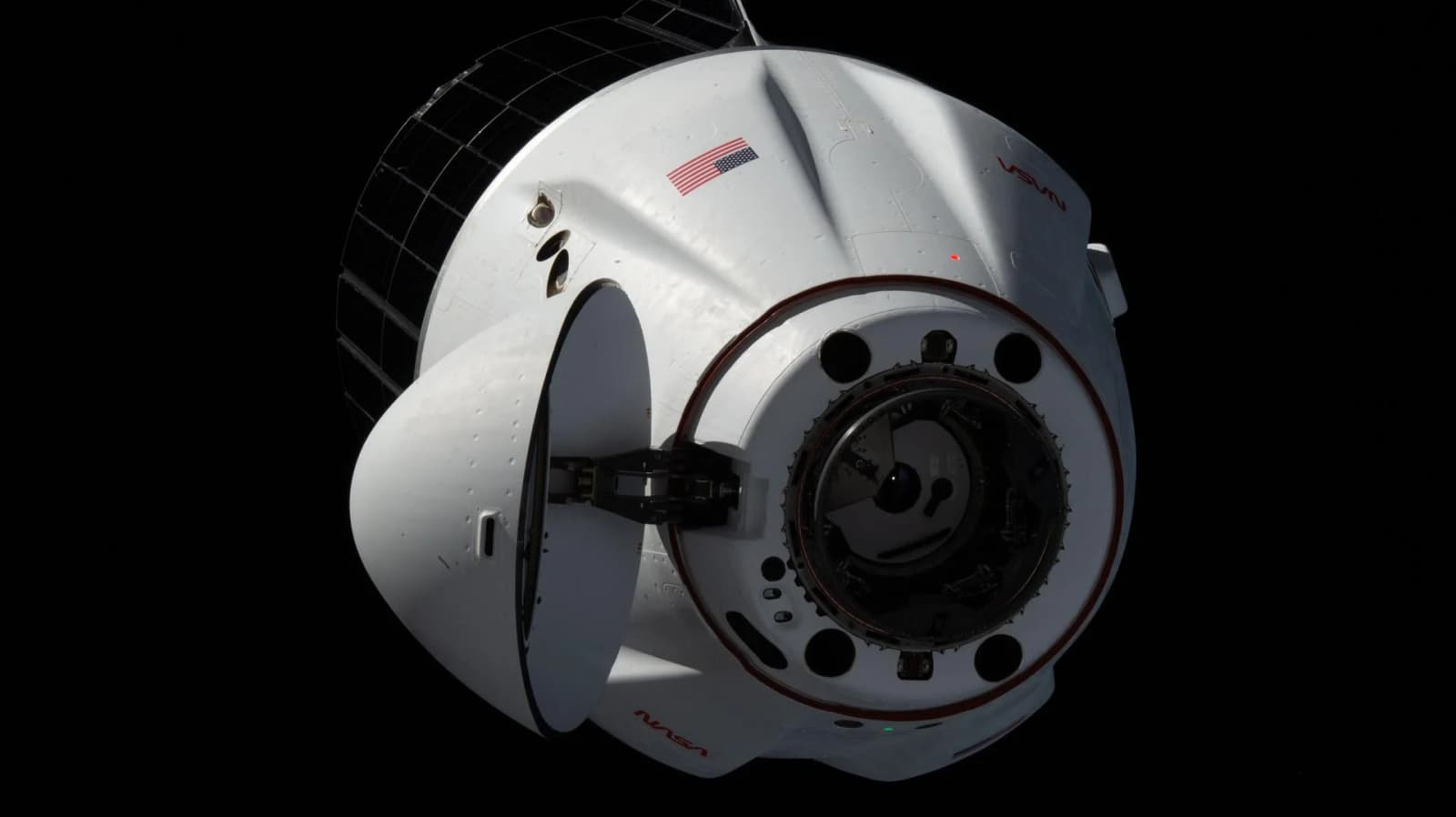
An uncrewed SpaceX Dragon cargo spacecraft undocked from the International Space Station (ISS) at 12:05 pm US Eastern time on 20 November 2026 (10:35 pm IST), ending the 35th SpaceX commercial resupply services mission for the US space agency NASA, NASA said in a station blog update. The capsule left the space-facing port of the station's Harmony module after a command from SpaceX ground controllers.
Dragon is scheduled to splash down off the coast of California at about 4:55 pm Eastern time (1:55 pm Pacific) on Saturday, 21 November, which is about 3:25 am IST on Sunday, 22 November. NASA said it will not stream the splashdown but will post updates on its space station blog.
What is Dragon bringing back to Earth?
Dragon is returning thousands of pounds of cargo, including research samples, according to NASA's pre-departure update. The agency highlighted four sets of returning research:
- a 3D-bioprinted blood vessel construct used to study vascular ageing and cardiovascular disease in space and on Earth;
- frozen tumour organoids treated aboard the station, which NASA said may help researchers find new ways to improve cancer treatment and advance personalised medicine;
- frozen microbial samples that scientists will analyse to understand how antibiotic-resistant bacteria survive, adapt and evolve in space; and
- a lighting system that spent more than three years on the station, where researchers tested whether it can support astronauts' sleep and well-being on long missions.
How long was Dragon at the station?
Dragon spent a little over five weeks attached to the orbiting laboratory. It launched on a SpaceX Falcon 9 rocket from Space Launch Complex 40 at Cape Canaveral Space Force Station in Florida and arrived at the station on 15 October 2026, two days after lift-off, carrying more than 6,300 pounds (roughly 2,860 kg) of crew supplies and science experiments for the Expedition 75 crew, NASA said.
Why do returning cargo ships matter?
Because Dragon returns to Earth and splashes down, samples from experiments run in orbit can be brought back for study in laboratories on the ground. NASA framed the returning experiments as research that could advance future space exploration and also improve life on Earth, from heart disease and cancer studies to understanding drug-resistant microbes.
Which other spacecraft are at the station?
Before Dragon's departure, four spaceships were docked to the station: the SpaceX Dragon, the Russian Soyuz MS-29 crew spacecraft, and the Progress 95 and Progress 96 resupply ships, according to NASA's configuration update.
More cargo is on the way. NASA is targeting 29 November for the launch of Northrop Grumman's next resupply mission, as MapMyTimes reported in its story on the Cygnus XL spacecraft named after Apollo 13 astronaut Jim Lovell.
What happens next?
After undocking, Dragon fires its thrusters to move away from the station before re-entering Earth's atmosphere for the planned splashdown off California on 21 November (US time). Once recovered, the research samples will be handed to scientists for analysis. NASA has said it will post splashdown updates on its space station blog rather than broadcasting the event live.