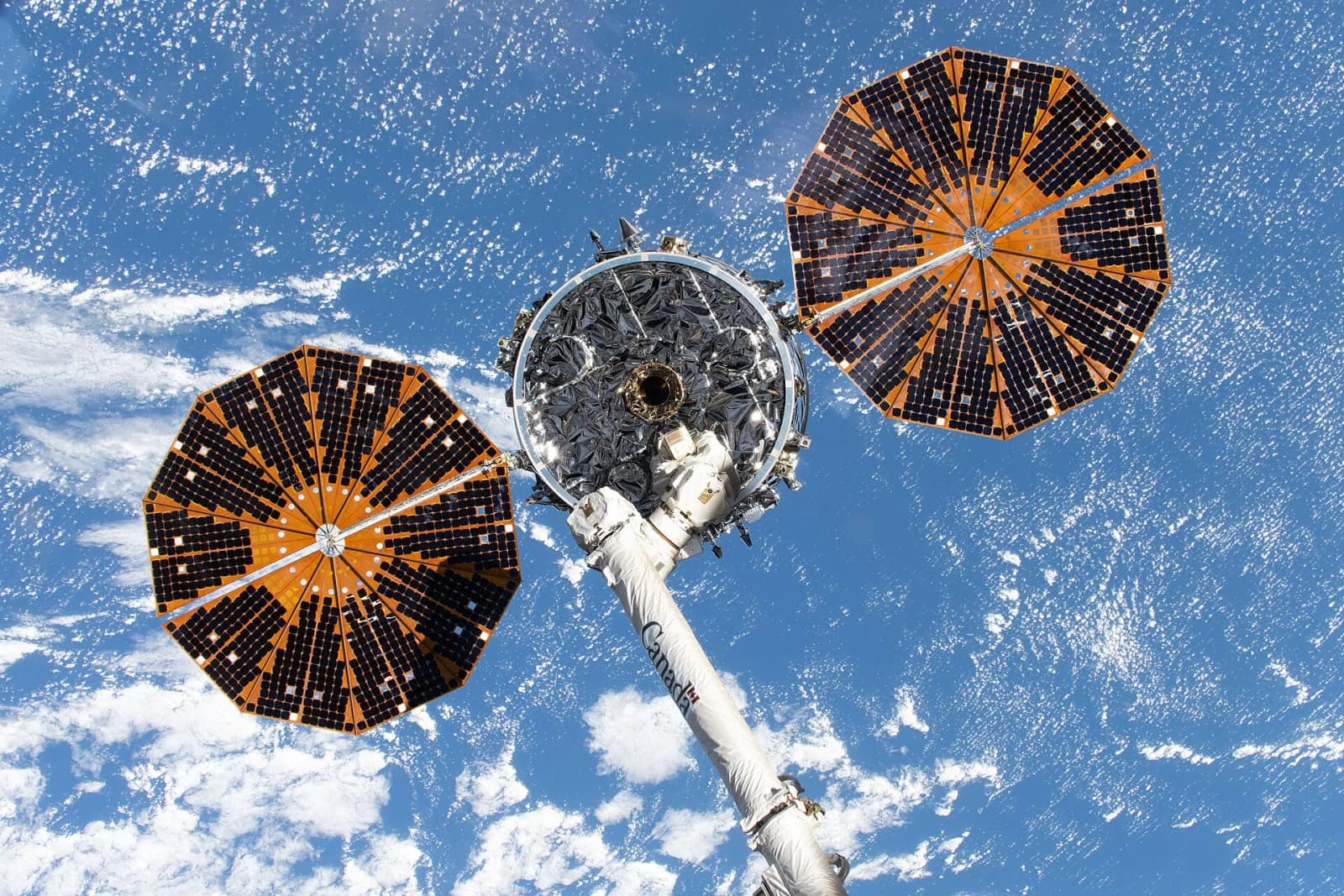
The National Aeronautics and Space Administration (NASA), Northrop Grumman and SpaceX are targeting no earlier than 10:47 am Eastern Standard Time on Sunday, 29 November 2026 (9:17 pm IST) to launch the next cargo mission to the International Space Station from Cape Canaveral Space Force Station in Florida, United States. NASA announced the plan on 18 November 2026.
The Northrop Grumman Cygnus XL spacecraft will fly on a SpaceX Falcon 9 rocket from Space Launch Complex 40 carrying about 11,000 pounds (roughly 5,000 kg) of science investigations, supplies and equipment, according to the NASA release. The mission is formally called NASA's Northrop Grumman Commercial Resupply Services 25, or CRS-25.
Who is the spacecraft named after?
Northrop Grumman has named this Cygnus the S.S. James "Jim" A. Lovell, after the former NASA astronaut. NASA notes that Lovell flew four missions: Gemini VII, Gemini XII, Apollo 8 and Apollo 13, the flight around the Moon.
What is the cargo for?
NASA says the research and technology demonstrations on board include experiments to:
- improve drug delivery for cancer and osteoarthritis;
- predict how cancer spreads;
- advance treatments for muscle loss;
- improve radiation sensing; and
- advance food production for future long-duration missions.
How will it reach the station?
After the spacecraft arrives, NASA astronauts Jessica Watkins and Luke Delaney, currently aboard the station, will use the Canadarm2 robotic arm to capture it on Tuesday, 1 December. Ground controllers will then install it on the Earth-facing port of the Unity module so the crew can unload it.
The spacecraft is scheduled to stay at the orbiting laboratory until May 2027. It will then leave with several thousand pounds of rubbish and unneeded items and burn up harmlessly on re-entry, NASA says.
What happens before launch?
NASA will hold a prelaunch media teleconference on Monday, 23 November, streamed on its YouTube channel. Launch-day coverage on the NASA website, with live streaming and blog updates, is set to begin no earlier than 10 am EST on 29 November, as countdown milestones occur. The agency is also offering a virtual guest programme for members of the public who register online. More details are on the CRS-25 mission page.
Why it matters
Resupply flights such as CRS-25 deliver both supplies and the experiments the station crew carries out. Some of the studies on this flight target medical problems such as cancer and muscle loss, while others, such as the food-production work, are meant for future long-duration missions. In other NASA news this week, the agency paused science on the Perseverance rover and Odyssey orbiter over technical faults.
The launch time is a target and, as with any launch, may change with weather or technical checks.
Photo source · NASA Johnson Space Center, public domain