NASA's Nancy Grace Roman Space Telescope has brought its instruments into precise alignment, a commissioning milestone that the agency says moves the observatory another step closer to beginning science operations. NASA announced the achievement on 13 November 2026 in an update on the mission's official blog.
Roman lifted off on a SpaceX Falcon Heavy from Launch Complex 39A at NASA's Kennedy Space Center in Florida on 30 August 2026. Since then it has been in commissioning, the phase in which NASA deploys, switches on and checks out a new observatory, while also making what the agency describes as a three-month journey from Earth to the second Sun-Earth Lagrange point, or L2.
Why alignment had to be redone in space
Engineers lined up Roman's optics and instruments on the ground before launch. But, as NASA explained, launch vibrations, swings in temperature and the absence of gravity can all nudge components slightly out of place. Over recent weeks, scientists ran a series of test observations to measure those shifts and update what the team calls the telescope's "internal map".
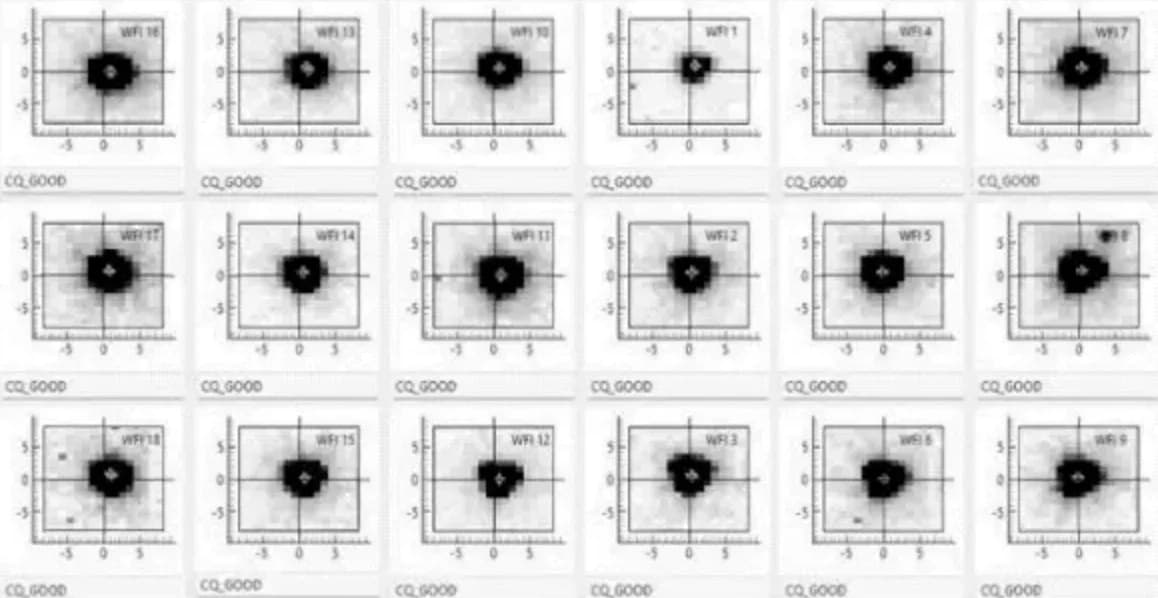
The method was straightforward in principle: the team observed stars, compared where they appeared in Roman's images with where they should have appeared, and used the differences to correct future pointing so that light from cosmic targets lands exactly on the detectors of the Wide Field Instrument.
"Roman requires exquisite alignment because it has to be at least ten times more stable than our Hubble or Webb space telescopes to conduct the science it's setting out to do," said Dominic Benford, Roman's program scientist at NASA Headquarters in Washington.
Tony Sohn, an astronomer on the mission at the Space Telescope Science Institute in Baltimore, said Roman is now aligned internally "to within a tiny fraction of a hair's breadth of perfection", precision he described as essential both for aiming correctly and for holding still through each observation.
Eighteen detectors, one guide system
The Wide Field Instrument is both Roman's main camera and its guider. Its 18 detectors must agree on where guide stars sit so that the observatory can lock on and correct small drifts. Tyler Desjardins of the Space Telescope Science Institute said that if the map placed even one star in the wrong spot on a detector, guiding problems would follow.
That dual role matters for Roman's second instrument. While the Coronagraph Instrument stares at a nearby star to look for planets and dusty disks, the Wide Field Instrument will track stars in a neighbouring patch of sky to keep the telescope steady. Benford noted that this arrangement will also yield "bonus" deep-field images of regions that have largely never been surveyed in depth.
Coronagraph next in line
The coronagraph relies on masks to block a star's glare, and any misplaced component would undermine that goal. The team adjusted the secondary mirror, a smaller mirror that links the telescope to the coronagraph, and the masks and optics inside the instrument.
The next step is to exercise more than 3,000 small moving parts that shape the coronagraph's deformable mirrors. Brian Kern, an optical engineer at NASA's Jet Propulsion Laboratory in Southern California, said the technique has been demonstrated in a lab simulating space, but that doing it in orbit "with real starlight and real planets" would be a record-breaking first.
Why it matters
Roman is a NASA flagship mission whose wide, deep surveys are meant to help astronomers study dark matter, dark energy and exoplanets, among many other targets. Precise alignment underpins all of that work: without it, the telescope could not point accurately or hold steady enough for its measurements. NASA has not given a fixed date for the start of science operations and says the commissioning schedule may change as the team assesses progress.
PS · NASA