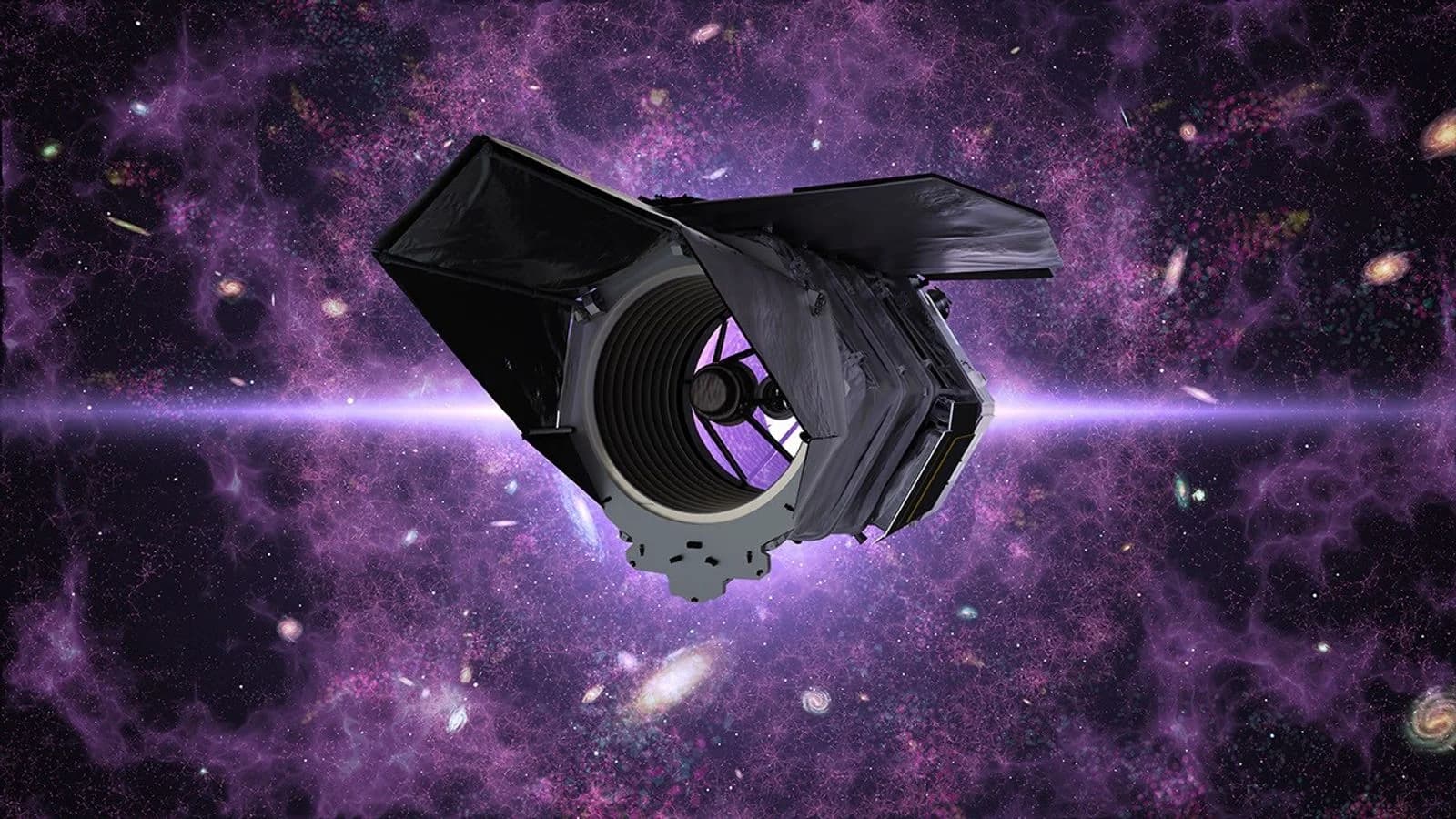
NASA's Nancy Grace Roman Space Telescope has had its instruments brought into precise alignment, a commissioning milestone that the agency says moves the observatory a step closer to beginning science operations. NASA reported the achievement in a Roman mission update published on 13 November 2026.
The work matters because Roman is designed to be far steadier than the observatories that came before it. Dominic Benford, Roman's program scientist at NASA Headquarters in Washington, said the telescope needs to be "at least ten times more stable" than the Hubble or Webb space telescopes to carry out its planned science.
Why a telescope drifts out of line
According to NASA, engineers lined up Roman's optics and instruments on the ground before launch. However, the shaking of a launch, swings in temperature and the absence of gravity in space can all nudge components slightly out of place. Scientists have run a set of test observations to measure those small shifts and refresh what the team calls Roman's "internal map" of its own layout.
The team observed stars and compared where they actually appeared in Roman's images with where they were predicted to fall. The difference tells controllers how to adjust future pointing so that light from the mission's targets lands exactly on the detectors of the Wide Field Instrument.
Tyler Desjardins, an astrophysicist on the Roman team at the Space Telescope Science Institute in Baltimore, explained that the Wide Field Instrument's 18 detectors must cooperate when the telescope locks onto guide stars. If the map places a star in the wrong spot on even one detector, he said, guiding becomes a problem, so the team needs very exact guide-star positions to aim the telescope and correct tiny drifts.
Tony Sohn, an astronomer at the same institute, summed up the outcome by saying Roman is now aligned internally "to within a tiny fraction of a hair's breadth of perfection." He said that level of precision is needed both to point at the right place and to stay extremely still during each observation.
One camera, two jobs
NASA noted that the Wide Field Instrument serves as Roman's main science instrument and also as its guider. Even when the separate Coronagraph Instrument is imaging nearby stars to look for planets and dusty disks, the Wide Field Instrument will be tracking stars in an adjacent patch of sky to keep the observatory steady.
Benford said this arrangement brings an unexpected bonus. Because the coronagraph must stare at a single star for long stretches, the Wide Field Instrument will collect what he described as "bonus deep fields" at the same time, largely in parts of the sky that have never been surveyed in depth.
Tuning the coronagraph
The Coronagraph Instrument relies on a series of masks and other parts to block the glare of a star so that much fainter planets nearby can be seen. NASA said that if any of these pieces were out of position, the instrument could not suppress starlight to the unprecedented degree it is aiming for.
To sharpen its view, the team adjusted the telescope's secondary mirror, a smaller mirror that links the telescope to the coronagraph, and the masks and optics inside the instrument. Brian Kern, an optical engineer at NASA's Jet Propulsion Laboratory in Southern California, said aligning the masks is only the first step, after which a more complex stage takes over.
What happens next
The next task is to exercise more than 3,000 small moving parts that shape the coronagraph's deformable mirrors. Kern said these mirrors work step by step to push away more and more starlight while leaving a planet's light intact. The technique has been demonstrated in a laboratory that simulates space, he said, but doing it in orbit with real stars and planets would be "a record-breaking first-time accomplishment."
The alignment is part of Roman's wider commissioning, the period in which its systems are switched on, adjusted and calibrated. NASA's mission pages describe Roman as travelling to Sun-Earth Lagrange Point 2, a location about which the agency says the telescope enjoys stable optical performance and a broad, largely unobstructed view of the sky. NASA said in October that Roman had entered its final commissioning phase, and the agency notes that the schedule may change as the team assesses progress.