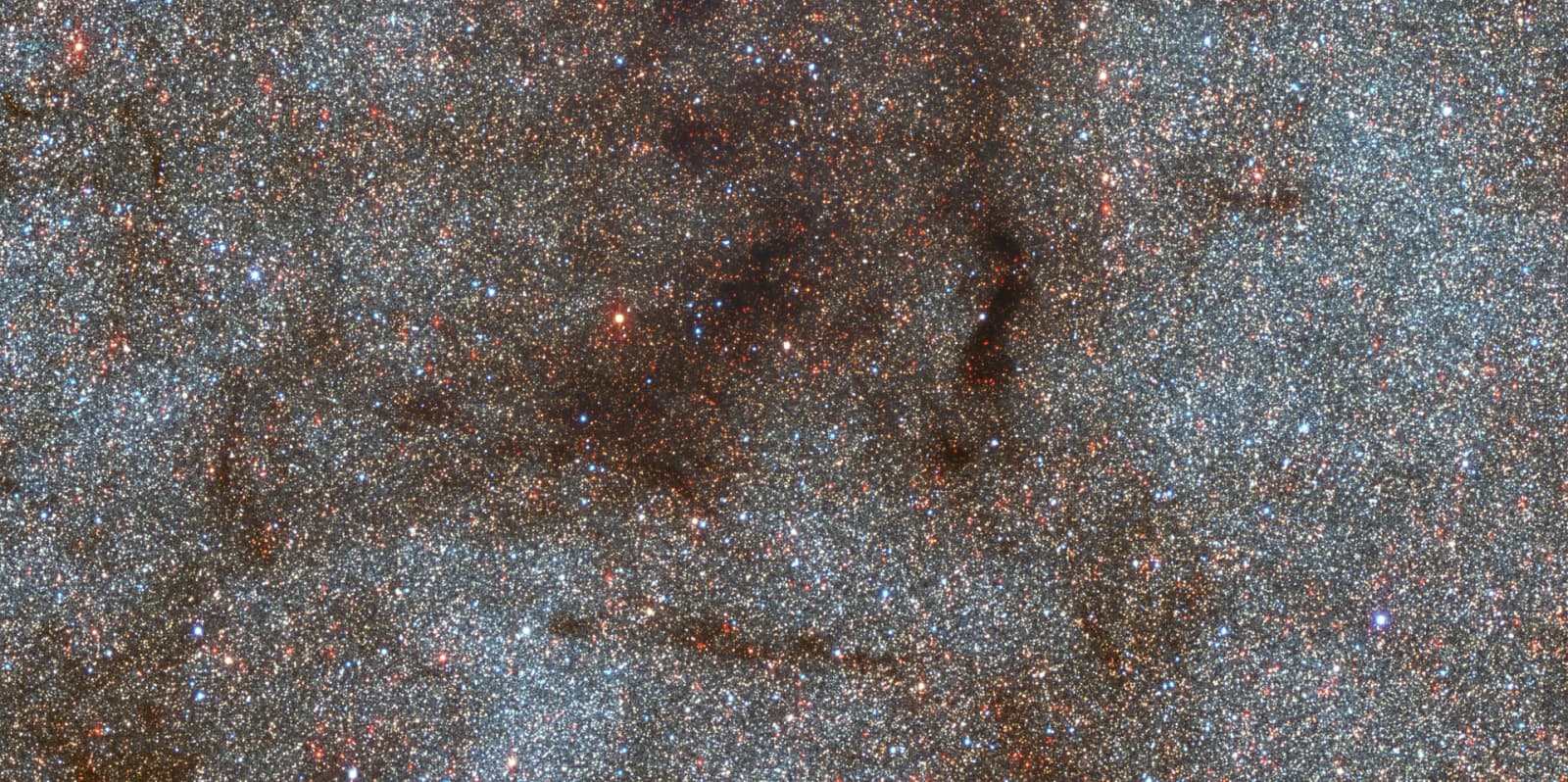
NASA has released new Hubble Space Telescope observations of the Milky Way's crowded galactic bulge, laying essential baseline data for the agency's upcoming Nancy Grace Roman Space Telescope. Announced on November 25, 2026, the survey captures densely packed stellar populations around the central hub of our galaxy, where roughly a quarter of the Milky Way's stellar mass resides.
Bridging Hubble and Roman Wavelengths
While Hubble primarily observes in ultraviolet, visible, and near-infrared light, the Roman Space Telescope will operate chiefly in the near-infrared alongside some visible coverage. To ensure scientists can directly compare datasets across both observatories, Hubble targeted the galactic bulge in overlapping wavelengths at the red end of the visible spectrum and in the near-infrared.
Because the Milky Way's core is relatively close compared with distant galaxies, Hubble's sharp resolution lets researchers measure individual stars' brightness, ages, chemical composition, and motion over time. Astronomers rely on these measurements to trace how galaxies assemble and evolve over billions of years, as well as to spot black holes and signs of dark matter.
Preparing for Exoplanet Microlensing
A central scientific goal for Roman is detecting exoplanets through gravitational microlensing—events in which light from a background star is bent and magnified by the gravity of a closer foreground star and any orbiting planets. By characterizing stars in the target field before lensing events occur, Hubble gives researchers a crucial baseline to compare against Roman's future detections.
The new survey, conducted under observing program #17776 led by S. Terry, extends Hubble's multi-decade study of the galactic center, building on earlier initiatives such as the WFC3 Galactic Bulge Treasury Program and the Sagittarius Window Eclipsing Extrasolar Planet Search (SWEEPS), which examined 180,000 stars in the region.
Photo: CTIO/NOIRLab/NSF/AURA, W. Clarkson, C. Johnson, and M. Rich / Wikimedia Commons (Public domain)
Source: NASA Science