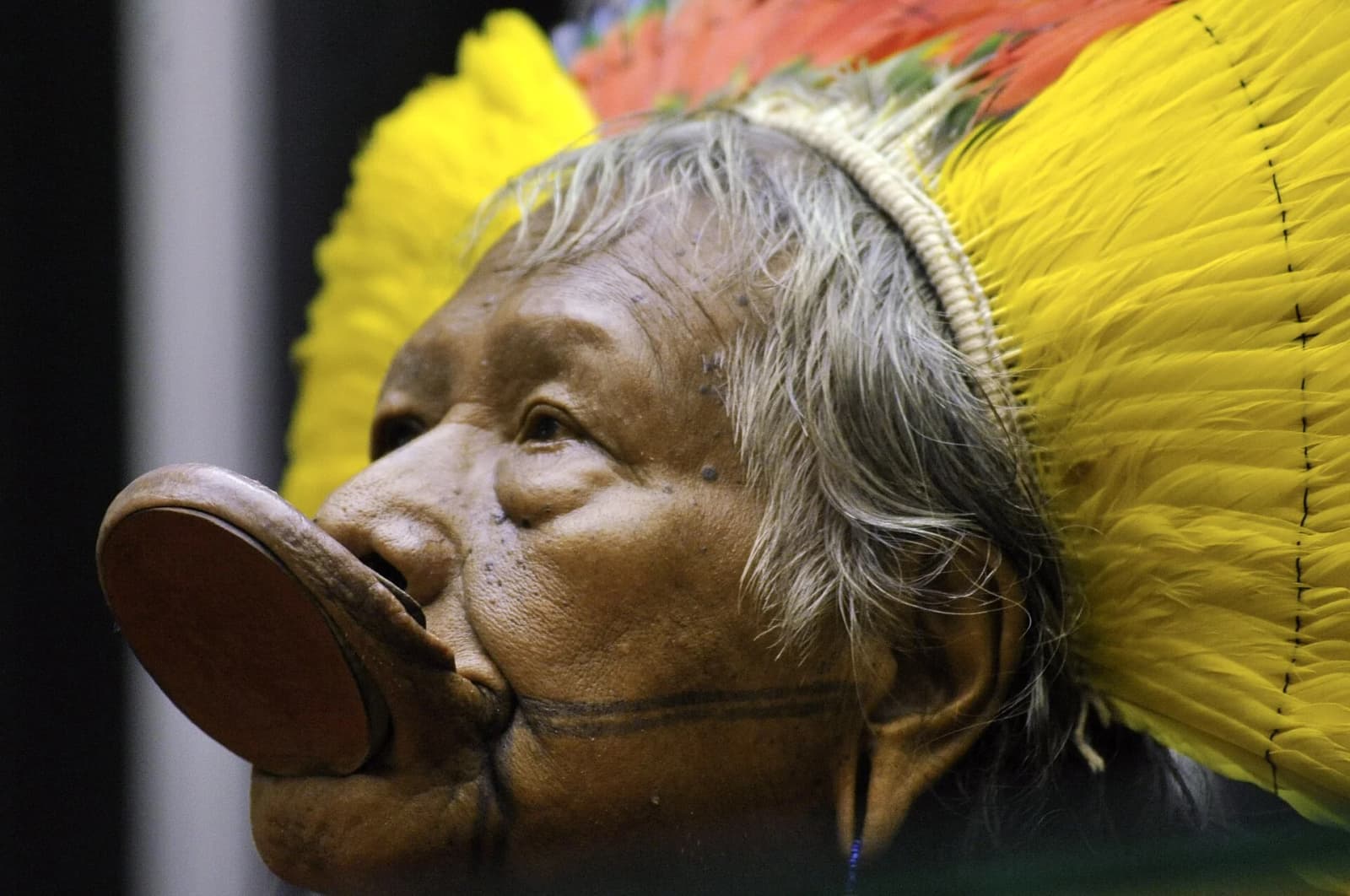
Brazil's government on 19 November 2026 declared the Kapôt Nhinore Indigenous Territory, the ancestral land of Kayapó leader Raoni Metuktire, to be the permanent possession of the Mẽbêngôkre (Kayapó) and Yudjá peoples. President Luiz Inácio Lula da Silva attended the ceremony at the Instituto Raoni in Peixoto de Azevedo, in Mato Grosso state, and then visited the 94-year-old chief, who is receiving palliative care for cancer.
What did the government decide?
The Ministry of Justice and Public Security issued a declaratory ordinance recognising about 362,000 hectares as the permanent possession of the two peoples, according to Brazil's National Foundation for Indigenous Peoples (Funai). The territory spans the municipalities of Vila Rica and Santa Cruz do Xingu in Mato Grosso and São Félix do Xingu in neighbouring Pará. Minister of Indigenous Peoples Eloy Terena and Funai president Lucia Alberta Baré also attended.
Baré said the recognition marked the culmination of a decades-long struggle by Indigenous peoples. Terena said 84% of the territory is forest, Al Jazeera reported.
In the Kayapó language, the name Kapôt Nhinore means "Ponta do Cerrado", a reference to the transition between the Amazon forest and the cerrado savanna, Funai said. Raoni was born and raised there. The area holds Mẽbêngôkre cemeteries and sacred sites.
Is the land now fully protected?
No. A declaration is the third of five stages in Brazil's demarcation process. Funai must still mark the boundaries physically. The president must then approve, or "homologate", the limits by decree, and the land must be registered before the process is complete.
The land is also contested. Lula said more than 200 properties lie inside it and that "there is still a bit of a battle ahead", according to Al Jazeera. A 2023 Greenpeace report found more than 47,000 hectares in use for pasture or soy. Funai said it had rejected all 32 administrative challenges to the boundaries in April 2026.
Why does it matter to Raoni?
Raoni has pushed for protection of the area for three decades. He left the Amazon in the late 1980s to campaign around the world against rainforest destruction. Lula said he wanted to settle the question of the land where Raoni was born "while he was still alive".
"There is no Brazilian more authentic than our comrade Raoni," Lula said. Raoni's grandson, Roiti Metuktire, told the news agency AFP: "It's his last wish."
The chief was diagnosed this year with cancer of the digestive system, Brasil de Fato reported. In early November he was admitted to the regional hospital in Peixoto de Azevedo with a lung infection and changes in blood pressure, and he was discharged on 15 November. His family has asked for privacy. Lula said he was "deeply distressed" to hear of the hospitalisation while he was at the COP31 climate summit in Türkiye.
How fast is Brazil recognising Indigenous land?
Brazil has almost 800 Indigenous lands, about 60% of them fully regularised, Al Jazeera reported. Lula resumed demarcations when he returned to office in 2023. Funai figures show that by July 2026 his government had homologated 20 territories covering more than 3.2 million hectares, and had declared 22 others covering more than 1.5 million hectares.
Demarcated territories still face pressure from agribusiness, illegal gold mining and logging.
What happens next?
Funai will carry out the physical demarcation. The final step depends on a presidential decree and on resolving the claims of non-Indigenous occupants. Funai's announcement did not give a date for the decree.
Photo source · Senado Federal, CC BY 2.0