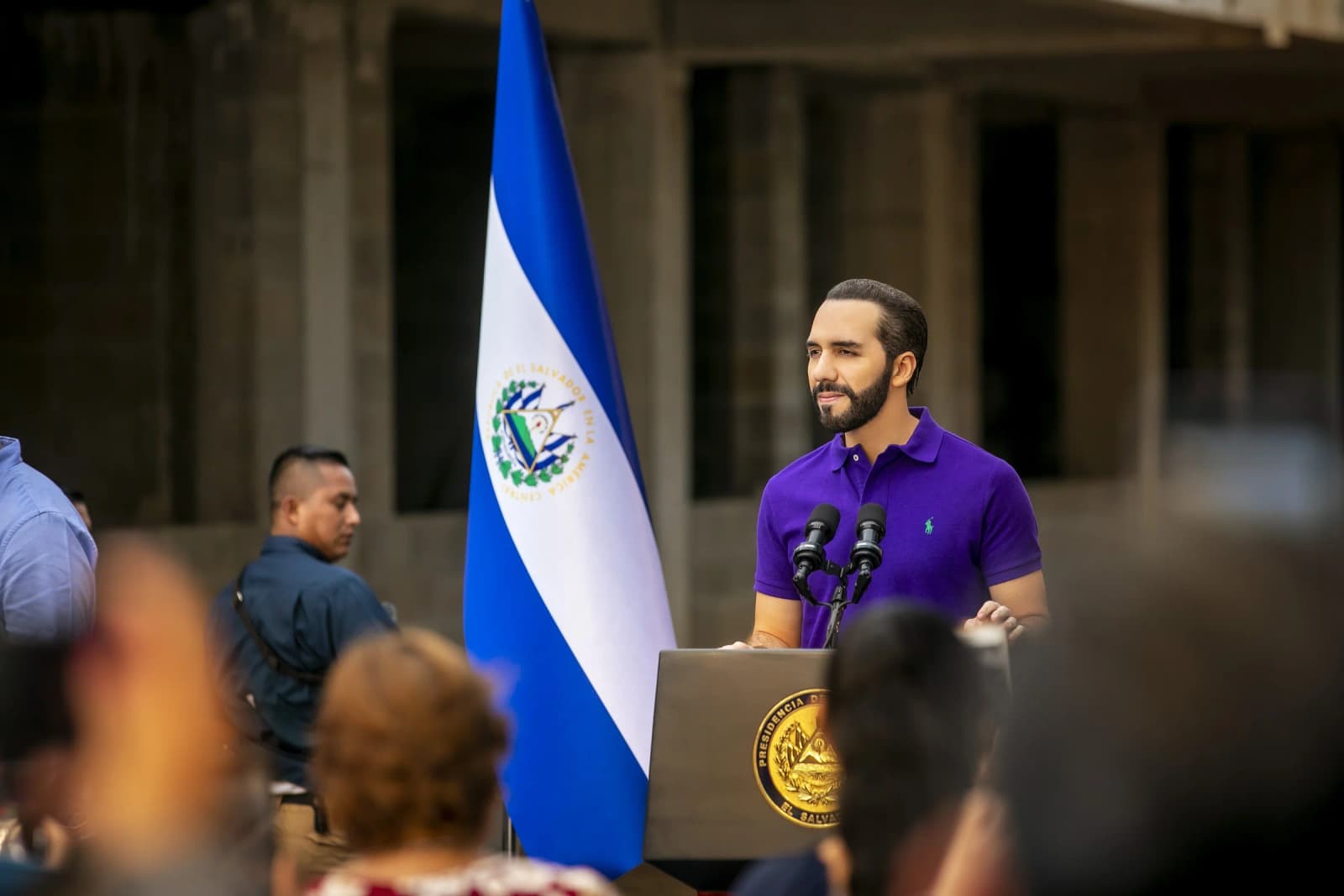
El Salvador's President Nayib Bukele formally registered on Thursday, 19 November 2026, as a candidate for a third consecutive term. He filed his candidacy with the Supreme Electoral Tribunal (TSE) in San Salvador ahead of the presidential election on 28 February 2027, the Spanish news agency EFE reported. Vice President Félix Ulloa registered alongside him as his running mate.
What happened at the tribunal?
Bukele, 45, registered on the last day allowed for presidential candidates, the newspaper El Diario de Hoy reported. Supporters gathered outside the tribunal's headquarters. He urged them to vote in February so the country would not slide backwards, and said El Salvador "is now an example for many countries", according to EFE.
"We need to go out and vote, we need to tell our family and friends to go out and vote," he said.
How can Bukele run for a third term?
He can run because the rules have been changed twice. El Salvador's Constitution once barred a president from immediate re-election. In September 2021, the Constitutional Chamber of the Supreme Court issued a ruling that allowed Bukele to run again, and he won a second term on 4 February 2024. That candidacy drew questions because the Constitution still barred immediate re-election at the time, El Diario de Hoy noted.
In July 2025, the Legislative Assembly, controlled by Bukele's Nuevas Ideas party, approved constitutional changes that allow indefinite presidential re-election, lengthen the presidential term from five to six years and abolish the run-off round. The February 2027 vote will be the first held under the new rules, so the winner will be decided in a single round.
Who else is running?
Bukele faces Rafael Aguirre, a doctor standing for the left-wing Farabundo Martí National Liberation Front (FMLN), and Mayteé Iraheta, a former member of parliament standing for the right-wing Nationalist Republican Alliance (ARENA). Those two parties governed El Salvador before Bukele took office in 2019. Bukele is widely seen as the clear favourite, Al Jazeera reported.
Why do critics worry?
Much of the criticism centres on his security policy. In 2022 his government declared a state of emergency against gang violence. It was meant to be temporary but has been extended for years. Rights groups estimate that more than 1% of the population has been arrested. They say mass trials have sentenced hundreds of people at a time with limited due process, and they have reported torture, other systemic abuses and poor prison conditions.
The US Treasury has accused his government of secretly negotiating with gangs. A Foreign Agents Law lets the government restrict civil society groups that receive money from abroad. Amnesty International says human rights lawyer Ruth López has been held for more than a year in incommunicado detention.
What happens next?
Salvadorans vote on 28 February 2027. Bukele first won the presidency on 3 February 2019 for the GANA party, because Nuevas Ideas had not completed its registration in time. If he wins, he would serve a six-year term under the amended Constitution.