Japan will make an extra 16 million barrels of crude oil storage available to Saudi Arabia for a limited period, taking the total Saudi crude that can be held in Japan under the two countries' joint stockpiling project to 24 million barrels, three times the current 8 million. The arrangement was announced on 20 November 2026, as reported by the Saudi Press Agency, and Japan's Ministry of Economy, Trade and Industry confirmed it in Tokyo on 21 November, according to the Kyodo news agency.
What did Japan and Saudi Arabia agree?
Japan will provide 16 million barrels of additional storage on a time-limited basis, on top of the 8 million barrels already set aside for Saudi crude, ARY News reported, citing the Saudi Press Agency. Japan also intends to buy up to 8 million barrels of Saudi crude for its national reserves, but only if market conditions are favourable and its internal procedures are completed.
Saudi Arabia has already begun refilling the joint stockpiling tanks in Japan, according to the Saudi Press Agency report. Kyodo reported that Saudi reserves released since March were being replenished.
How does joint stockpiling work?
Under the scheme, which dates to 2010, oil companies from Saudi Arabia, the United Arab Emirates and Kuwait lease storage tanks in Japan for their crude, Kyodo reported. In an emergency, Japanese oil companies get preferential rights to buy the stored oil.
Why now?
Japan relies heavily on crude imports that pass through the Strait of Hormuz, which was effectively closed after United States and Israeli strikes on Iran, according to Kyodo. Tension in the waterway has continued: Iran's Islamic Revolutionary Guard Corps has claimed that it shot down a US MQ-9 drone over the strait.
The agreement follows a virtual meeting on 9 November between Saudi Energy Minister Prince Abdulaziz bin Salman and Japan's Minister of Economy, Trade and Industry, Ryosei Akazawa, ARY News reported. It builds on a bilateral task force set up in May 2026, when the two countries reached an agreement on oil stockpiling and energy supply chains.
Wider Asian plan
The two ministers also agreed to cooperate under Japan's POWERR Asia initiative, which aims to strengthen energy security across Asia, according to the Saudi Press Agency report as carried by ARY News. That effort follows a work programme on strengthening oil stockpiling presented at the Asia Zero Emission Community (AZEC) ministerial meeting on 8 October, and covers stockpiling infrastructure, links between producers and consumers, and coordinated emergency response.
What is not yet confirmed
The purchase of up to 8 million barrels for Japan's state reserve is conditional and had not been finalised in the reports. Neither side has said publicly how long the extra storage will be available, or where in Japan the additional Saudi crude will be held.
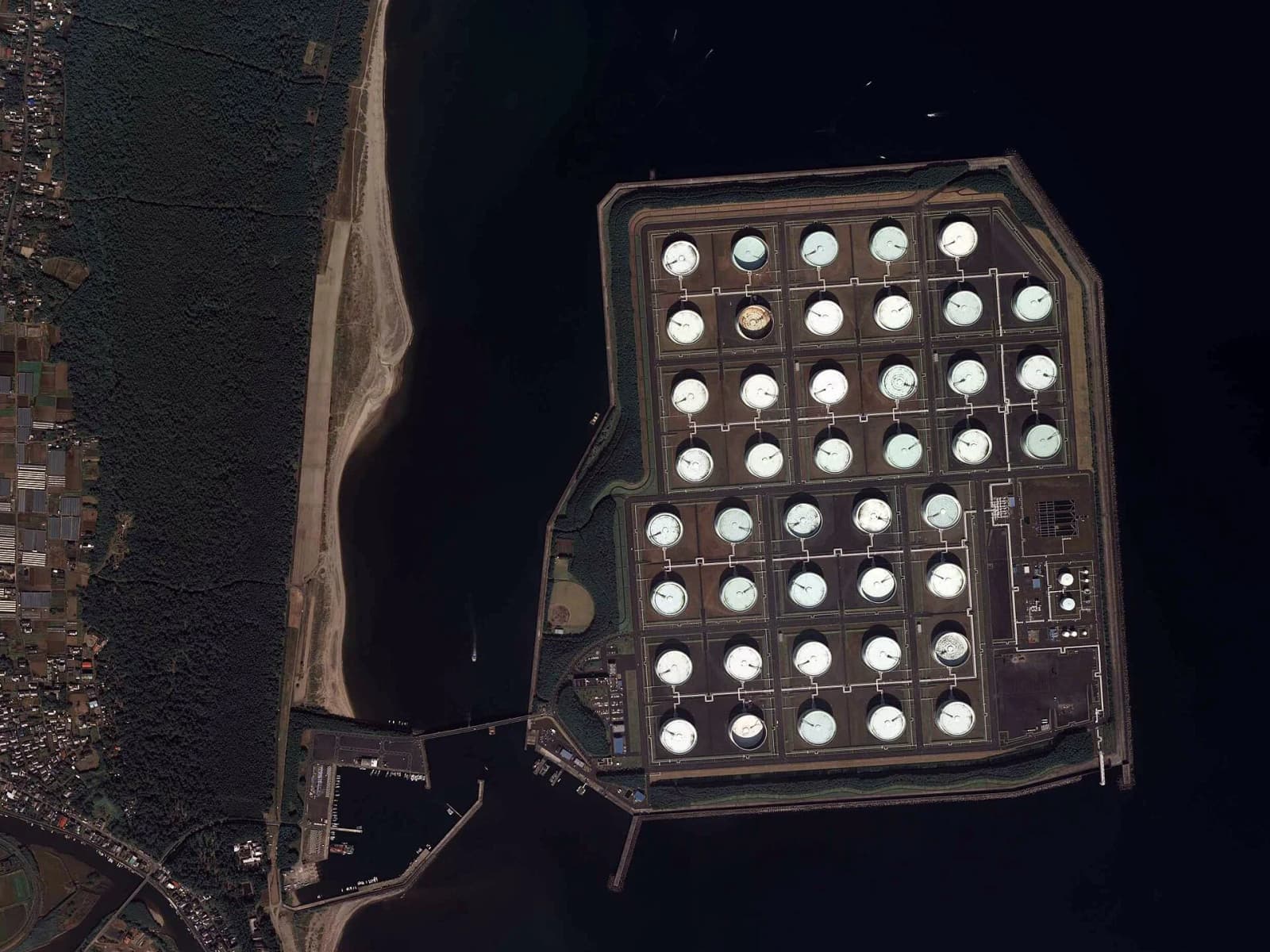
Photo source · Geospatial Information Authority of Japan, CC BY 4.0