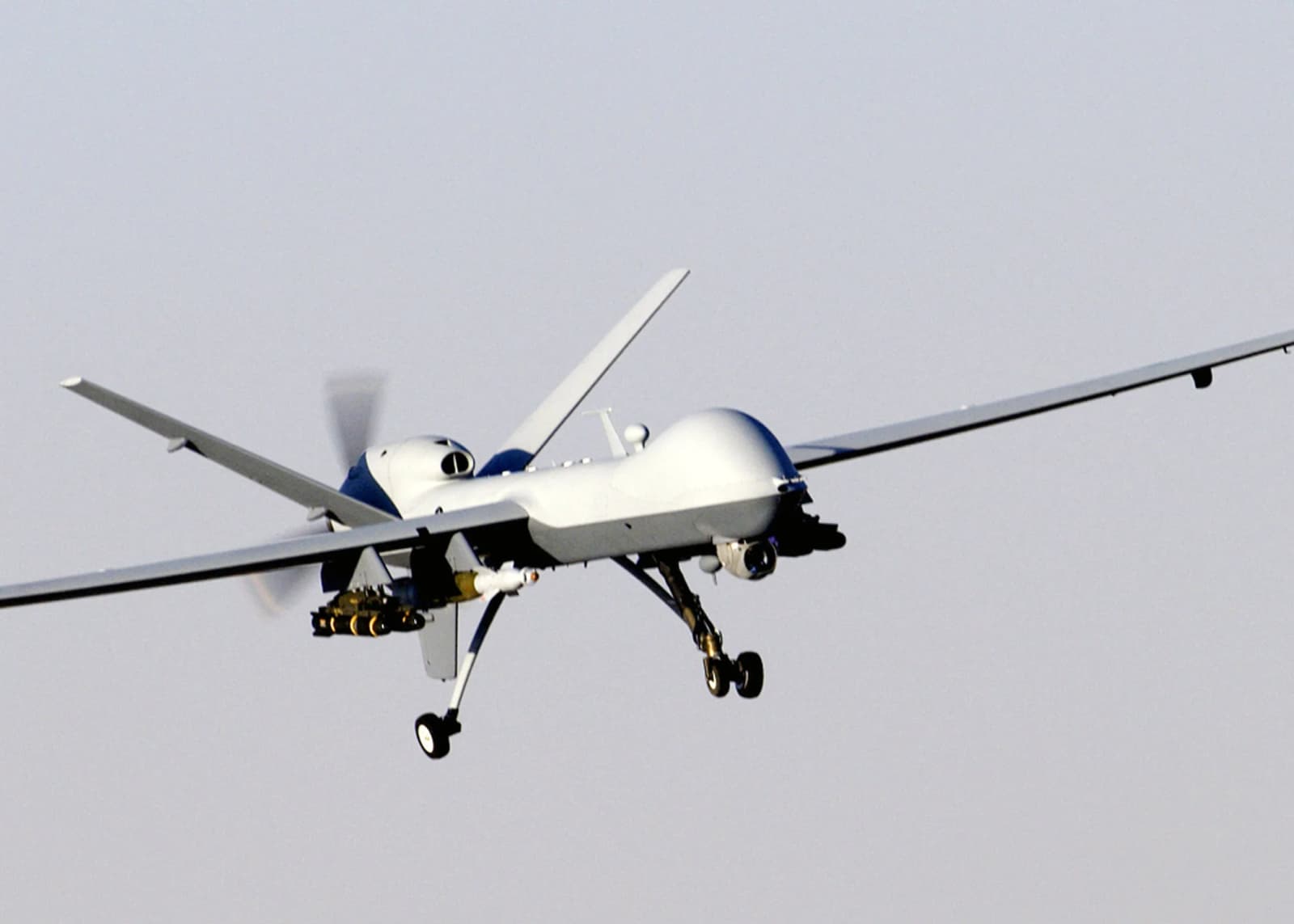
Iran's Islamic Revolutionary Guard Corps (IRGC) said on Saturday, 21 November 2026, that it had shot down a United States MQ-9 Reaper drone over the Strait of Hormuz, the waterway between Iran and the Arabian Peninsula. The claim, carried by Iranian state broadcaster IRIB, came a day after Washington imposed fresh sanctions on Iranians it accused of handling the country's oil money.
What exactly did the IRGC claim?
The IRGC said its aerospace forces brought down the drone using a newly deployed air defence system, and described it as the 58th MQ-9 that Iranian forces have downed, according to Al Jazeera and Middle East Eye, both citing IRIB. Middle East Eye noted that the claim had not been independently confirmed. Neither outlet reported any response from the US military at the time of publication.
Why does the Strait of Hormuz matter?
Al Jazeera notes that about one-fifth of the world's oil and gas passed through the strait before the conflict. The war, launched by the US and Israel against Iran on 28 February, has killed thousands of people and seriously disrupted shipping, pushing global energy prices up, the network reported. A memorandum of understanding signed by the US and Iran in June was never fully implemented because of disputes over navigation through the strait, and attacks have resumed from time to time since July. The latest incident follows direct exchanges of strikes between the two countries in recent days.
Who did the US sanction?
On 20 November 2026, the US Department of the Treasury announced sanctions on what it called Iranian "oil trustees", as part of a campaign it calls Operation Economic Outcast. According to the Treasury press release, these intermediaries are supposed to collect money from Iran's oil sales abroad but in many cases have kept the revenue for themselves. The Office of Foreign Assets Control (OFAC) notice added four men to its Specially Designated Nationals list:
- Mohammad Javad Bavand, described by the Treasury as a former IRGC intelligence officer who led efforts to recover Iranian oil funds held in third countries;
- Majid Taj, brother of Iranian Football Federation president Mehdi Taj, named as part of the same network;
- Mohammadhossein Servati, son of IRGC Brigadier General Mohsen Servati, who the Treasury said held executive roles at companies that brokered Iranian oil shipments to independent Chinese "teapot" refineries;
- Mojtaba Arabnejad, linked by the Treasury to the already-sanctioned airline Mahan Air.
The listing freezes any of their assets under US jurisdiction. Treasury Secretary Scott Bessent said in the release that the regime "has exhausted its seaborne oil supply" and may never receive the revenue from oil already sold.
What are the two sides saying about a deal?
Iranian Foreign Minister Abbas Araghchi said in a state media interview on Friday that seven conditions Tehran gave Washington in September, including an end to the war and the lifting of sanctions and the naval blockade of its southern ports, must be met for the strait to reopen, Al Jazeera reported. He said Iran was flexible on the timetable but ruled out sending its stockpile of 60 per cent enriched uranium abroad.
At a White House news conference on Friday, US President Donald Trump said Tehran wanted a deal but not one acceptable to him. The question of Iran also went unaddressed when Mr Trump met Chinese President Xi Jinping and Russian President Vladimir Putin earlier this week, as MapMyTimes reported from the Shenzhen summit.
What happens next?
In Washington, Democratic Representatives Yassamin Ansari and Ro Khanna have urged Congress to use a coming government funding bill to cut money for offensive operations against Iran, Al Jazeera reported. Congress must pass a spending bill by 11 December to avoid a possible government shutdown. Whether the US confirms the drone loss remains to be seen.
Photo source · U.S. Air Force photo/Staff Sgt. Brian Ferguson, public domain