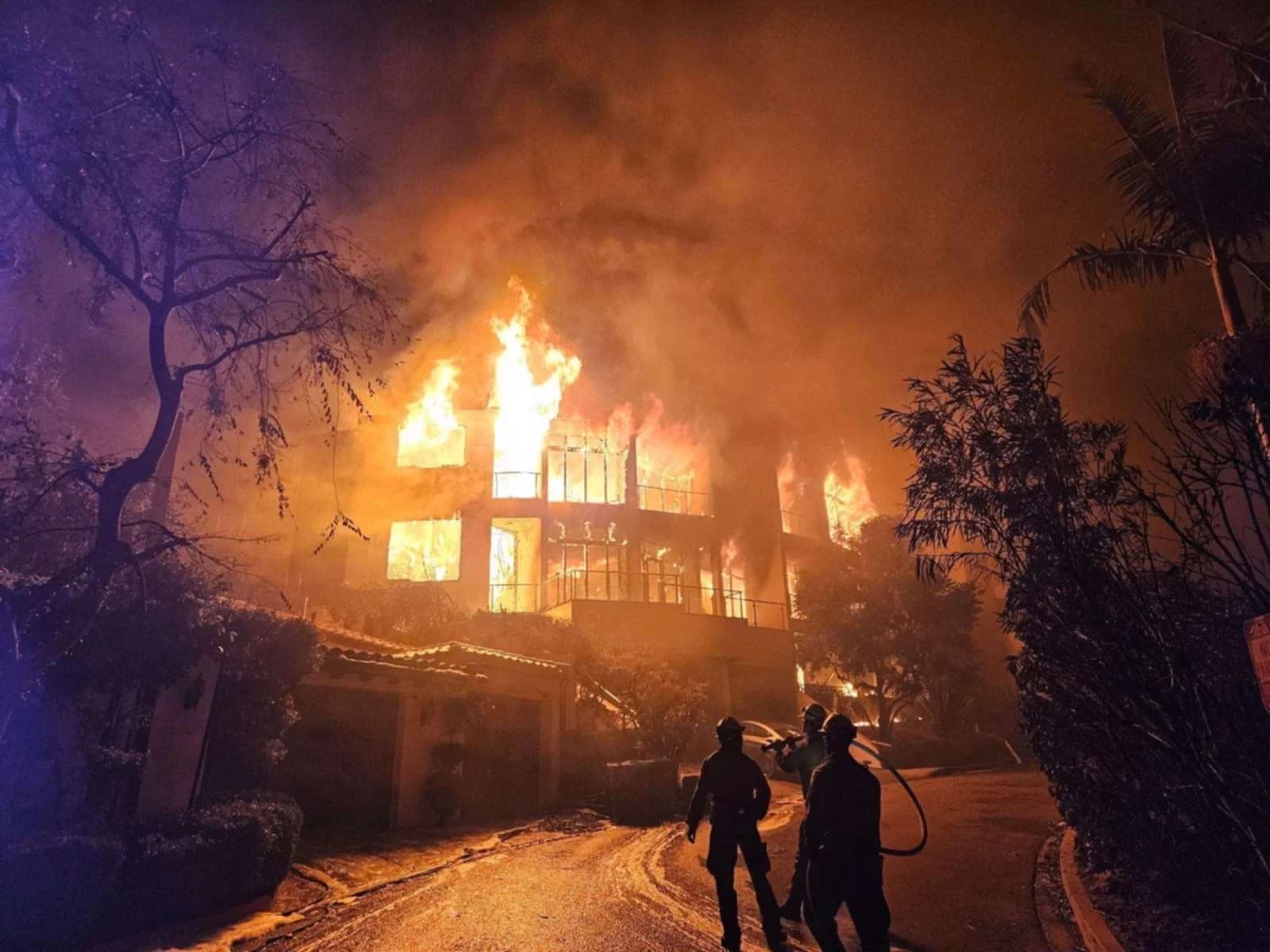
A federal jury in Los Angeles, California, on 20 November 2026 found Jonathan Rinderknecht, 30, guilty of starting the fire that grew into the Palisades Fire of January 2025, a blaze that killed 12 people and tore through the Pacific Palisades neighbourhood and parts of Malibu. The verdict came at the end of a retrial, after an earlier jury failed to agree in June.
What was Jonathan Rinderknecht convicted of?
He was convicted on both counts he faced at the retrial: destruction of property by means of fire, and arson affecting property used in interstate commerce. According to the US Attorney's Office for the Central District of California case page, the superseding indictment filed on 13 August 2026 accused him of maliciously starting a fire near Pacific Palisades early on 1 January 2025, which developed into the Palisades Fire. One count related to that first blaze, known as the Lachman Fire, and the other to the far larger fire it became, ABC News reported. A third charge from the original indictment was dropped before the retrial.
Rinderknecht, a Los Angeles resident and former ride-share driver, had pleaded not guilty. The jury reached its verdict on its third day of deliberations, according to ABC News.
How did a New Year's Day fire become the Palisades Fire?
Prosecutors said the fire lit on 1 January 2025 kept smouldering underground in root systems and flared up again on 7 January, when it spread into a catastrophic wildfire. The BBC reported that it destroyed more than 6,800 buildings. It was one of several fires that broke out across the Los Angeles region that month, which together left 31 people dead and destroyed about 16,000 structures, the BBC said.
What evidence did the jury hear?
According to ABC News, prosecutors relied on mobile phone tower data that tracked his movements on the hill, photographs placing his car near the trail leading to the point of origin, fire-detection camera images showing when the fire started, and expert testimony ruling out other causes such as fireworks. Witnesses and text messages described him as angry and erratic in the hours before the fire. Prosecutors also told jurors that he called the emergency number more than a dozen times as he walked down the hill, and while doing so asked the chatbot ChatGPT whether he would be at fault if a fire were caused by his cigarettes; they argued this was part of an attempt to build an alibi.
Defence lawyer Steve Haney argued that the scene may have been compromised because it stayed open to the public until 7 January, that gaps in mobile data meant others could not be ruled out, and that fireworks may have caused the blaze. He also questioned whether the government had enough physical evidence.
How have the two sides responded?
Bill Essayli, who leads the US Attorney's Office for the Central District of California, said the verdict "delivers a measure of justice" for families who lost loved ones and for thousands of people whose lives were upended. Haney said the defence was disappointed but respected the jury's decision.
Los Angeles Mayor Karen Bass said in a statement quoted by the BBC that no verdict could bring back the lives lost, adding that many residents are still struggling to rebuild.
Why was there a second trial?
The first trial, held over two weeks in June, ended in a mistrial after jurors deadlocked 10-2 in favour of acquittal, according to ABC News. Prosecutors then obtained a new indictment and narrowed their case. ABC News reported that the retrial leaned less on claims about his alleged resentment of wealthy people and more on forensic data and expert evidence.
What happens next?
Sentencing is scheduled for 17 March 2027. Each count carries a mandatory minimum of five years and a maximum of 20 years in federal prison, according to both the BBC and ABC News. The case was heard before US District Judge Anne Hwang.
Photo source · Pacific Southwest Forest Service, USDA, public domain